
Please note that we do not create all the designs featured in this article. Our primary focus is to curate and collect a diverse range of design collections and products to inspire and share with our audience. While we do not claim ownership or take full credit for the original designs and images, we occasionally make minor adjustments, particularly in home decor and fashion items, to present them more effectively. Additionally, we may produce and edit images to enhance their quality and composition before sharing them on our Pinterest page or website. For the design work we do on these creative designs, we also include our logo on the images shared on Pinterest and our website. This helps our audience recognize that these designs have been published on insiderlyfe.com!
Here is the thing nobody tells you about a short French manicure: it is the hardest version to fake. A thick white tip on a tiny nail looks like a mistake, while a thin, soft one looks expensive.
I went through the set of close-ups we have been saving and noticed the same few details on every nail that looks truly salon fresh. The base is sheer, the tip line is slim, and the edge is sealed. That is the whole secret.
October is the perfect time to try it. Fall nail roundups, including this one from Booksy, put short nails and minimalist French tips (sometimes in deep forest green) among the season’s looks, so a classic French fits right in.
Below are 10 tricks, each tied to a real nail you can screenshot for your next appointment or your next at-home session. Do not skip number 4 if your tips always look wobbly, and number 8 is the one that stops chipping before it starts.
If you also love a cozy seasonal palette, our guide to moody fall nail trends pairs nicely with a classic French base.
1. Start with a soft, almost skin-toned base
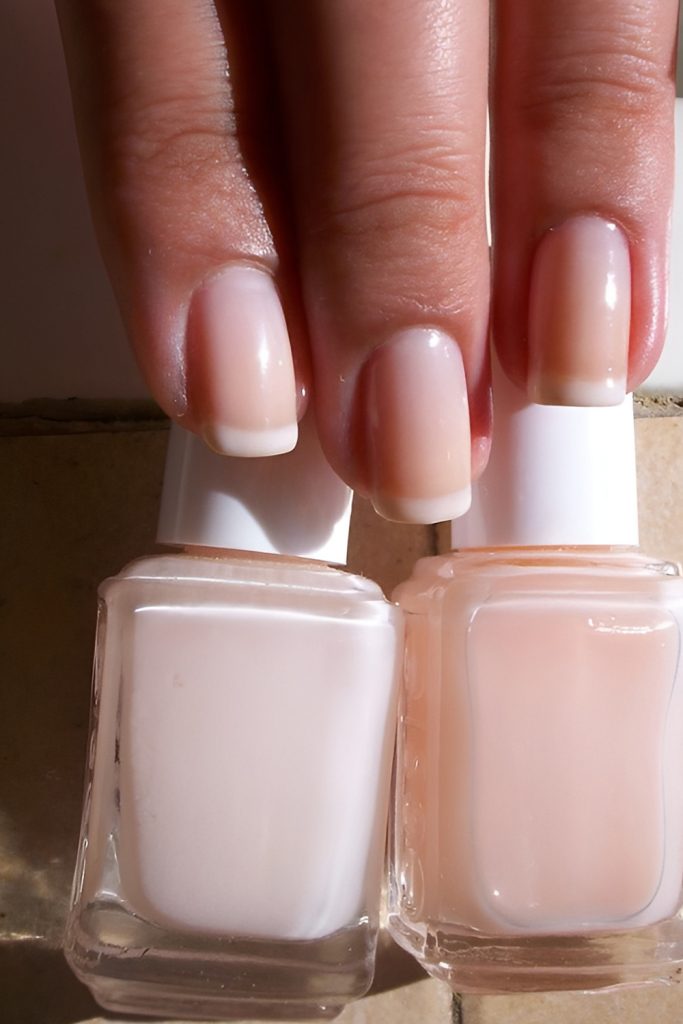
Here is the clearest lesson: a pale, milky nude that melts into the skin makes short nails look longer. Think of it as a blurred filter for your fingertips.
Pick a sheer pink or peachy beige and apply two thin coats rather than one thick one. Thick coats bubble and make the white tip look pasted on.
Hold your hand at arm length before you commit. If you can see the polish from across the room, it is too opaque.
Best for: anyone who wants the cleanest, most natural look.
Maintenance: Low. A fresh top coat every three days keeps the glow.
Styling tip: Match the base to your knuckles, not your nail bed.
2. Keep the tip line slim, about a millimetre or two
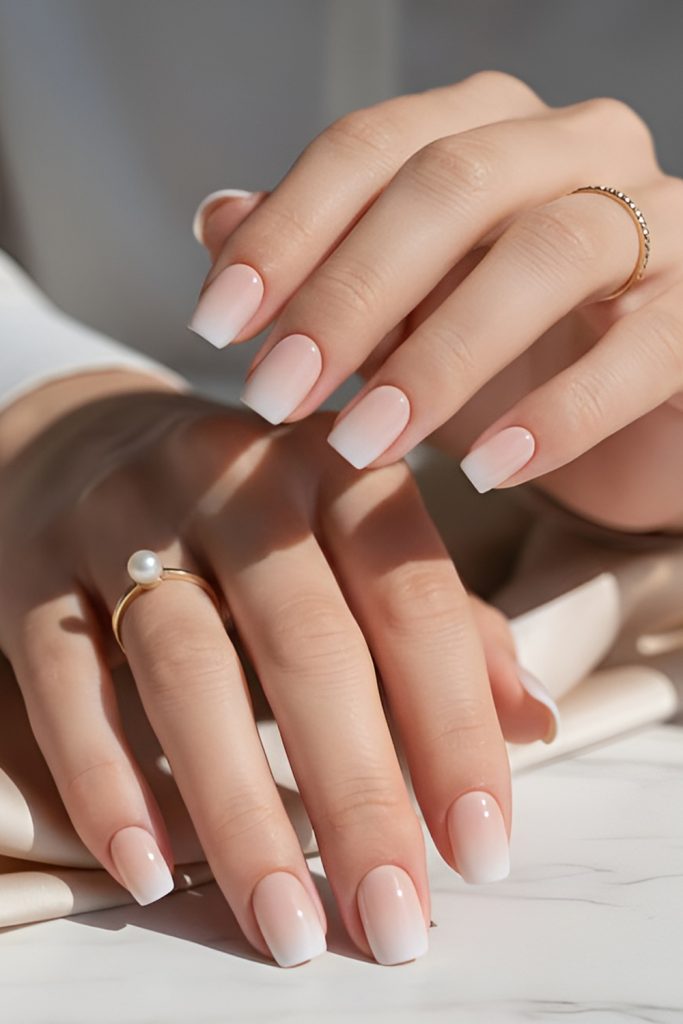
Short nails give you very little room, so the white line should be thin. The hands in the photo above show it perfectly: the tip is a soft whisper, and the nail still looks long.
A good rule is to paint only the free edge, the part that extends past the pink. If your nail has no free edge, skip the tip and try a micro French along the cuticle instead.
Thin tips also grow out gracefully, which means fewer salon visits.
Best for: bitten or very short nails.
Maintenance: Moderate. Re-do the tip line once the nail grows past the pink.
Styling tip: Slide your brush from one side to the other in one confident stroke.
3. Use a clear or sheer pink polish to blend everything
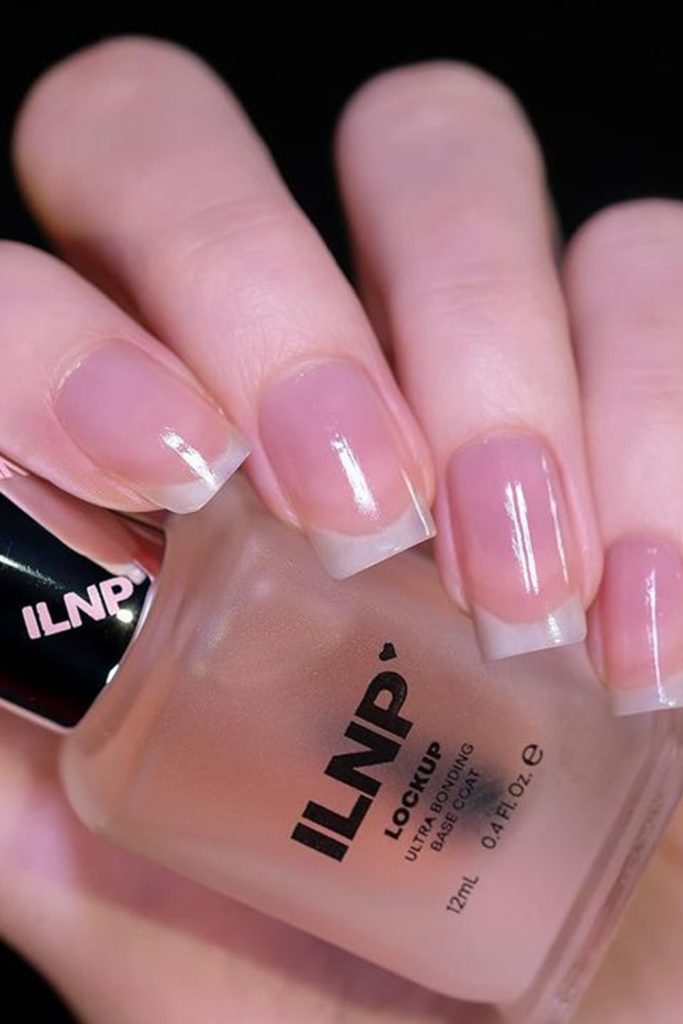
Look at the photo above and you will notice the nails are glossy and slightly pink, almost like healthy nails on their best day. That finish comes from a sheer polish, not a coloured one.
Sheer shades forgive small mistakes. If your tip is a little uneven, a sheer pink layer over it softens the line.
Keep a bottle in your bag. A swipe over a worn nail brings it back to life.
Best for: beginners who want a forgiving finish.
Maintenance: Low. Reapply a thin coat every few days.
Styling tip: Wipe your brush on the bottle neck so you never flood the cuticle.
4. Fix wobbly tips with a steady, supported hand
This is the trick for anyone whose white line always wanders. A tip that curves gently with the shape of the nail only happens when the painting hand is steady.
Rest your wrist on a table and anchor your pinky against a stable surface. Paint the opposite hand first if you are right handed and shaky.
If you need a guide, a strip of tape or a small tip sticker keeps the curve even. Peel it off while the white polish is still slightly tacky.
Best for: at-home manicures where the tip tends to wander.
Maintenance: Low. Practise on one hand until it clicks.
Styling tip: Turn your finger, not the brush, when you follow the curve.
5. Choose a creamy white, not a stark one
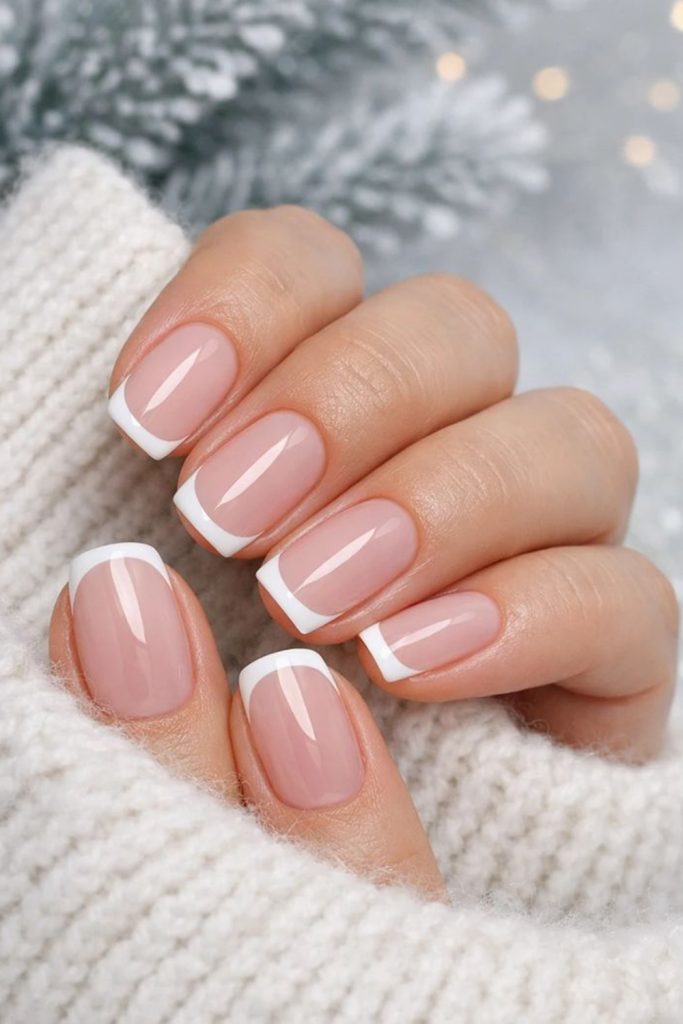
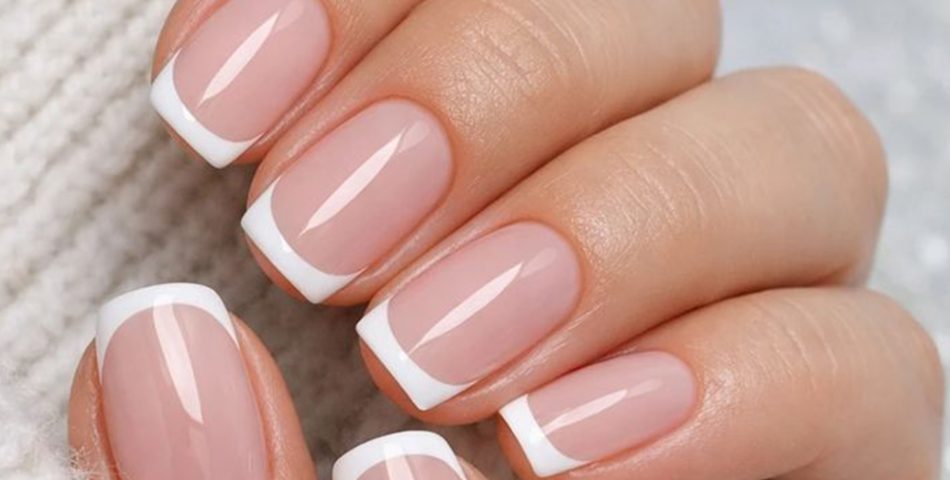
The tips resting on the cream knit sweater are a clean white, but the cosy knit around them softens the contrast. For your own nails, aim for a creamy white, and it will sit beautifully against autumn knitwear.
Stark white can look harsh against short nails and chips more obviously. A milky white with a hint of cream feels softer and more modern.
If your skin has cool undertones, a cool-leaning white works too. Test a swatch on a spare nail.
Best for: fall wardrobes full of cream, oatmeal and camel.
Maintenance: Moderate. Creamy whites can stain, so seal them well.
Styling tip: Choose a white that is one shade softer than your sweater.
6. Round or soft square shapes flatter short French tips
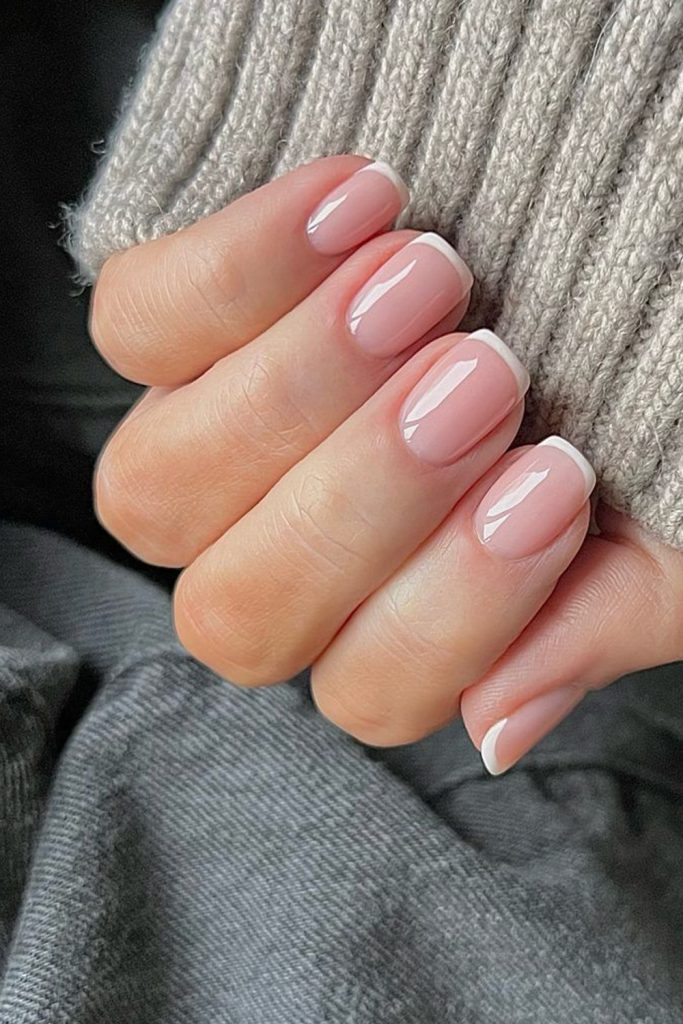
The nails against the grey knit are gently rounded, and that shape is perfect for short French tips. It echoes the natural curve of the fingertip, so the white line follows it without looking harsh.
Square tips can work too, but only with softened corners. Sharp corners make short nails look wider.
File in one direction, never back and forth, to prevent splitting.
Best for: short, practical nails and busy hands.
Maintenance: Low. Re-file every week to stay smooth.
Styling tip: File a tiny bevel on the top edge so polish glides over without catching.
7. Prep the nails before any colour touches them
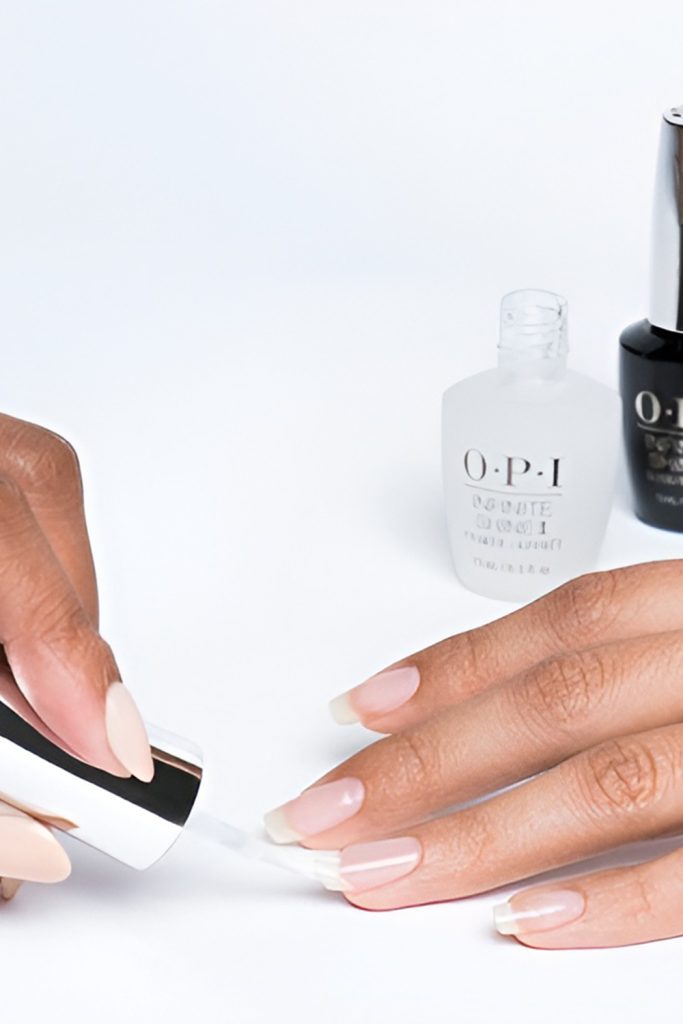
The hand brushing on a base coat shows a clean, dry nail, and that preparation is what decides how long your manicure lasts.
Push back cuticles gently after a warm soak, buff the surface lightly, and wipe each nail with a lint-free pad and a little alcohol. Oils are the number one reason polish lifts.
Skip heavy hand cream until the manicure is done.
Best for: long-lasting results at home.
Maintenance: Moderate. Five minutes of prep saves days of chipping.
Styling tip: Wash your hands with plain soap right before you start.
8. Seal the free edge so it does not chip
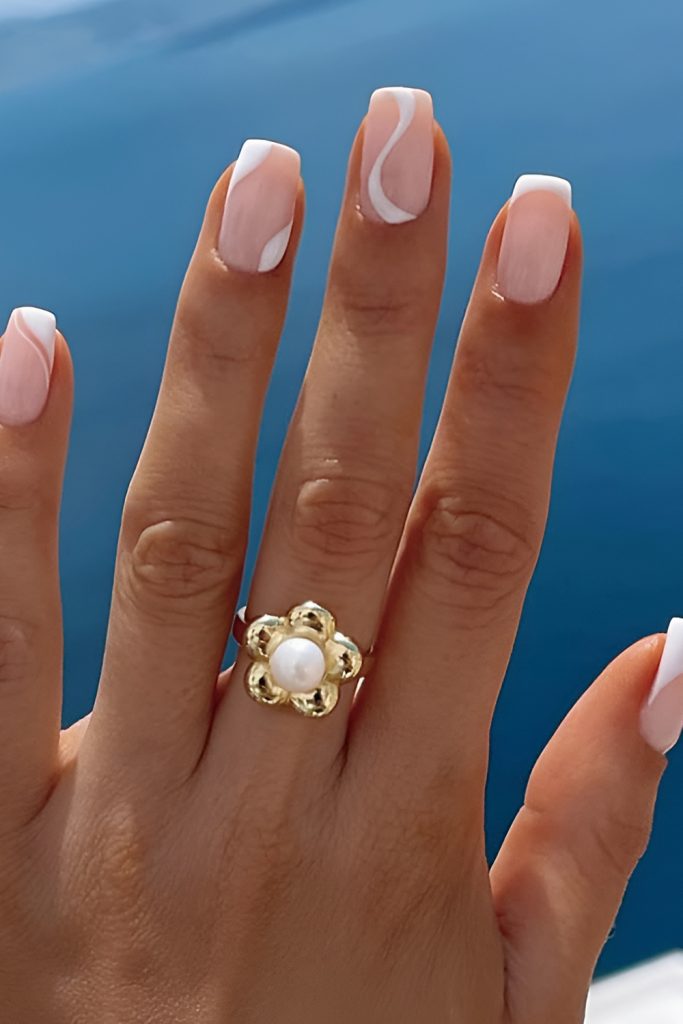
This is the step that separates a manicure that lasts three days from one that lasts two weeks. Run the brush along the very tip of the nail, capping the edge with both base and top coat.
The nails in the photo above have clean, even edges with no visible wear, which is exactly what a sealed tip looks like.
Capping takes about ten seconds per hand, and it is the best insurance you can buy.
Best for: anyone who types, cooks or opens a lot of packages.
Maintenance: Low, but repeat capping every other day with fresh top coat.
Styling tip: Stroke the brush across the tip, not down the nail.
9. Let each layer dry properly
Rushing is the enemy of a French manicure. If the white tip is not dry before you add the top coat, it smears into the pink and you lose the crisp line.
Give the white at least two minutes, and the top coat a good ten before you touch anything. A drop of quick-dry oil helps, but patience works better.
Sit somewhere comfortable and put a show on.
Best for: perfectionists who hate smudges.
Maintenance: Low, once you build a routine.
Styling tip: Set a phone timer so you are not guessing.
10. Touch up smartly instead of starting over
A tiny chip does not mean the whole manicure is done. A small dab of white on the tip, a swipe of sheer pink over it, and a fresh top coat can add several days.
Keep a mini kit: a thin brush, the white you used, the sheer base and a bottle of top coat. It fits in a makeup bag.
Check our fall lip gloss shades if you want a matching soft, glossy mood for your whole look.
Best for: extending wear between appointments.
Maintenance: Moderate. A two-minute fix every few days.
Styling tip: Touch up in bright light so you see exactly where the chip is.
Mistakes that make short French tips look dated
Most disappointing French manicures fail in the same handful of ways, and every one is easy to avoid once you know what to look for.
The first is a thick white line. On a long nail it reads classic, but on a short nail it swallows the whole fingertip. Aim for a stripe thinner than a pencil lead.
The second is an opaque pink base. When the base is heavy, the contrast between pink and white becomes stark and the nail looks painted rather than polished. Sheer bases keep everything soft.
The third is skipping the top coat on the underside of the tip. Water and soap attack that edge first, so a quick pass underneath is worth the extra seconds.
The fourth is cuticle flooding. Polish on the skin lifts within a day and makes the whole manicure look sloppy, so clean any slip with a small angled brush dipped in remover before it dries.
The last is ignoring the weather. Cold, dry fall air weakens nails, so a drop of cuticle oil at night is as important as the polish itself.
The small kit that makes it easy at home
You do not need a full salon table. A short list covers everything: a gentle file, a cuticle pusher, a lint-free wipe, a sheer pink polish, a creamy white polish with a fine brush, a quick-dry top coat and a bottle of cuticle oil.
Spend a little more on the white polish and the top coat, and save on the rest. Those two decide how crisp and how durable the result is.
Store the bottles upright in a cool drawer, and roll them between your palms instead of shaking, which adds bubbles. Old, gloopy polish is the hidden cause of many uneven tips, so replace any bottle that has thickened.
If you would rather not freehand, a pack of tip guides costs a few dollars and works well for beginners, especially on shorter nails where precision is tricky.
Fall twists that keep a short French fresh
Once you have the classic down, a few small changes keep the look interesting through October and November without fighting the shape of short nails.
Try a soft ivory tip instead of white, which echoes cream sweaters and looks gorgeous next to gold jewellery. Or choose a barely-there taupe tip for a muted, grown-up feel.
Another easy option is the reverse French, where the colour sits along the cuticle line instead of the tip. It looks modern, it hides regrowth for longer, and it is surprisingly forgiving on very short nails.
If you love a little sparkle, add a single gold foil flake or a tiny pearl on one ring-finger nail. Keep every other nail plain, so the effect stays elegant.
For Thanksgiving tables and holiday parties, a clear glossy top coat with a hint of shimmer adds warmth under candlelight. You can scroll through our Thanksgiving nail picks for colour ideas to borrow.
Whatever you choose, photograph your nails in daylight once the manicure is done. It is a handy reference for your next appointment and shows exactly how thin you like the tip.
Finally, remember that the best French manicure is the one that fits your life. If you type all day, favour a rounder shape and extra capping. If you love an evening look, go glossier and a touch bolder. Short nails give you a clean canvas either way, and the same few habits keep it looking sharp.
Troubleshooting a French manicure that will not behave
Even with good prep, a short French can go wrong in a few predictable ways, and each one has a quick fix.
If the white line looks streaky, the polish is probably too thin or too old. Add a second thin coat after the first has dried for two minutes, or switch to a bottle with a creamier formula.
If the tip bleeds into the pink, you applied the top coat too soon. Next time wait the full ten minutes, and use a fast, light touch so the brush does not drag the white polish.
If you get bubbles, you probably shook the bottle or painted too thickly. Roll the bottle between your palms and keep every coat paper-thin.
If the polish peels off in one piece after three or four days, oils were trapped underneath. Re-prep with alcohol next time, and avoid hand cream until the manicure is fully set.
If the white starts to look yellow, the culprit is usually a cheap top coat or too much time in sunlight and dark teas. Switch to a non-yellowing top coat and rinse your hands after coffee.
A simple weekly routine to keep the finish crisp
A good French manicure takes about forty minutes to do, but it only lasts if you look after it for ten seconds a day.
Every night, rub a drop of cuticle oil into the skin around each nail. Healthy cuticles frame the tip line and stop the skin from lifting the polish.
Wear gloves for dishes, and avoid using your nails as tools for opening cans or peeling stickers. Short nails are strong, but a chipped tip is hard to hide.
Every third day, add a thin layer of top coat to refresh the shine and re-seal the free edge. It takes two minutes and adds days of wear.
Once a week, check the cuticle area. If growth is visible, a quick tidy with a cuticle pusher keeps the manicure looking recent.
When you are ready to remove it, soak a cotton pad in remover, press it on each nail for ten seconds and wipe gently. Scraping damages the nail plate and makes the next manicure harder.
Short French manicure tricks at a glance
| Trick | Time | Difficulty | Why it helps |
|---|---|---|---|
| Sheer base | 5 min | Easy | Hides small mistakes |
| Thin tip line | 10 min | Medium | Makes short nails look longer |
| Edge capping | 2 min | Easy | Prevents chipping |
| Creamy white | 1 min | Easy | Looks softer on short nails |
| Touch-up kit | 2 min | Easy | Extends wear |
What to say at the nail salon
Salons often default to thick, bright white tips unless you say otherwise. A short, clear script keeps you in control.
Bring a photo, and say something like this:
I would like a short French manicure with a sheer pink base and a very thin, creamy white tip. Please keep the free edge sealed, and finish with a glossy top coat. No bright white, please.
What to expect over two weeks
A well-done French manicure changes a little each week. Here is a realistic timeline so you know what is normal.
- Day 1 to 3: nails look glossy, crisp and flawless, with a perfectly clean edge.
- Day 4 to 7: a slight dulling of the shine, so add a fresh top coat to bring it back.
- Day 8 to 10: the tip line may thin at the very edge, which is the moment for a tiny touch-up.
- Day 11 to 14: growth shows near the cuticle, so plan a refresh or a soak-off.
FAQ
Can I do a French manicure on very short nails?
Yes. Use a thin tip line, a sheer base and a slightly rounded shape. A micro French along the cuticle is also an option.
How long does a short French manicure last?
Done with proper prep, capping and a good top coat, it can last up to two weeks.
What colour should the base be?
A sheer pink, peach or milky beige that matches your skin tone. Avoid opaque shades.
Is a French manicure still in style for fall?
Yes. Micro French tips and refined neutral shades both appear in roundups like this fall nail trend report.
The takeaway
A great short French manicure is mostly restraint: a sheer base, a slim tip, a sealed edge, and a little patience.
Save the tricks that fit your habits, try one new thing this week, and enjoy how polished your hands look. If you want more nail inspiration, our Christmas nail designs are a fun next stop.
Related Post