
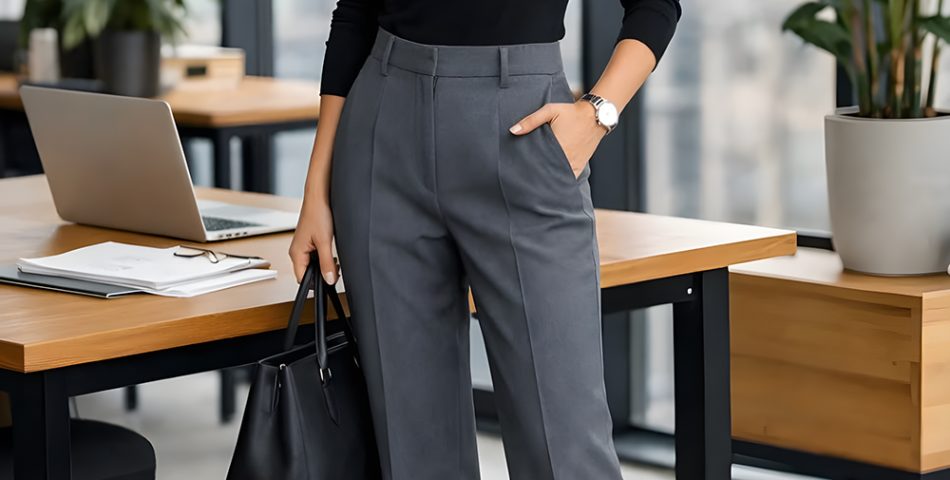
Please note that we do not create all the designs featured in this article. Our primary focus is to curate and collect a diverse range of design collections and products to inspire and share with our audience. While we do not claim ownership or take full credit for the original designs and images, we occasionally make minor adjustments, particularly in home decor and fashion items, to present them more effectively. Additionally, we may produce and edit images to enhance their quality and composition before sharing them on our Pinterest page or website. For the design work we do on these creative designs, we also include our logo on the images shared on Pinterest and our website. This helps our audience recognize that these designs have been published on insiderlyfe.com!
Nobody tells you how confusing business casual is until your first week at a new job. Is a knit okay? Are jeans a risk? The honest answer is that you can look sharp without ever buying a suit.
Each outfit below is built from pieces that you can wear to a meeting and still wear to dinner. The formula is simple: one structured item, one soft item and a colour palette that behaves.
Autumn is the perfect time to refresh your office wardrobe. Guides such as this fall capsule wardrobe echo the same approach: fewer pieces, better fit, calmer colours.
Watch for number 2, the colour pop that still looks professional, and number 8, the one-colour outfit that looks like a custom suit but isn’t.
If you want a longer list, our elegant fall office outfits adds plenty more, and our trousers outfit ideas helps with the bottom half.
1. A white blouse with khaki trousers and a belt
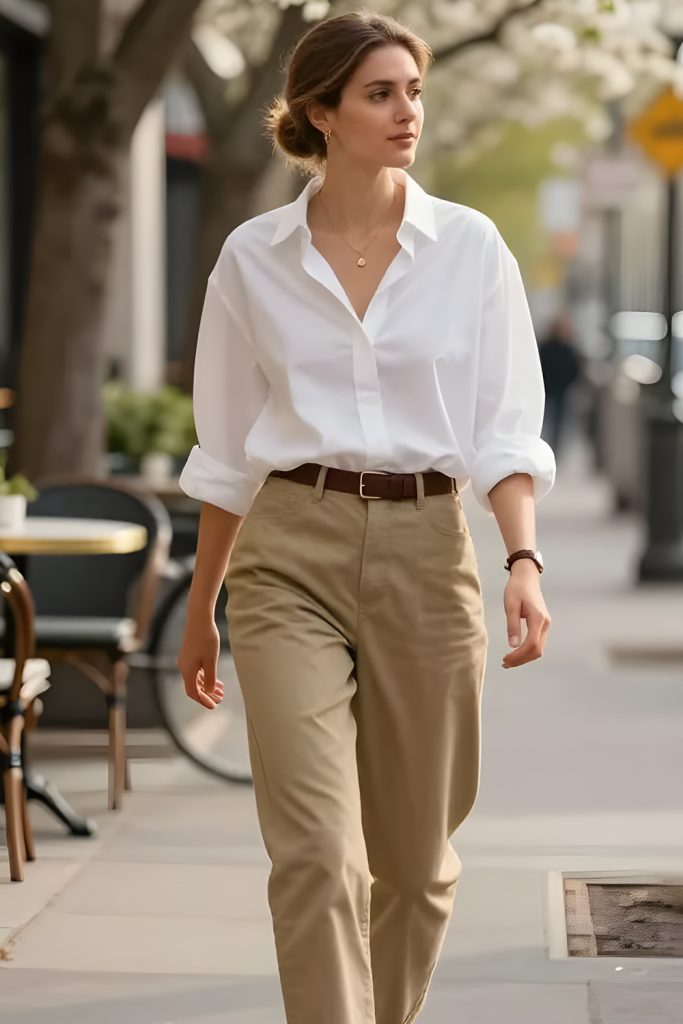
Begin with the most reliable outfit in business casual: a white blouse, khaki trousers and a slim belt. It is polite, it is calm and it works almost everywhere.
The belt matters. It turns two basic pieces into a considered outfit.
If your office is more relaxed, roll up the sleeves and add loafers.
Best for: first days and conservative workplaces.
Why it works: Classic colours never feel out of place.
Styling tip: Choose a blouse in a fabric that does not crease easily.
2. A red knit sweater with cream trousers
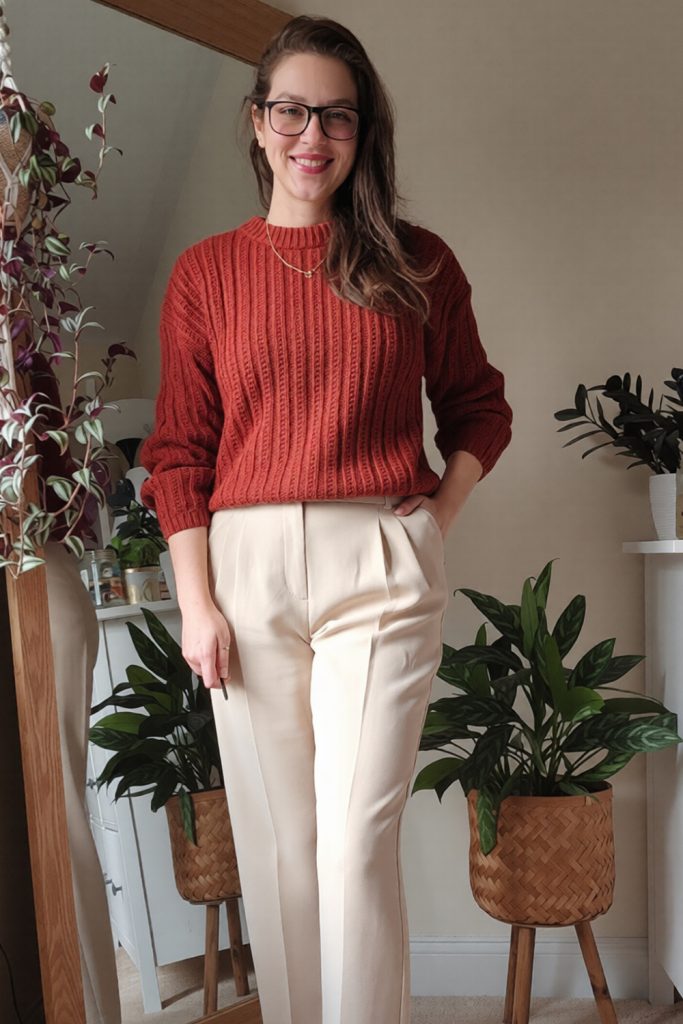
Here is the colour pop I promised. A warm red knit with cream trousers is friendly and confident, but the soft fabric keeps it professional.
Cream trousers make the red look softer, and glasses add a smart, bookish touch.
Keep jewellery minimal, since the sweater is already the focus.
Best for: team meetings and presentations.
Why it works: A single bold colour plus neutrals looks intentional.
Styling tip: If red feels too loud, try burgundy or rust.
3. A black polo with grey trousers
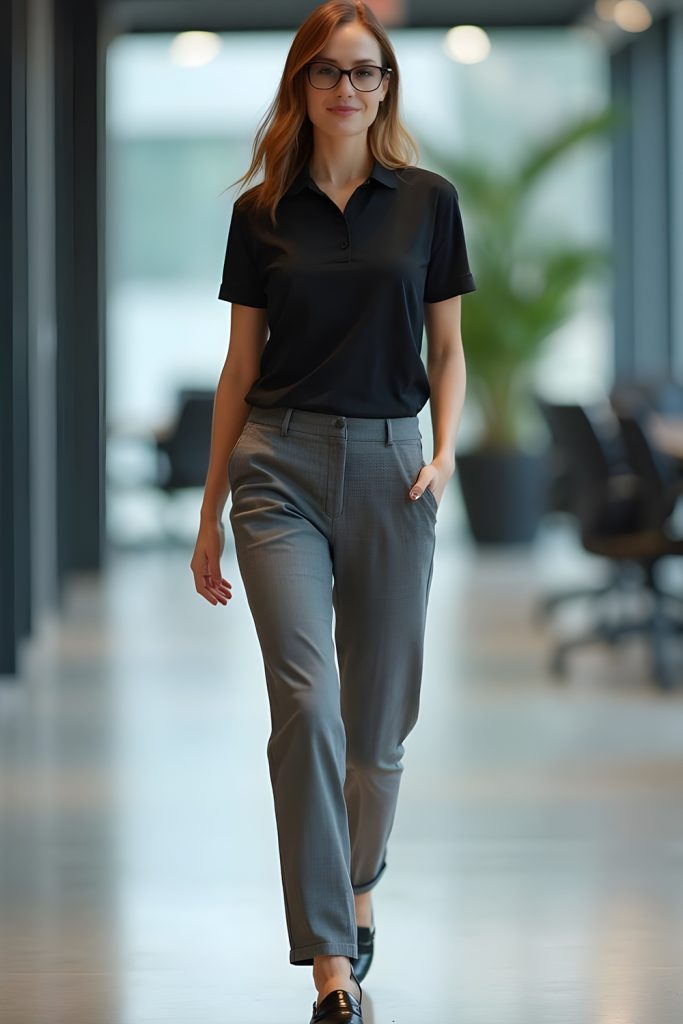
Some days you want to blend in and focus on the work. A fitted black polo with grey trousers is calm and tidy, and it works with glasses on the commute.
Choose a thick cotton tee with a clean neckline. A thin one can look casual.
Add a blazer or cardigan if the office is chilly.
Best for: quiet days and desk work.
Why it works: Dark top, mid-grey trousers: a flattering contrast.
Styling tip: Tuck the tee and add a belt for a smarter finish.
4. A black blazer with navy wide-leg jeans
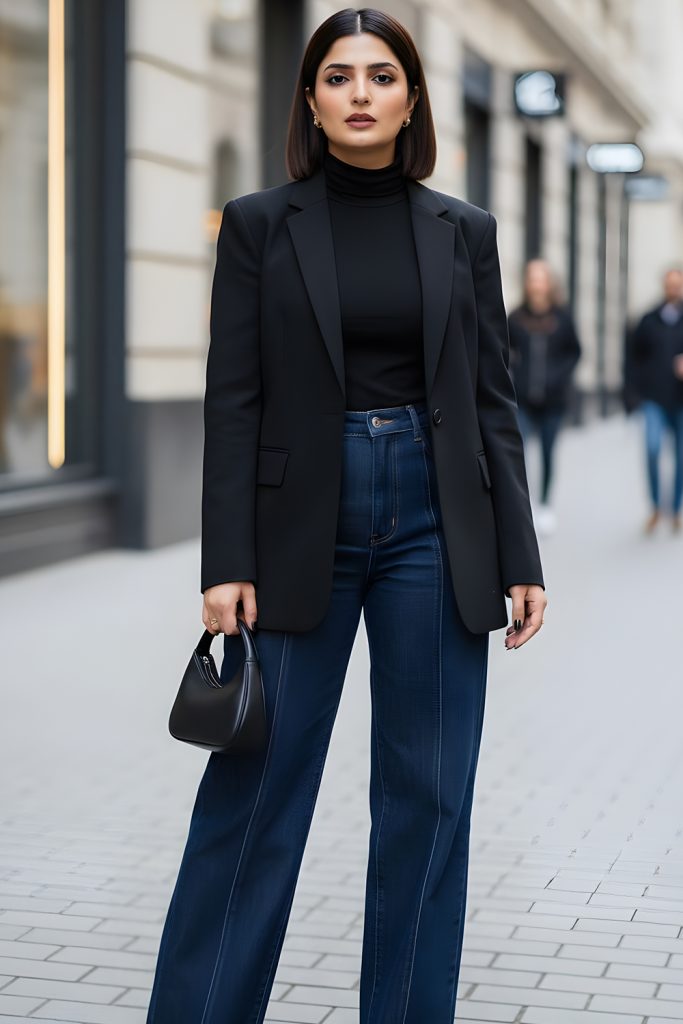
Black and navy together can look dull, but not here. A black blazer over dark wide-leg jeans looks deliberate when the fabrics have texture.
Wide legs add movement, and the blazer keeps the look in order.
A structured shoulder bag completes the outfit.
Best for: client meetings.
Why it works: Similar dark tones create a long, clean line.
Styling tip: Check both pieces in daylight to make sure the blacks and navies agree.
5. A black turtleneck with grey trousers
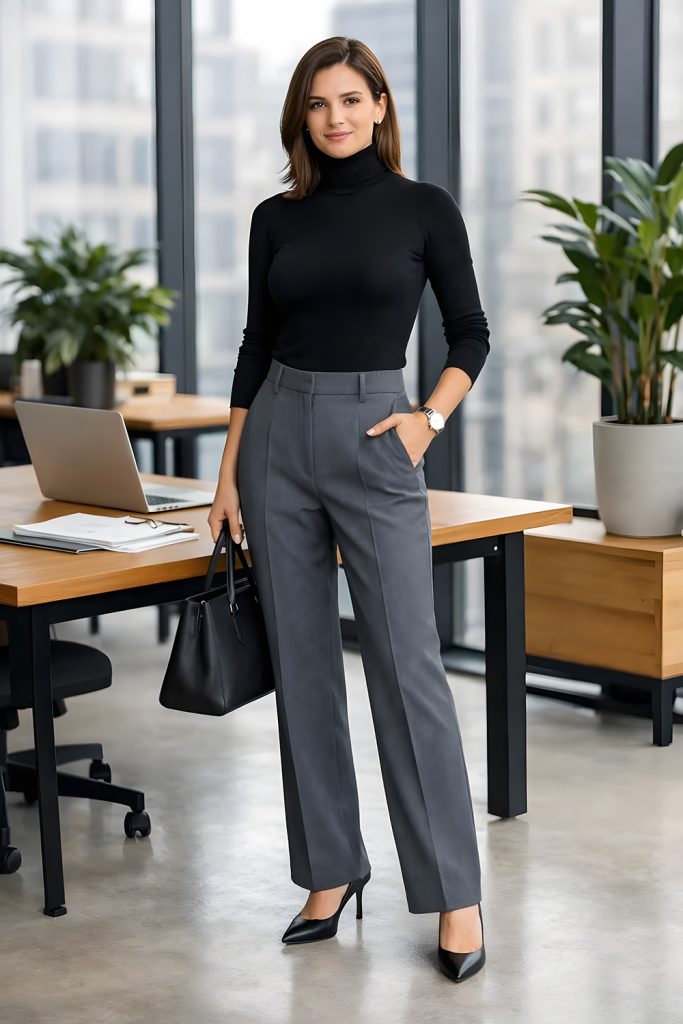
A black turtleneck is the secret weapon of business casual. Worn with grey trousers and heels, it is elegant and warm, with no need for a necklace.
Pick a fine-gauge knit that sits close to the body.
It works well on camera too, because the neckline is clean.
Best for: video calls and desk-heavy days.
Why it works: A high neckline looks polished with zero effort.
Styling tip: Wear a thin layer beneath if the knit feels itchy.
6. A brown jacket with white trousers
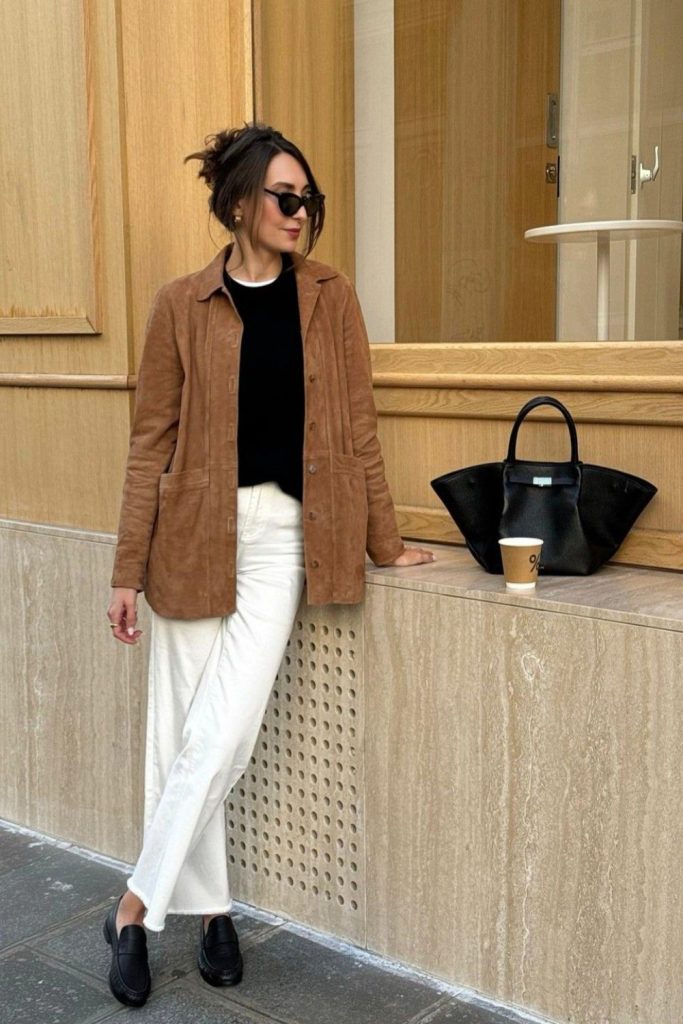
Brown and white is a classic autumn combination. A brown suede jacket over a black top, with white trousers, looks fresh and expensive.
Black underneath makes the outfit more grounded.
White trousers need a lining or a good thick fabric, so check them under bright light.
Best for: lunches and daytime events.
Why it works: Warm neutrals look rich.
Styling tip: Carry a stain pen, just in case.
7. A black jacket, white top and grey trousers
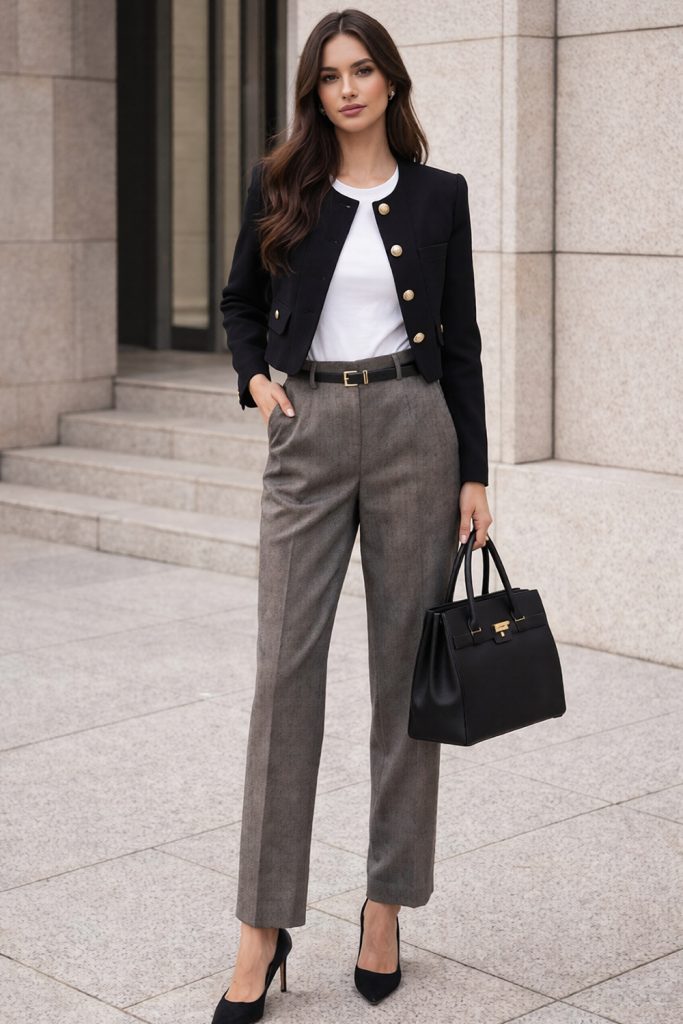
This is an everyday formula for those who want an outfit that never fails. A black jacket, a white top and grey trousers form a tidy triangle of colour.
A black structured bag and simple heels finish it.
It transitions easily from office to after-work drinks.
Best for: a classic work week.
Why it works: Three neutrals create a calm, balanced look.
Styling tip: Add a pendant or small earrings for a personal detail.
8. A one-colour tailored beige set
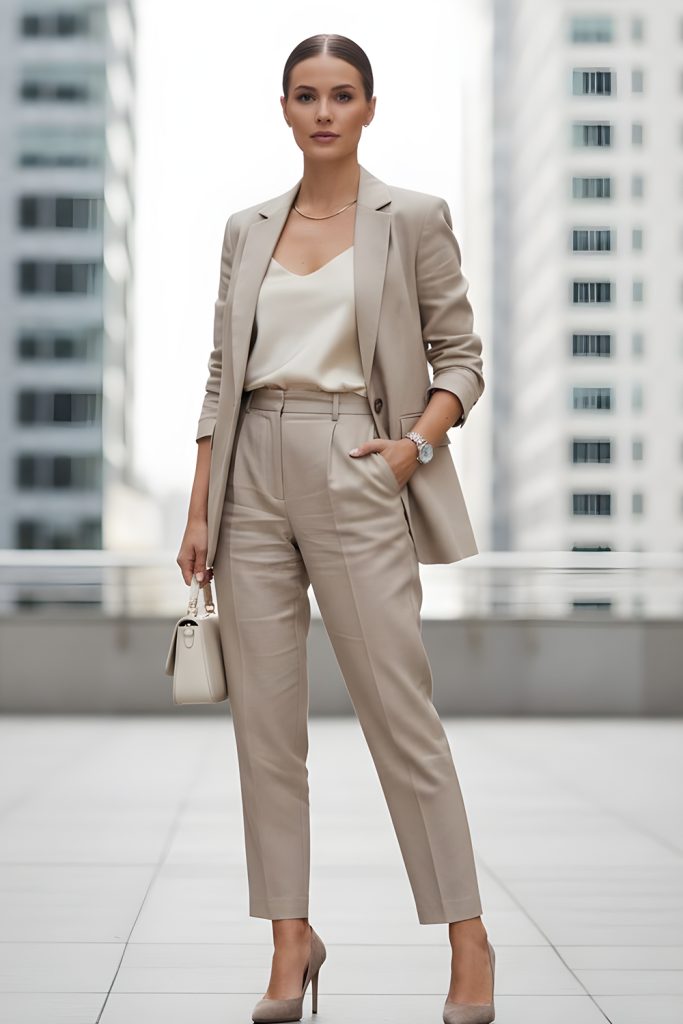
This is the outfit that looks like a custom suit. A beige blazer with matching trousers creates an elongated line and a polished look.
You do not need it to be a matching suit. Pieces that are close in tone will work just as well.
Wear a white tee or a silk camisole underneath.
Best for: important days, interviews and presentations.
Why it works: One tone looks sleek and expensive.
Styling tip: Choose slightly different textures, such as linen and crepe, to avoid looking flat.
9. A light blue co-ord set
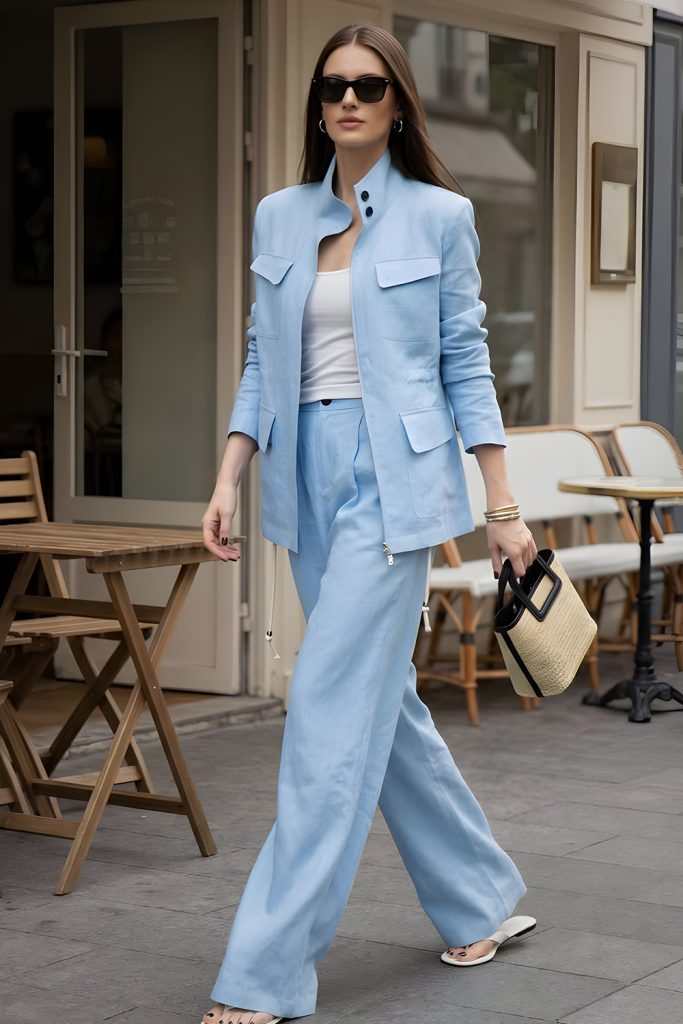
Finally, an outfit for people who think business casual is boring. A light blue jacket and wide-leg trousers form a co-ord that is fresh yet professional.
The soft colour is calming and good for summer-to-fall transitions.
Pair it with white trainers or loafers and sunglasses.
Best for: creative offices and warm days.
Why it works: A matched set keeps the colour interesting but easy.
Styling tip: Wear the pieces separately to double your outfits.
10. The bonus rule: dress one notch above the room
Here is the unofficial rule that works in most offices: dress one notch above your colleagues. It signals care without trying too hard.
If your team wears jeans, wear dark jeans with a blazer. If they wear blazers, add a silk blouse.
Observe for a week, then adjust.
Best for: new jobs and new teams.
Why it works: It shows effort without crossing the line.
Styling tip: Keep a spare blazer at your desk for unexpected meetings.
What business casual actually means
Business casual sits between a formal suit and weekend wear. It usually means tailored trousers or skirts, collared shirts or fine knits, closed-toe shoes and a neat finish.
Dress codes vary hugely by industry. A law firm, a design studio and a hospital all define the phrase differently, so look at senior colleagues and observe what they wear.
If the policy is vague, ask HR for a quick guide. Most are happy to explain, and it saves you a stressful morning.
A good test is to picture meeting an important client in the outfit. If you would feel comfortable, you are probably fine.
Fit rules that make cheap pieces look expensive
Fit is the cheapest upgrade you can make. Shoulders should sit at the edge of your own shoulder, and blazer sleeves should end at the wrist bone.
Trousers should hang cleanly from the hip without pulling across the thighs. The hem should graze the top of your shoes.
Shirts and knits should skim your body, with no pulling across the bust or gaping between buttons.
A tailor can fix most issues for a modest fee, and it is worth doing for the pieces you wear weekly.
Colours that look professional and still feel like you
Neutral shades such as grey, beige, navy, white and black form the base of every office wardrobe, and they mix without effort.
Add personality with one coloured piece per outfit, like a red sweater or a light blue co-ord. This keeps the look professional while showing your taste.
Choose colours that suit your complexion. Warm skin tones glow in rust, camel and olive, and cool tones often prefer navy, grey and soft blue.
Try a colour near your face first, with a scarf or top, before you invest in trousers or a blazer.
Shoes, bags and finishing touches
Shoes can lift a basic outfit instantly. Loafers, pointed flats, block heels and leather ankle boots are all safe choices.
A structured bag in black, tan or navy looks professional and holds a laptop. Check that the straps are in good condition.
Keep jewellery simple, with small earrings, a slim watch and a delicate necklace. Remove anything that jangles during meetings.
Finally, keep your clothes pressed and your shoes clean. A crisp finish matters more than the price of the item.
Building a five-piece business casual base
If you are starting from scratch, five pieces carry most of the outfits above: a well-cut blazer, a pair of straight or wide-leg trousers in grey or navy, a fine knit in a neutral colour, a crisp white shirt and one pair of comfortable leather shoes.
Add a second pair of trousers in beige or cream and a fitted black top, and you can create more than a dozen combinations without effort.
Our fall capsule wardrobe for work lays out a longer version of this list, with outfits built from a handful of neutral pieces.
Whenever you add something, check that it works with at least three items you already own. This keeps you from buying one-off pieces that stay on the hanger.
Invest the most in the blazer and the shoes, since you will wear them most and they signal quality at a glance.
Dealing with weather, commuting and long days
A day at the office often involves more than sitting at a desk. You may commute on foot, step into an air-conditioned meeting room and then head out for dinner.
Plan for temperature swings by choosing breathable fabrics and keeping a light cardigan or jacket at work. A scarf is a good emergency layer.
If you walk to work, bring a comfortable pair of shoes in your tote and change at the office. It saves your good shoes and your feet.
Keep a tiny kit in your drawer: a lint roller, a stain pen, spare tights, mints and a pair of earrings. It is the cheapest insurance against bad moments.
Finally, give yourself ten minutes at the weekend to lay out and press your outfits for the week. It makes mornings calmer and shows in how you carry yourself.
Five easy formulas to remember on busy mornings
When you are short on time, formulas beat inspiration. Memorise a few and you can dress in minutes without second-guessing.
Formula one: neutral blouse plus tailored trousers plus loafers. It never fails, and it works in every season.
Formula two: fine knit plus straight trousers plus a structured bag. Add a belt if you want more definition, and swap the knit for a fitted tee in warmer weather.
Formula three: blazer plus tee plus dark trousers. This is the formula for meetings you did not plan for, because you can add or remove the blazer to fit the room.
Formula four: matching set plus plain top. It looks styled even when you rush, and you can wear the pieces apart on other days.
Formula five: one colour from head to toe, in a neutral tone, broken up by a bag or shoes in a different texture. It reads as expensive and it takes no thought.
Write your favourites on a note on your phone, with photos if possible. On a hectic morning, you can scroll, pick and go. Over time, you will notice which formulas feel most like you, and you can build your wardrobe around them.
Finally, remember that confidence is part of the outfit. Stand tall, check your fit in a mirror, and wear the look as if you chose it on purpose, because you did.
Dressing for video calls without feeling overdressed
Half of modern business casual happens above the waist and on a screen. Cameras flatten fabrics and exaggerate patterns, so choose with that in mind.
Solid colours and soft textures read best on camera. The red knit, the black turtleneck and the white blouse in this guide all look good on a call because the neckline is clean and the colour is steady.
Avoid very fine stripes, tiny checks and shiny fabrics, which can flicker or glare. Mid-tones usually look better than pure white or pure black under a ring light.
Keep jewellery quiet. Small earrings and a short necklace look refined, while large hoops can catch the microphone.
Even on a call day, put on the trousers. It changes how you sit, how you speak and how ready you feel when someone asks you a question on the spot.
A first-week outfit plan for a new job
Your first week sets the tone, and a simple plan removes the stress. Choose five outfits you already like, and make sure each one fits properly.
Day one: a white blouse, khaki trousers and loafers. It is polite, friendly and almost impossible to get wrong. Day two: a fine knit, grey trousers and a structured bag.
Day three: a blazer, a plain tee and dark trousers, ready for any meeting that appears. Day four: your favourite co-ord or dress with a cardigan. Day five: the most relaxed version, such as dark jeans with a blazer, once you have seen how casual Fridays really are.
Observe the room as you go. Note what senior colleagues wear, which shoes people choose and how formal client days look. By week two you will know exactly where to dial up or down.
Pack a small desk kit: spare tights, a lint roller, mints, a stain pen and a pair of comfortable flats. It turns a bad moment into a non-event.
Finally, dress for the job you want, but be yourself. A single personal detail, such as a bright scarf or a favourite earring, makes you memorable without breaking any rules.
Business casual outfits at a glance
| Outfit | Formality | Colour mood | Best occasion |
|---|---|---|---|
| White blouse and khaki | Medium | Neutral | First day |
| Red knit and cream | Medium | Warm | Team meeting |
| Black blazer and navy | High | Dark | Client meeting |
| Beige set | High | Soft neutral | Interview |
| Light blue co-ord | Medium | Light | Creative office |
What to say when asking about the dress code
Not sure what your office expects? A polite, specific question gets better answers than a vague one.
Could you tell me what is typical for the dress code here? I would like to know if trousers and knits are fine for everyday, and what you recommend for client days or presentations.
What to expect when you change your office wardrobe
A wardrobe update does not have to be all at once. Expect a gradual change.
- Week 1: you wear your best existing pieces and note what feels right.
- Week 2: you identify one or two gaps, such as a blazer or comfortable shoes.
- Week 3: you add a piece or two and start mixing outfits.
- Week 4: your mornings feel faster and you stop worrying about what to wear.
FAQ
Can I wear jeans in a business casual office?
In many offices, yes, as long as they are dark, well fitted and free of rips. Pair them with a blazer or a polished top.
Do I need to wear heels?
No. Loafers, flats and neat boots are all appropriate.
What colours are best for business casual?
Grey, beige, navy, black and white are the safest. Add one colour pop for personality.
Is a knit sweater okay for business casual?
Yes. Choose a fine-gauge knit in a plain colour, and make sure it fits well.
The takeaway
Business casual does not need a suit. It needs a few well-fitting pieces, a calm palette and a bit of attention to detail.
Choose an outfit from this list for Monday, borrow one idea for Tuesday and keep building. Soon your work wardrobe will feel like yours.
Related Post