
Please note that we do not create all the designs featured in this article. Our primary focus is to curate and collect a diverse range of design collections and products to inspire and share with our audience. While we do not claim ownership or take full credit for the original designs and images, we occasionally make minor adjustments, particularly in home decor and fashion items, to present them more effectively. Additionally, we may produce and edit images to enhance their quality and composition before sharing them on our Pinterest page or website. For the design work we do on these creative designs, we also include our logo on the images shared on Pinterest and our website. This helps our audience recognize that these designs have been published on insiderlyfe.com!
Why do some people look effortlessly put together in a cold October morning while the rest of us look like we are wearing every sweater we own? It is not the number of layers. It is the order and the thickness.
The nine outfits below all follow one quiet rule: thin layers close to the body, a structured piece in the middle and an easy outer layer on top. Do that and you can peel off a layer when the afternoon warms up without wrecking the outfit.
Fall style roundups, including Bustle’s fall 2026 fashion trends, mention librarian-inspired layering and a return to structured tailoring, which are exactly the building blocks of good layering.
I put the most useful outfits first. Do not miss number 4, which proves a single colour can carry a whole outfit, and number 8, the best formula for chilly office mornings.
Not sure where to begin? Browse our fall date night outfits for more cozy ideas as you read.
1. A white cardigan with a soft blue scarf
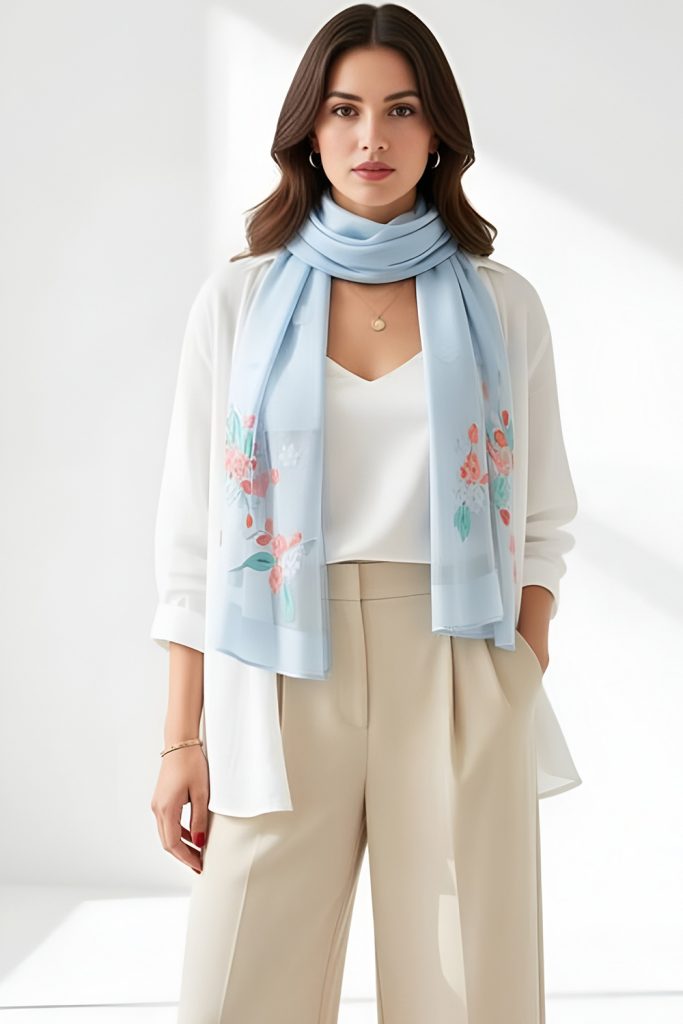
Start with the gentlest layer. A fine white cardigan worn open over a light top, plus a pale blue scarf at the neck, adds warmth without a single heavy piece.
Beige trousers keep everything light and neutral, and the scarf brings in a colour that makes your face look fresher.
It is perfect for a day that starts at 8 degrees and ends at 18.
Best for: mild fall days and indoor-outdoor errands.
Why it works: Fine knits trap heat without adding bulk.
Styling tip: Loop the scarf once and let the ends hang loosely.
2. A black jacket over a tan midi skirt
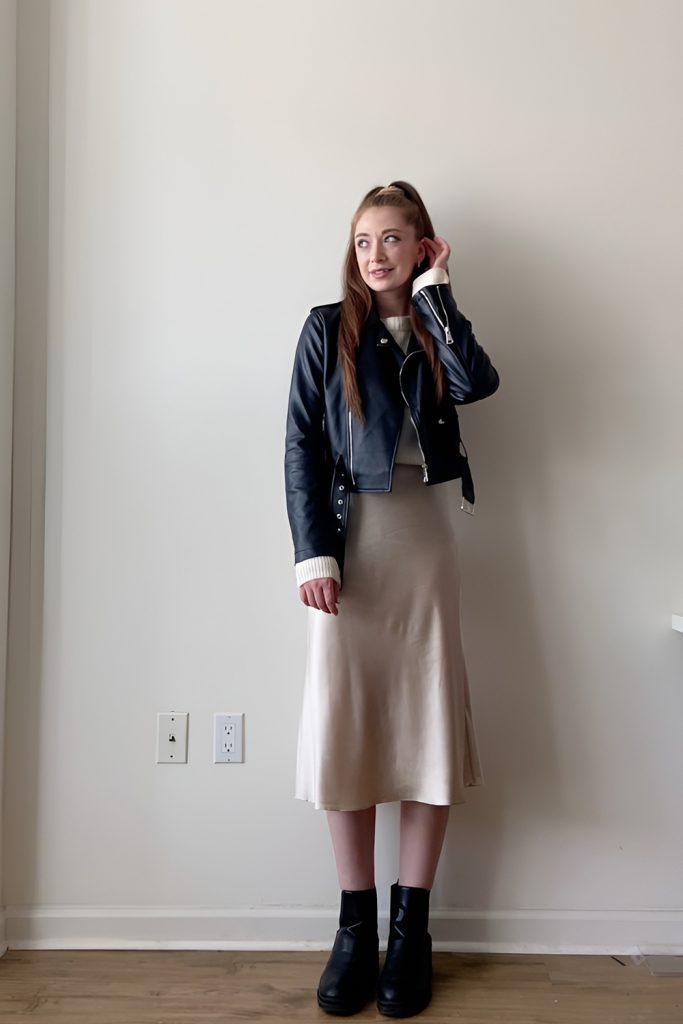
Here is how to make a skirt work in fall. A short black jacket over a white top, with a tan midi skirt and black boots, has structure on top and movement below.
The jacket stops at the waist, so it defines your shape instead of hiding it.
Add opaque tights or thermal socks inside your boots for chillier days.
Best for: skirt lovers who refuse to give up skirts in autumn.
Why it works: Short jacket plus long skirt keeps the proportions balanced.
Styling tip: Pick tights in the same shade as your boots.
3. A navy sweater with a cognac tote
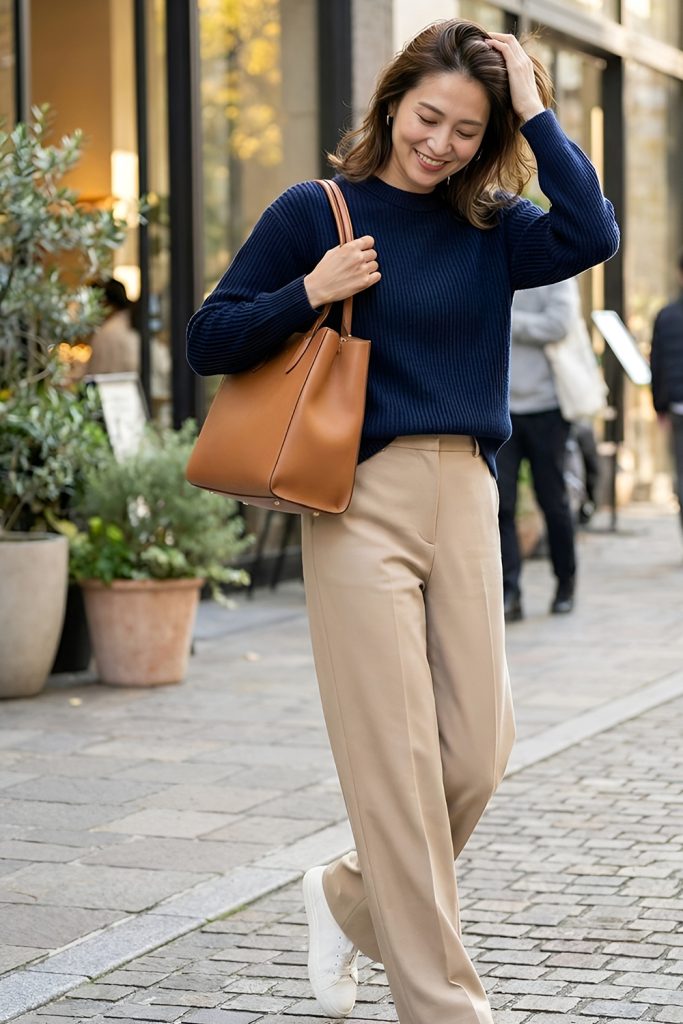
This outfit is deceptively simple: a navy sweater, beige trousers and a cognac tote bag. The bag is the accent that makes it look styled.
Navy is one of the most underrated autumn colours, and it feels warmer than black.
Roll the sweater cuffs once for a relaxed shape.
Best for: low-effort weekday outfits.
Why it works: Dark top and light bottom are easy to balance.
Styling tip: Choose a bag in an earthy colour like rust, tan or olive.
4. An orange knit with wide-leg beige trousers
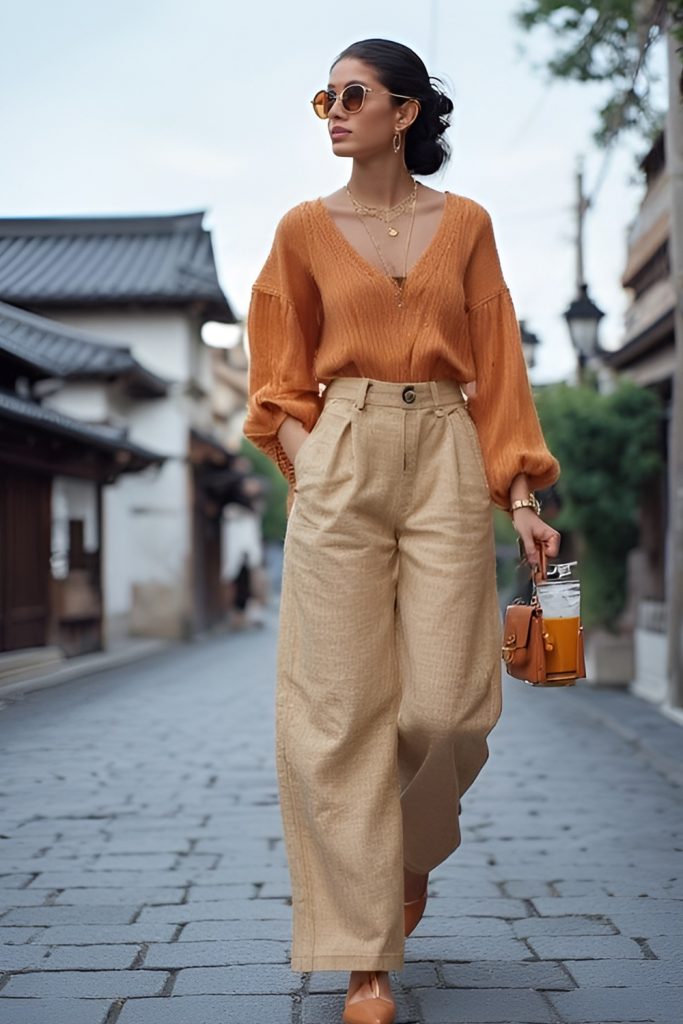
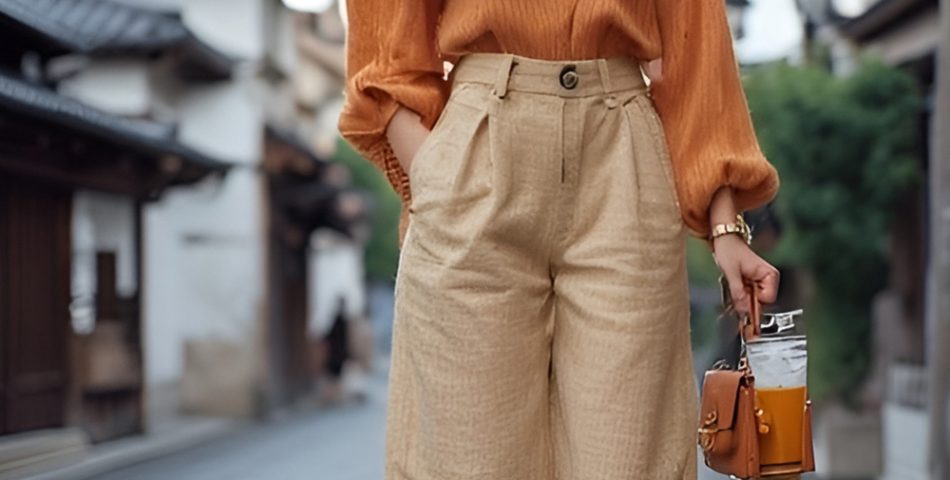
This is the single-colour story I promised. An orange knit with beige wide-leg trousers uses just two shades, but the warmth of the orange makes the outfit pop.
Because the trousers are neutral, you can stack a coat or scarf over the top without clashing.
Sunglasses add a cool finishing touch on bright fall days.
Best for: anyone who wants colour without fuss.
Why it works: A single bold item plus neutrals looks confident, not loud.
Styling tip: If orange feels too bold, try terracotta or rust.
5. A tan jacket over cream with white trousers
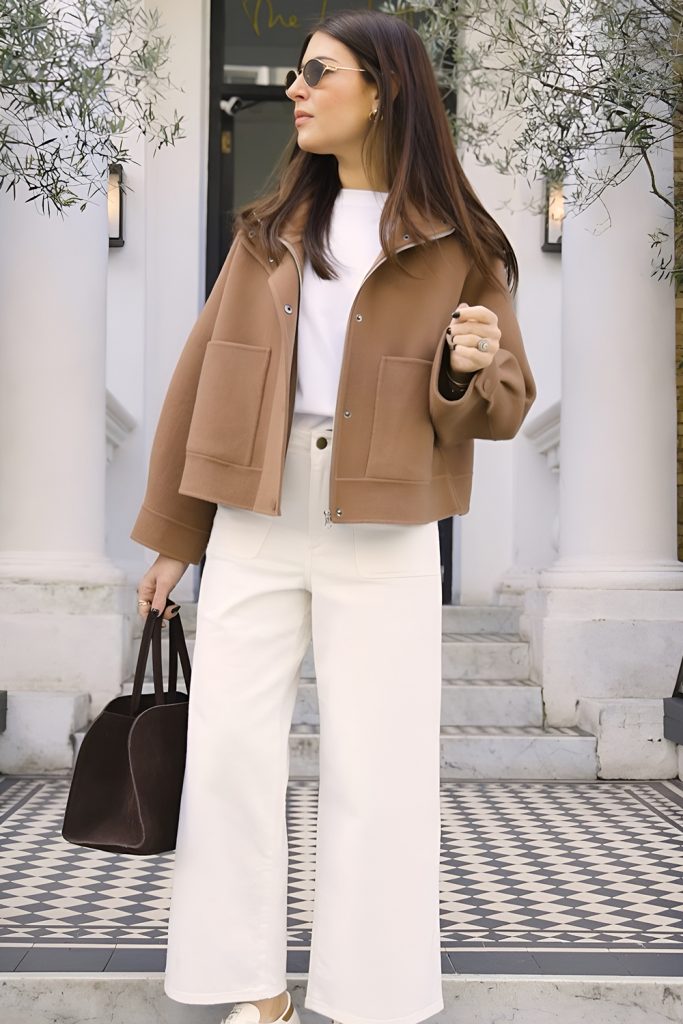
Tonal dressing is a layering secret. A tan jacket, a cream top and white wide-leg trousers sit in the same colour family, so even three layers look sleek.
The roomy trousers allow thermal leggings underneath if you need them.
Finish with a large tote, which is handy for carrying a scarf you may want later.
Best for: light, bright outfits for crisp autumn days.
Why it works: Matching tones make layers look like one piece.
Styling tip: Swap in a darker bag to ground the outfit.
6. A cream turtleneck with a plaid midi skirt
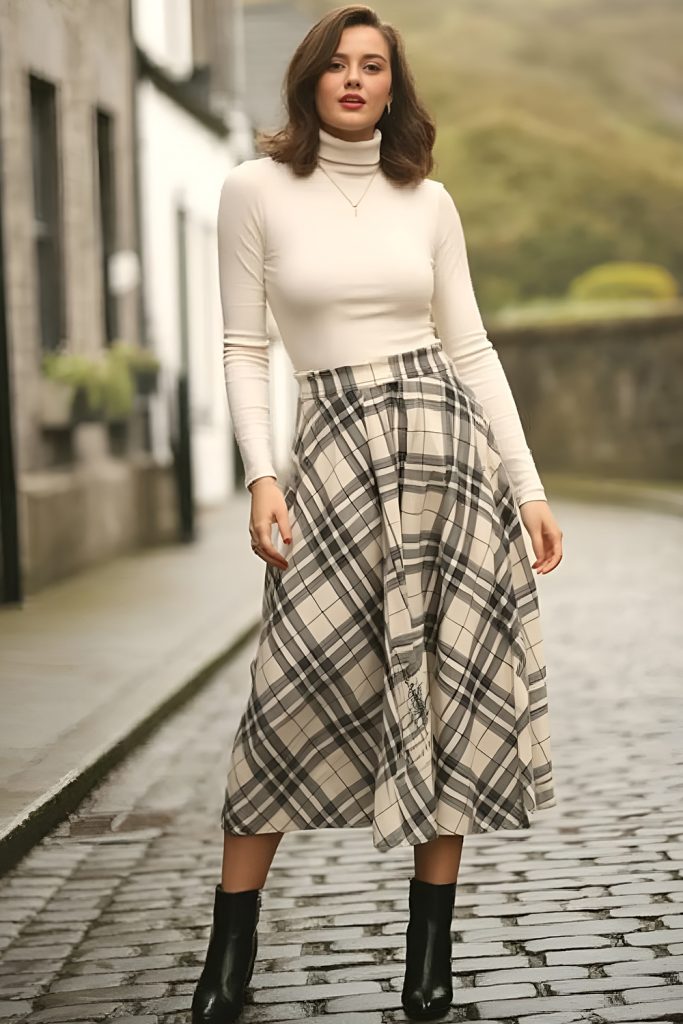
Pattern is welcome in fall, as long as it stays in a muted palette. A plaid midi skirt with a cream turtleneck and black boots is classic and cosy.
The turtleneck doubles as a base layer under a blazer or coat, so it earns its place in your closet.
Keep the top plain when the skirt has a pattern.
Best for: cold-weather days when you still want to dress up.
Why it works: Neutral top, patterned bottom: simple and polished.
Styling tip: Choose a skirt that falls below the knee so your boots meet it neatly.
7. A rust cardigan over cream
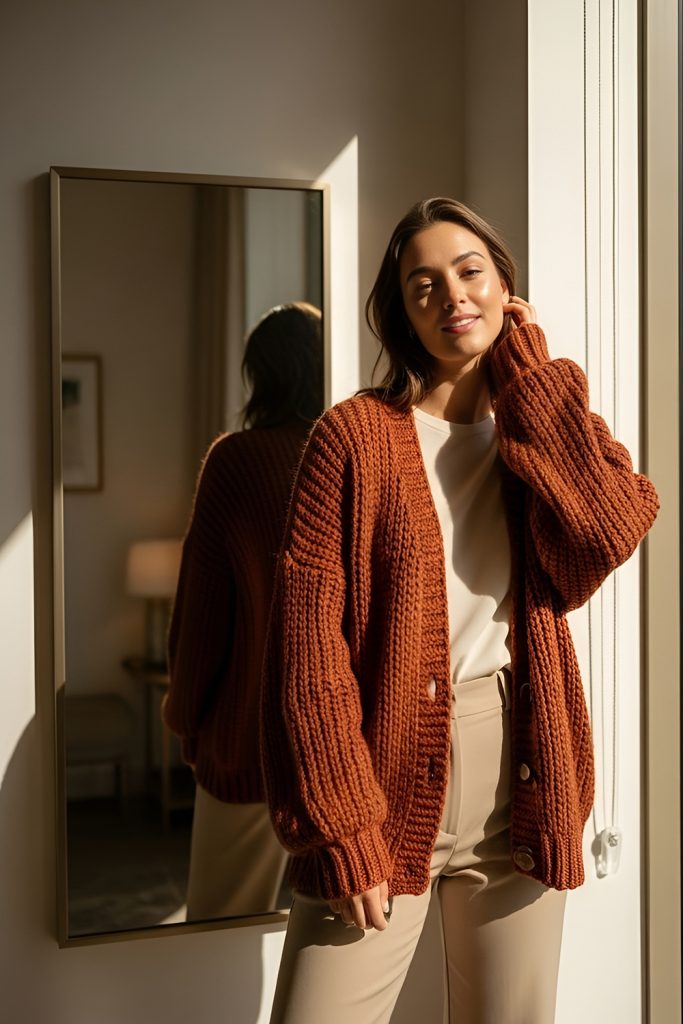
Rust is a hallmark colour of the season. A rust cardigan over a cream top with beige trousers looks warm and grown up.
The cream below the cardigan softens the colour, so it feels more natural than a head-to-toe autumn shade.
Wear it open or buttoned depending on the temperature.
Best for: office days and weekend brunches.
Why it works: Warm colour plus neutral base looks rich.
Styling tip: Button only the middle two buttons for a relaxed fit.
8. A tailored blazer with a blue top and white trousers
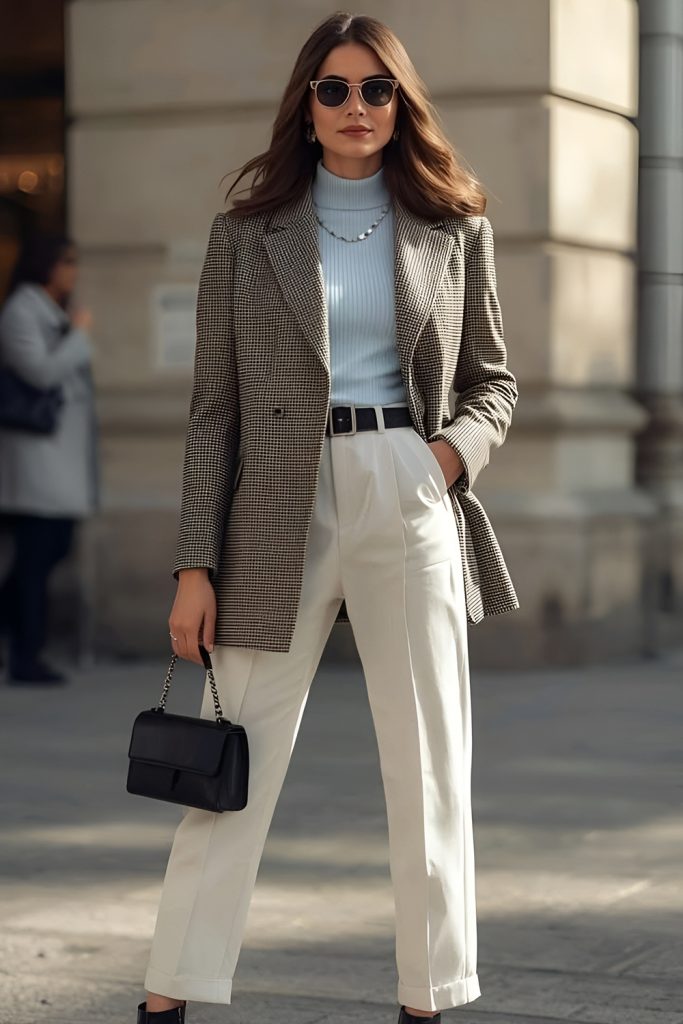
Here is the best formula for chilly office mornings: a grey-brown tailored blazer over a blue top with white trousers.
The blazer works as a mid-layer, and you can slip a coat on top for the commute and take it off at your desk.
White in autumn looks fresh, as long as the fabric is thick enough to be opaque.
Best for: work mornings and meetings.
Why it works: A blazer adds structure and warmth at once.
Styling tip: Choose a blazer one size up so it fits comfortably over knits.
9. A shirt dress under a long camel coat
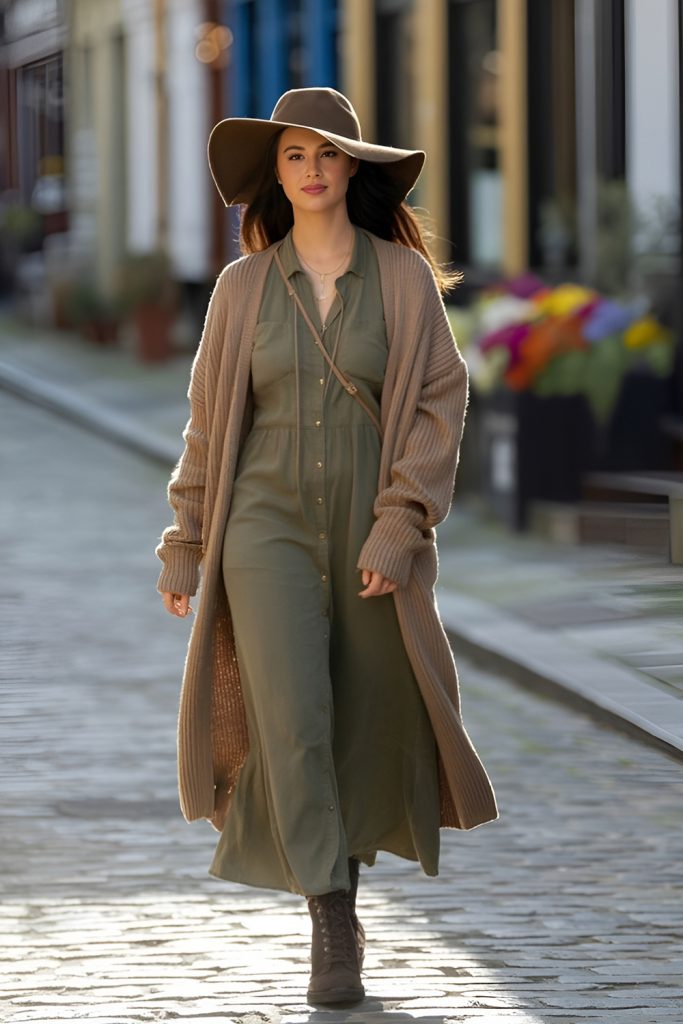
Finish with the cinematic option. An olive shirt dress worn under a long camel coat and a wide-brim hat looks dramatic, yet it is only two main layers.
It is practical too, since the shirt dress provides full coverage and the coat does the warming.
Keep the coat belted or open, depending on how windy it is.
Best for: street style, travel and weekend wandering.
Why it works: Long lines elongate your silhouette.
Styling tip: Pick a coat that is at least as long as your shirt dress.
10. The bonus rule: three layers, three thicknesses
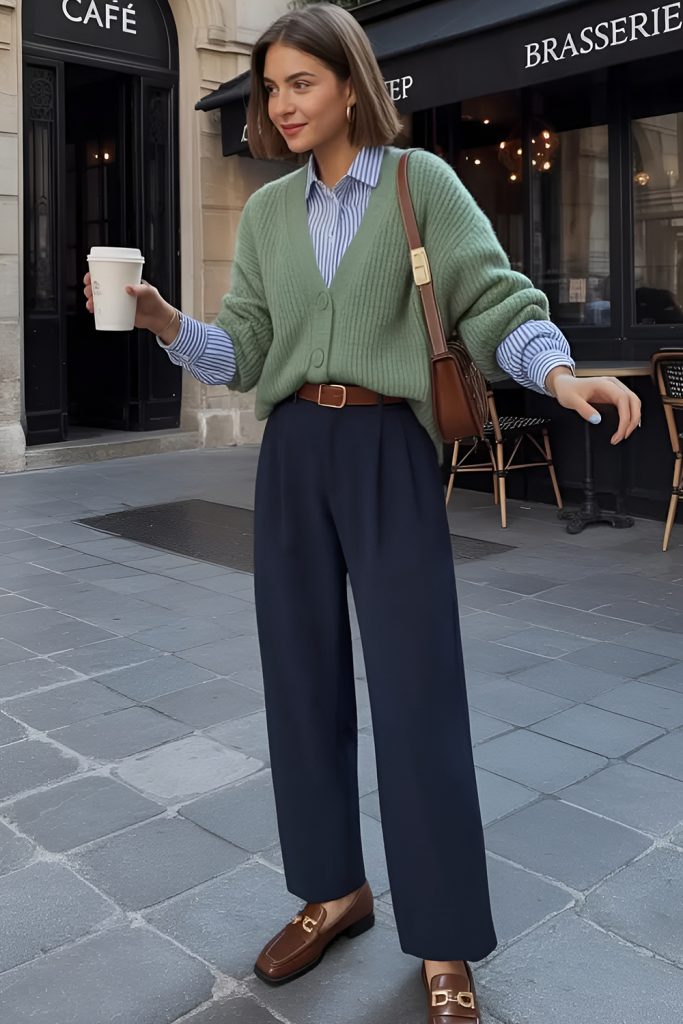
The last item is not an outfit but a reminder you can apply to all of them. Choose a thin base, a medium mid-layer and a light outer layer, and you will rarely feel too cold or too hot.
Think tee or silk top, cardigan or blazer, then a coat or jacket. Each layer should be easy to take off and carry.
If you ever have doubt, add a scarf, because it is the easiest layer to remove.
Best for: unpredictable fall weather.
Why it works: Variable thickness lets you adjust through the day.
Styling tip: Keep your outer layer free of heavy lining, so it does not trap heat indoors.
The fabrics that make layering work
Fabric matters more than the number of pieces. Merino wool, cotton jersey and fine cashmere blends are warm yet slim, so they sit beautifully under other layers.
Chunky knits look cosy but add bulk. If you love them, wear one as your top layer and keep everything underneath as thin as possible.
Avoid cheap polyester next to your skin. It traps sweat and feels clammy when you move from a cold street to a heated office.
Check the lining of coats and blazers, too. A smooth lining slides over knits easily, while a rough one drags and bunches.
How to avoid the bulky look
Bulk comes from stacking thick pieces of the same weight. Instead, mix thicknesses and balance volume: if the top is roomy, make the bottom slim, and vice versa.
Tuck or half-tuck the base layer so fabric does not bunch at your waist. A belt over a cardigan or coat defines your shape and stops layers from swallowing you.
Keep sleeves in order. A thin sleeve under a thicker sleeve should end at or just past the wrist, and your outer sleeve should cover it without squeezing.
Finally, stand in front of a mirror and move. If you cannot lift your arms comfortably, remove a layer.
Footwear and accessories that finish the look
Shoes can make or break a layered outfit. Ankle boots, loafers with thick socks and leather trainers all work with the looks above.
A scarf is the easiest way to add warmth, and a light one in wool or cashmere is better than a chunky one when you are layering.
Gloves, a belt and a good bag are small details that complete a look. Choose leather or suede in shades of tan, brown or black to match the earthy palette.
For wet weather, a waterproof ankle boot and a stone-coloured trench keep you dry without breaking the neutral scheme. Our winter outfits for women shows how the same ideas adapt to colder weather.
Colour combinations that always work in fall
Colour is the fastest way to make layers feel intentional. The easiest approach is to choose one anchor shade and two supporting ones, then repeat them across the outfit.
Cream, camel and chocolate are the classic trio, and they look rich together because the tones sit close to each other. Navy and rust is a lovely contrast, one cool and one warm, while olive and tan makes a calm, earthy pair.
If you want a bolder look, take a cue from the orange knit in the set and let one strong colour stand alone against a sea of neutrals. Keep the rest of the outfit quiet and the colour looks deliberate.
Avoid mixing too many mid-tones that sit near each other without contrast, because they can look muddy. A light top under a dark mid-layer, or the reverse, adds definition.
Patterns work as long as there is a clear hero. A plaid skirt with plain knits is better than a plaid skirt with a striped cardigan. When in doubt, wear one pattern per outfit.
Five-minute morning routine for layering
Check the forecast the night before, not just the temperature but the wind and the chance of rain. Lay out your base and mid-layer, and hang the coat where you can see it.
In the morning, dress from the inside out and test movement. Lift your arms, sit down and bend over, since this is when bulk and tight sleeves show up.
Put essentials in the tote you will carry: a spare scarf, a small umbrella and lip balm. Fall wind dries lips and hands quickly.
When you arrive indoors, take the outer layer off first, then decide whether to remove the mid-layer. This order keeps you from feeling clammy.
If your day includes an evening plan, bring a small accessory, like a statement earring or a silk scarf, that can transform the same outfit after work.
A temperature cheat sheet for fall layering
Weather apps give you a number, but they do not tell you what to put on. Use this rough guide and adjust for how cold you feel.
Around 15 to 20 degrees Celsius (60 to 68 Fahrenheit), a fine knit or a cotton shirt plus a light jacket is plenty. This is cardigan and trench weather.
Around 8 to 14 degrees (46 to 57 Fahrenheit), add a mid-weight layer, such as a merino sweater or a tailored blazer, and wear a scarf. This is where the turtleneck and skirt outfits earn their keep.
Below 8 degrees (46 Fahrenheit), keep the thin base, add a proper sweater and finish with a wool coat, gloves and warm socks inside your boots.
If the forecast swings by more than ten degrees between morning and afternoon, dress for the afternoon and carry the extra layer. A light scarf, a cardigan or a packable jacket takes almost no space.
Wind and rain change everything. A windy 12 degrees feels colder than a still 8, so choose a closed coat and a scarf you can tuck in.
Layering for the commute, the desk and the evening
Most of us live in three temperatures a day: the street, the office and wherever we go afterwards. Plan layers so that each transition takes seconds.
For the commute, keep the outer layer simple, such as a trench or a short jacket, with pockets for gloves and your phone. Wear the thinnest base you can, because you will warm up as you walk.
At the desk, the mid-layer does the work. A cardigan or blazer that you can drape over a chair is more useful than a bulky sweater you cannot take off without ruining your hair.
For the evening, change one thing instead of the whole outfit. Swap sneakers for ankle boots, add a silk scarf or a bolder earring, and swap the tote for a smaller bag.
Finally, keep one emergency layer in your bag, in a neutral colour that goes with everything, so a surprise cold snap never ruins a plan.
Layering formulas at a glance
| Outfit | Base | Mid-layer | Outer layer |
|---|---|---|---|
| White cardigan and scarf | Light top | Cardigan | Scarf |
| Black jacket and midi skirt | White top | None | Short jacket |
| Tonal tan and cream | Cream top | None | Tan jacket |
| Office blazer look | Blue top | Blazer | Coat |
| Shirt dress and coat | Shirt dress | None | Long coat |
What to say in the fitting room (or to a tailor)
Layers only work if they fit over each other. When you shop, try everything with the thickest piece you plan to wear underneath.
I need this blazer to fit over a thin knit. Could you let out the sleeves slightly and check that it closes comfortably without pulling across the back? I also want the hem shortened so it sits at my hip.
What to expect over a fall week
Layering is a habit that takes a few days to learn. Here is a realistic timeline.
- Day 1: you will probably over-layer, and that is fine, because you can remove pieces.
- Day 2 to 3: you learn which base layers feel good all day.
- Day 4 to 5: you start choosing outer layers based on the morning forecast.
- Day 6 to 7: dressing for temperature swings feels automatic.
FAQ
How many layers should I wear in fall?
Two to three is usually enough: a base, a mid-layer and a light outer layer.
What is the best base layer?
A fitted cotton, merino or silk top that does not add bulk. Avoid thick fabrics next to your skin.
How do I layer a dress?
Add a fine turtleneck underneath, tights, and a cardigan or blazer on top.
Can I layer in neutrals only?
Yes. Neutral layers look elegant and mix easily, and a single colour such as rust or orange can add interest. This neutral capsule guide has a few more ideas.
The takeaway
Great layering is mostly about thickness, proportion and a little planning. Start with a thin base, add structure in the middle and finish with a coat or scarf you can take off.
Try one outfit from this list this week, then mix the pieces. For more seasonal ideas, our fall outfit ideas are a good next read.
Related Post