
Please note that we do not create all the designs featured in this article. Our primary focus is to curate and collect a diverse range of design collections and products to inspire and share with our audience. While we do not claim ownership or take full credit for the original designs and images, we occasionally make minor adjustments, particularly in home decor and fashion items, to present them more effectively. Additionally, we may produce and edit images to enhance their quality and composition before sharing them on our Pinterest page or website. For the design work we do on these creative designs, we also include our logo on the images shared on Pinterest and our website. This helps our audience recognize that these designs have been published on insiderlyfe.com!
You walk into the salon with a screenshot of a rich, glossy red-brown, say “auburn”, and walk out with something closer to a traffic cone. Or the opposite: a muddy brown with a hint of warmth that disappears after two washes. Both happen constantly, because “auburn” means something different to almost everyone who says it.
The word covers a wide patch of the colour wheel, from deep chestnut with a red glow to a bright, almost coppery orange-red. Add the fact that red pigment is the smallest and fastest-fading dye molecule in the book, and it is easy to see why auburn has a reputation for being hard work.
This guide is for anyone thinking about auburn hair for winter, whether you are starting from brunette, black, blonde or natural curls. It covers ten distinct looks, how auburn differs from copper, burgundy and cherry cola, which undertones suit which shades, what a salon really charges, which colour-depositing products are worth buying (with real prices), and the exact words to say to your colourist.
Two to watch for. Number 5 is the money piece trick that brightens your face without committing the whole head, and number 9 is the best way to wear auburn on natural curls. Keep scrolling.
Auburn vs copper vs burgundy vs cherry cola: what is the difference?
Most colour mix-ups come from these four names being used as if they were interchangeable. They are not, and the difference is mostly about tone: how much orange, red, violet or brown sits in the mix.
| Shade | Main tone | Looks like | Best for |
|---|---|---|---|
| Auburn | Red-brown, warm | Chestnut with a red glow, like polished mahogany in daylight | Warm and neutral skin, brunettes going red |
| Copper | Orange-red, bright | A new penny, more orange and more visible from a distance | Warm and olive skin, lighter bases |
| Burgundy | Red-violet, cool | Red wine, with a plum or purple cast | Cool skin, dark bases, evening drama |
| Cherry cola | Dark red with violet-brown depth | Nearly brown indoors, deep cherry in sunlight | Anyone wanting red without committing to red |
A quick test: if the colour makes you think of autumn leaves, it is auburn or copper. If it makes you think of wine, it is burgundy or cherry cola. If you like the burgundy end, our burgundy hair colour ideas cover that side in depth.
Which auburn suits your skin tone?
Undertone matters more than depth. Check the veins on your inner wrist in natural light: green-looking veins usually mean a warm undertone, blue or purple a cool one, and a mix of both is neutral. Gold jewellery flattering you more than silver is another clue for warm, and the reverse for cool.
- Warm undertone (golden, peachy, olive): copper auburn, golden auburn and soft rusty shades echo your natural warmth. Ask for “warm” or “golden” auburn.
- Cool undertone (pink, rosy, blue-toned): choose an auburn with a hint of violet or mahogany, such as dark auburn or red-brown. Orange-leaning copper can make pink skin look flushed.
- Neutral undertone: you can go either way. A true mid-tone auburn, neither too gold nor too violet, is usually the safest bet.
- Very fair skin: go a notch softer and deeper, such as a muted red-brown, so the colour does not overpower you.
- Deep skin: rich, dark auburn, mahogany and dark copper tones read beautifully against deep skin and do not need a lot of lightening on dark hair.
10 auburn hair colour ideas for winter
Each look below has the shade name to use, what it suits, how long it lasts and one thing a stylist would tell you before you book.
1. Deep auburn
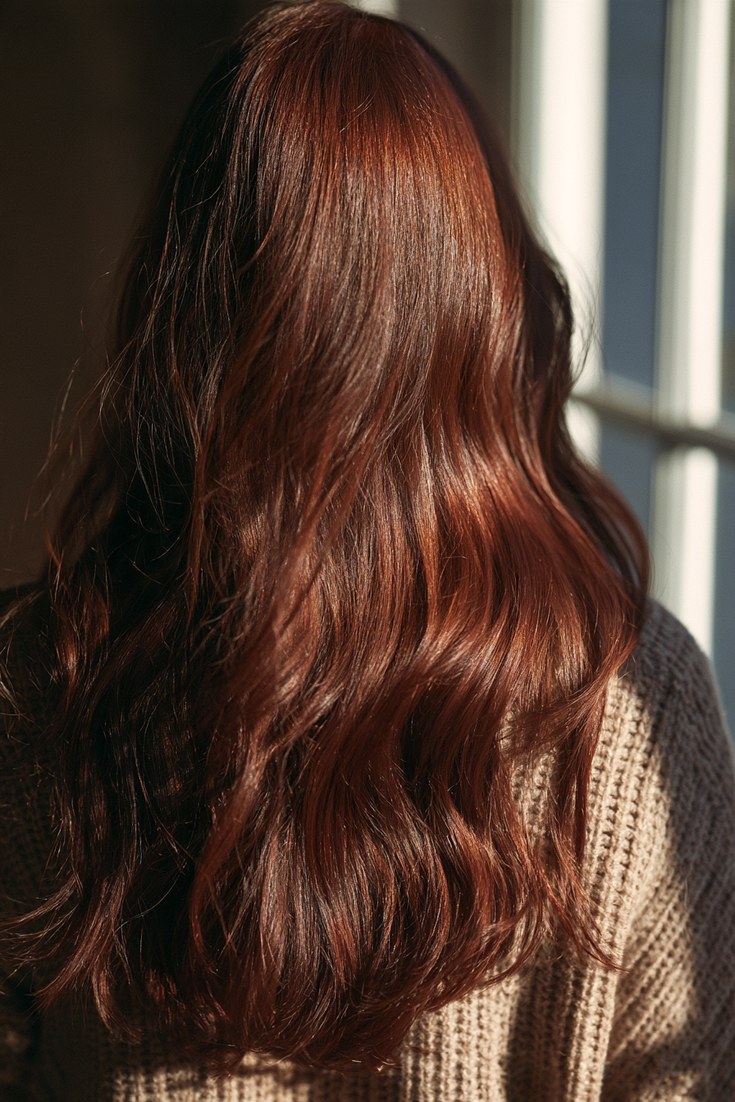
Deep auburn is the safest way into red: a dark chestnut base with a mahogany-red glow that shows up mostly in daylight and looks almost brown indoors. Ask for “a deep auburn, level 4 to 5, with a red-brown reflect, not orange”. Colourists often build it with a gloss over a brunette base, so there is little or no bleach involved.
It suits cool and neutral undertones best, and it is forgiving on anyone with brown hair who wants to see how red feels. It typically lasts four to six weeks before the red softens. The pro tip: book a gloss rather than a full permanent colour if you are unsure, because a gloss fades out gently instead of leaving a hard regrowth line.
2. Copper auburn
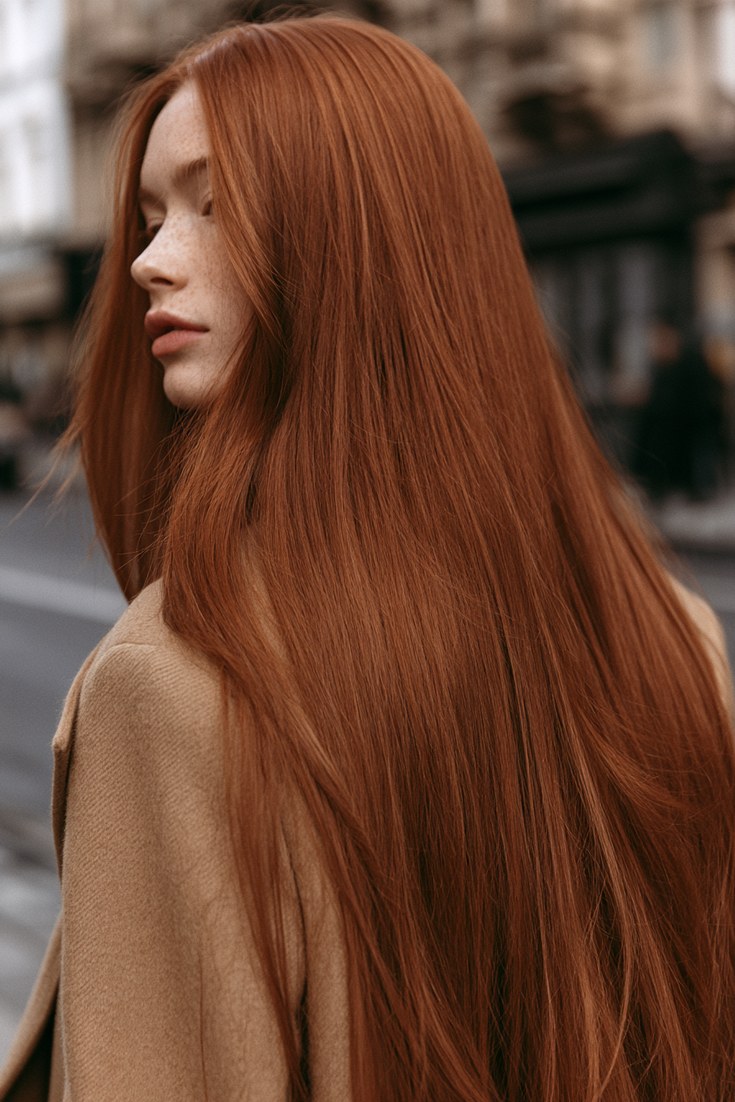
Copper auburn leans orange: think new penny with a touch of red. It is the brightest look on this list and the one that stands out most against grey winter light. Say “copper auburn, warm and glossy, with no pink or violet in it”, because a hint of the wrong tone turns it salmon.
It looks best on warm, golden and olive skin, and on anyone starting from light brown or dark blonde, since copper needs some lift to look vivid. Brunettes will usually need a light bleach first. Expect it to fade the fastest of the lot: the orange tones can dull within three to four weeks, so plan for a copper-depositing mask at home from day one.
3. Auburn balayage
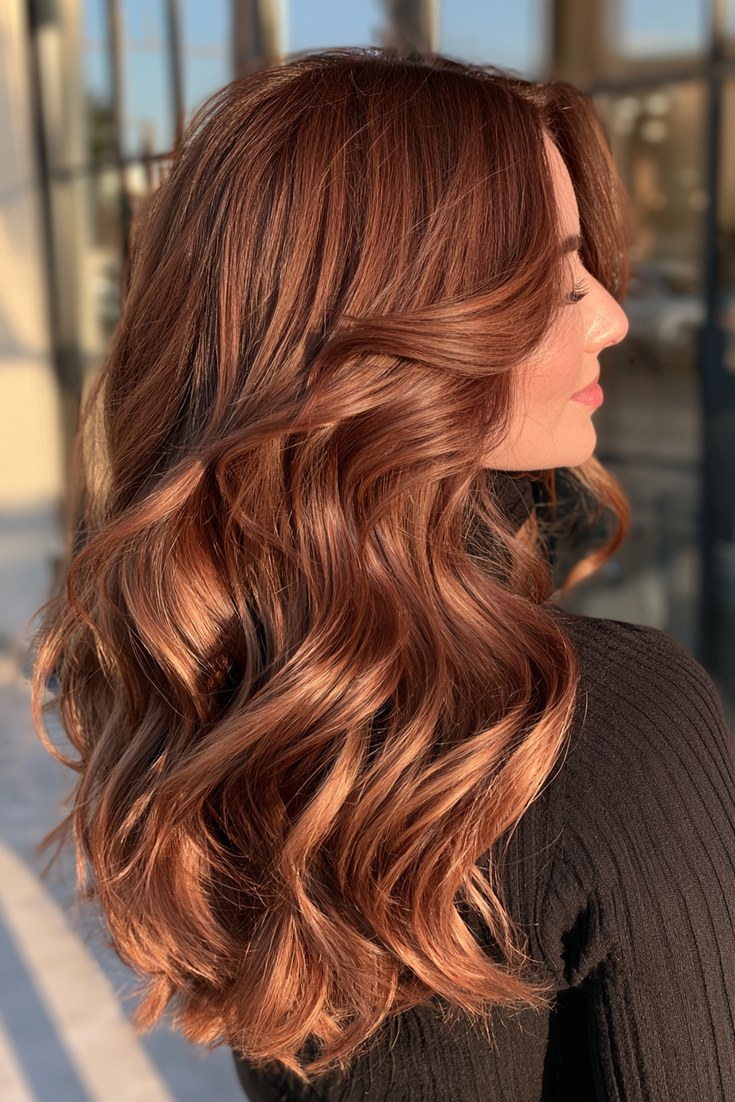
Auburn balayage keeps your natural root and paints red-brown through the mid-lengths and ends, so there is no harsh regrowth line to fix. Ask for “a soft root smudge, then auburn painted from the ears down, glossed in a red-brown”. It is lower maintenance than all-over colour and can go ten to twelve weeks between visits, though the red will need glossing sooner.
It suits brunettes best, and straight or wavy hair shows the dimension most clearly. If you are weighing it up against traditional foils, our balayage vs highlights guide explains the difference. One tip from stylists: ask for the ends to be a touch brighter than the roots, which makes hair look thicker.
4. Dark auburn on black hair

Black hair rarely needs bleach to wear auburn, but it does need patience. A dark auburn on black is a subtle sheen: the hair reads as black until the light hits it and a wine-red glow appears. Ask for “dark auburn, one to two levels of lift, with a mahogany or red-violet reflect”. Many stylists use a high-lift gloss or a gentle lightener, then tone.
This is the right look for anyone who wants a change that does not scream colour, including those with strict dress codes. It suits cool and deep skin tones and lasts six to eight weeks before the sheen fades. The practical tip: go slow. Taking black hair to a bright auburn in one visit risks damage, and a second session two to four weeks later is often kinder.
5. Auburn with a money piece

A money piece is a pair of brighter strands right at the front, framing the face. In auburn, it works like a built-in highlighter: it lifts skin tone and brings red to your face without colouring the whole head. Ask for “two face-framing sections in a bright copper auburn, a shade lighter than the rest”.
It is the lowest-commitment option on the list. It suits almost every skin tone if you choose the right warmth, and it is ideal if your workplace or family has opinions. The front pieces are usually hand-painted and need lightening, so expect about 60 to 90 minutes. It typically lasts six to eight weeks and grows out very kindly. Keep scrolling: number 6 is the cut that makes auburn look expensive.
6. Auburn lob
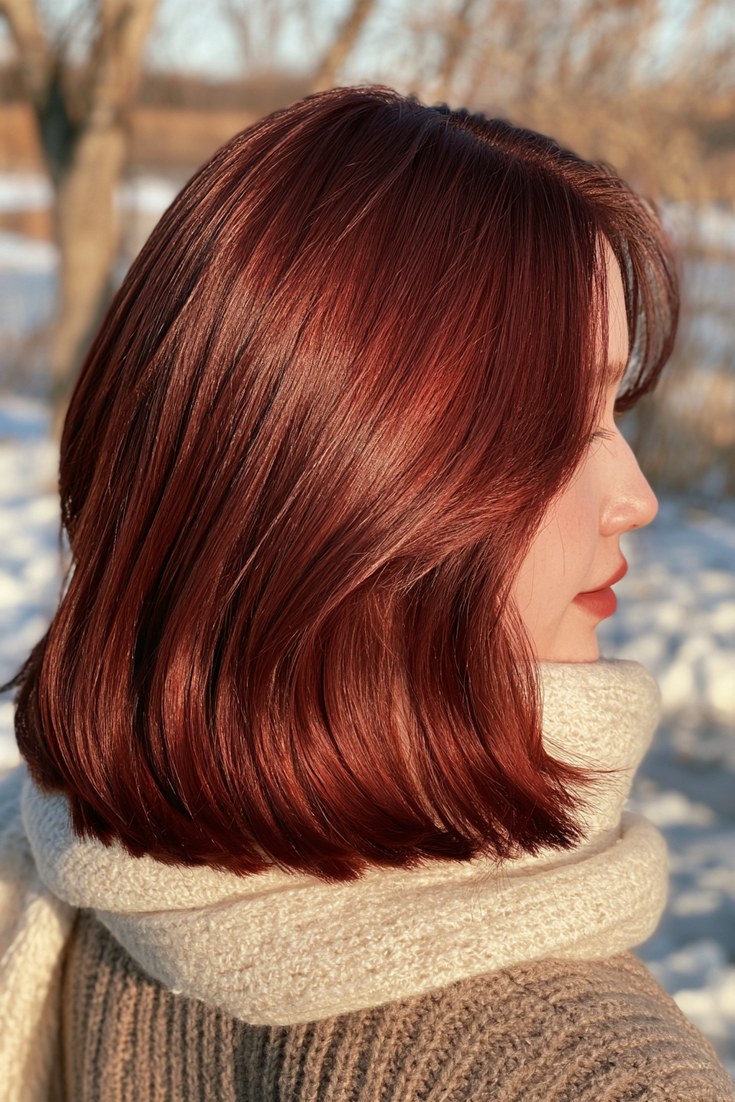
A shoulder-skimming lob shows off auburn’s shine better than almost any other cut, because blunt ends reflect light in one flat sheet. Ask for “a one-length lob with a glossy auburn all over, slightly deeper at the roots”. The tone should be consistent, so it looks like expensive, healthy hair.
It suits fine to medium hair and straight or lightly wavy textures, and it is easier to keep up because shorter hair means less colour to maintain. If you like the idea but not the length, our winter bob haircut ideas show shorter cuts that work with this shade. Trim every six to eight weeks, since split ends dull red faster than any other colour.
7. Auburn waves
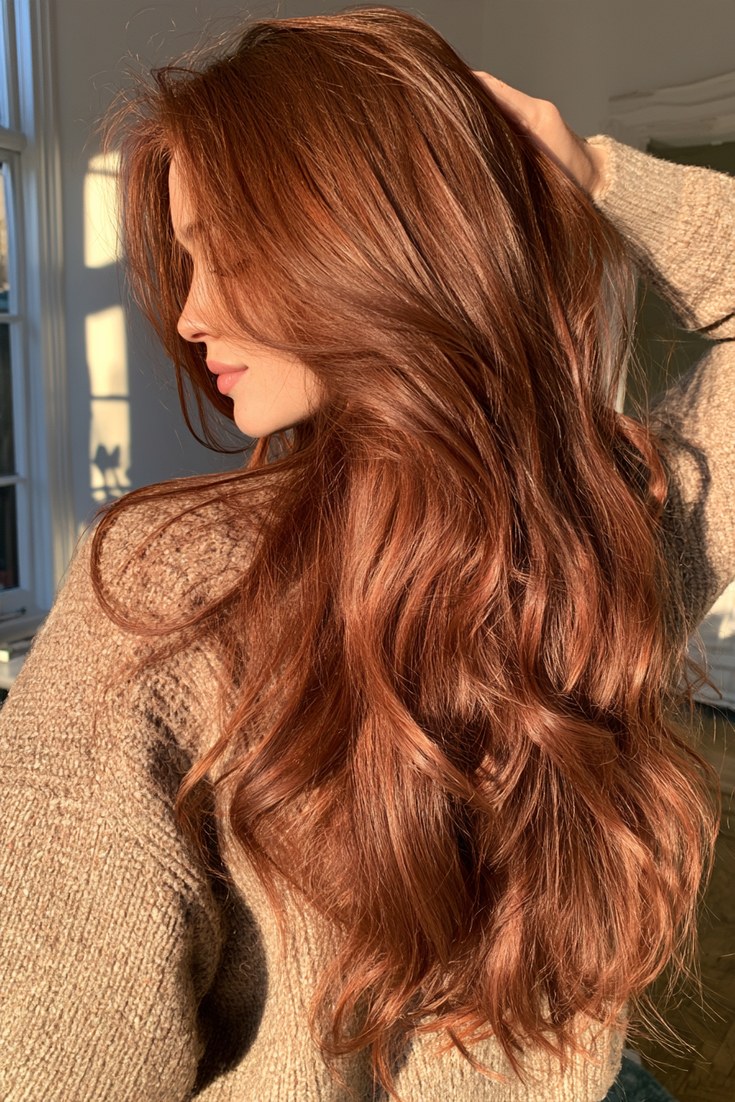
Soft waves are where auburn gets its depth: the curve of each wave catches the light and shows lighter copper on top, deeper red in the shadow. A stylist might add subtle lowlights in a darker red-brown so the colour looks multi-tonal, not flat. Ask for “auburn with two tones, a copper face and a deeper red-brown underneath”.
It is a great option for medium to long hair, and for anyone who wants to look polished without a lot of effort. Set waves with a medium barrel curling iron at around 160 to 180 degrees Celsius if your hair is coloured, because heat is the second biggest cause of red fading. A heat protectant is not optional here, it is what keeps the colour in the strand.
8. Red-brown
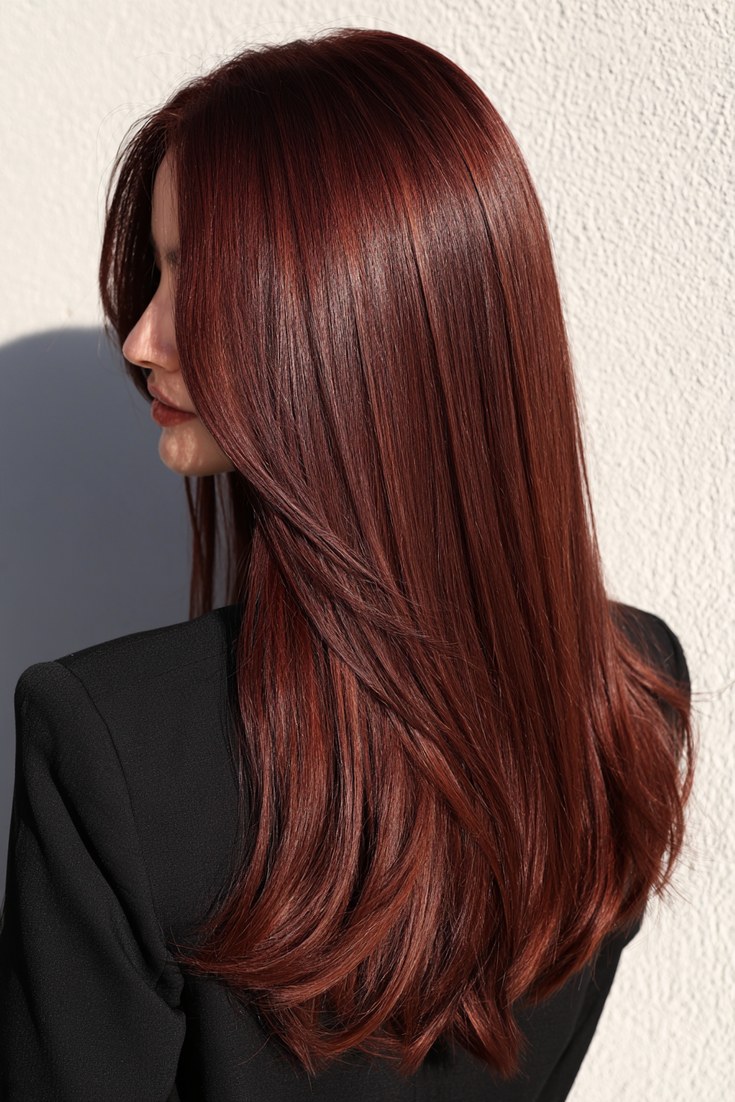
Red-brown is auburn for the cautious: a chocolate brown with a visible red tint, often called mahogany or chestnut with red. Ask for “a brown base with a red-brown gloss on top, not a bright red”. It is the one that most people can wear to a job interview and still feel like they did something.
It suits almost every undertone and is the easiest to maintain, because the base is close to natural colour and the red lives in a gloss that can be redone every four to six weeks. If you also like the warm brown family, our hot cocoa brown hair ideas sit right next to it. Avoid it if you want people to notice from across the room.
9. Auburn on natural curls
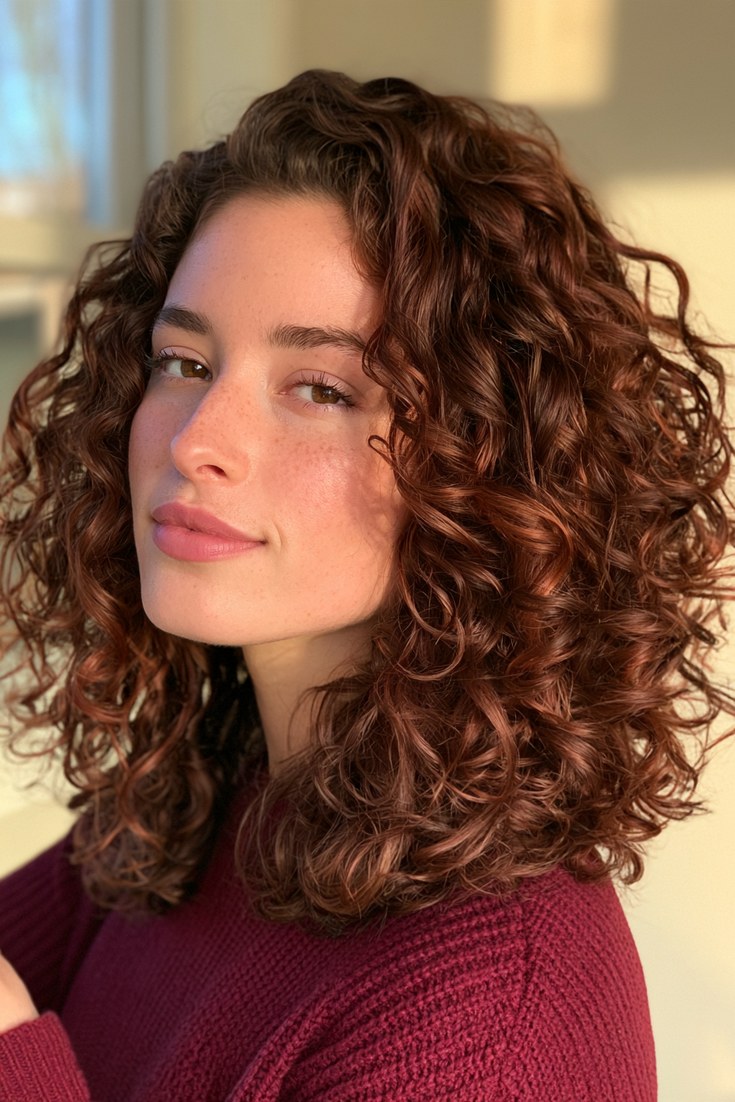
Curls hold auburn beautifully because the spiral shape scatters light, which gives red a lot of dimension. Ask for “auburn placed by hand, not foiled, with lighter copper on the curl ridges and deeper red underneath”. Many curl specialists colour on dry, defined curls so they can see where each ringlet sits.
It suits all curl types, from loose waves to tight coils, and is a good way to add warmth without lightening the whole head. Curls are naturally drier, so bleach is the thing to be careful with: ask for a bond-building treatment and a deep conditioner afterwards. Plan on a gloss every six weeks and a moisture mask weekly to keep the curl pattern bouncy and the colour even.
10. Soft rusty auburn
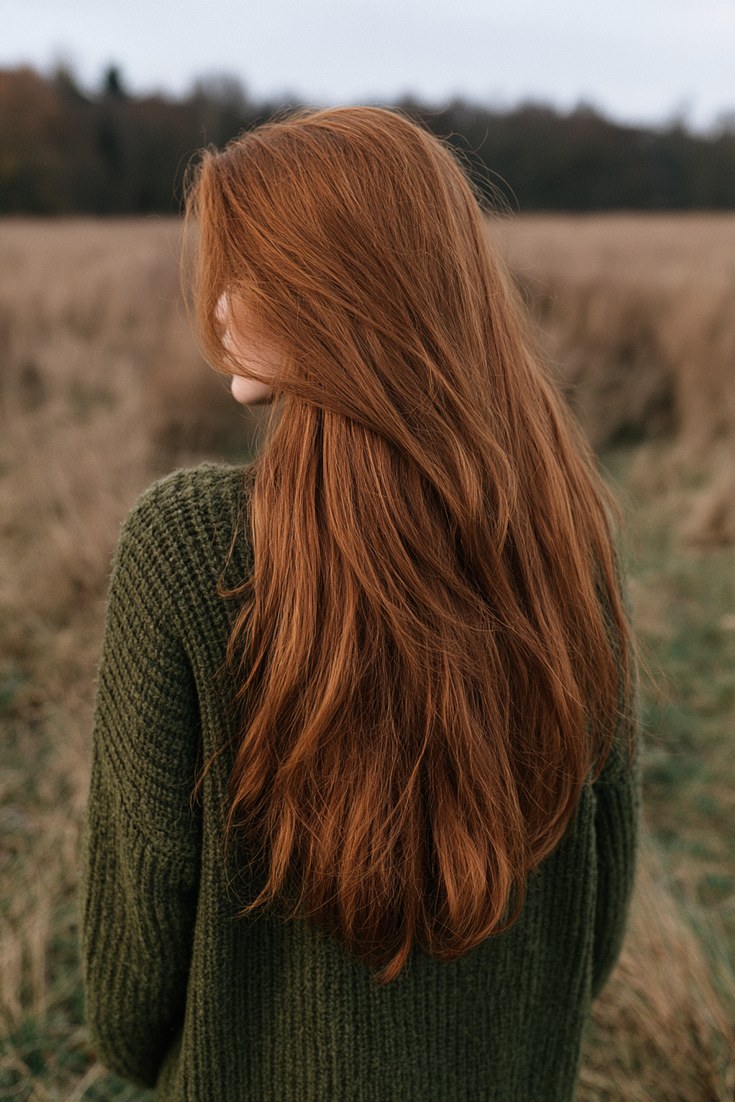
Soft rusty auburn is muted, earthy and slightly brown: a terracotta-leaning red that feels lived-in, not glossy and loud. Ask for “a soft, rusty auburn with a hint of brown, low shine, no bright orange”. It is easier to wear with olive, tan and warm medium skin tones, and it looks especially good against green, camel and cream clothing.
It is also forgiving as it fades, because the colour moves into a soft copper-brown instead of an obvious brassy orange. Expect six to eight weeks between glosses. The pro tip: if your hair has any grey, rusty auburn blends it well, because the warm tone makes a few silver strands read as highlights.
What it costs: salon prices in USD and GBP
Auburn prices vary by city, stylist level and hair length, so treat these as starting points, not quotes.
- United States: a full balayage typically runs from about $76 to $452, with an average around $193, and a partial balayage from about $101 to $222, according to StyleSeat booking data. A gloss is often added as a separate line, so ask.
- UK (Charlie Miller): Charlie Miller lists a full head tint at £86 and a full balayage including toner at £155 for a salon technician, with a toner or gloss at £27. Long or thick hair adds £10 to the toner and £15 to the balayage.
- UK (TONI&GUY): TONI&GUY Canary Wharf lists signature colour from £113 and signature balayage from £247.
Upkeep is the hidden cost. A gloss every four to six weeks, plus a root touch-up and glaze every eight to ten weeks if you have gone from dark to red, is a normal schedule, according to a Schwarzkopf Professional colourist writing for Behind the Chair about modern auburn.
Colour-depositing products that actually keep auburn alive
A colour-depositing mask or conditioner puts a small amount of pigment back in every time you use it. It does not replace the salon, but it stretches the time between glosses. Prices below were checked on brand or retailer pages and will move with sales.
| Product | Shade | Price | How to use |
|---|---|---|---|
| oVertone Auburn Brown colour depositing treatment mask (8 oz) | Auburn brown | $32 | 10 to 15 minutes on dry hair with gloves |
| oVertone Ruby Red colour depositing daily conditioner (4.5 oz) | Ruby red | $14.75 | 3 to 5 minutes in the shower, as often as you like |
| Kristin Ess Signature Hair Gloss (4 fl oz) | Copper Penny | $14.99 at Target | 10 to 20 minutes |
| Wella Professionals Color Fresh Mask (150 ml) | Copper Glow | £13.36 at LookFantastic (RRP £16.70) | 5 to 7 minutes, alone or diluted with conditioner |
| Keracolor Color + Clenditioner | Copper, Red, Ruby, Merlot | $22 | Replaces shampoo on refresh days |
Match the product to the shade: a copper mask on a deep auburn will warm it up, which can be a bonus or a mistake. Always do a strand test, and wear gloves, because these will stain skin and towels.
How to stop auburn fading
- Wash less and cooler. Hot water opens the hair cuticle and lets red pigment escape. Aim for two to three washes a week, lukewarm.
- Use a sulfate-free, colour-safe shampoo. Harsh cleansers strip dye fast.
- Protect from heat. Use a heat protectant and keep tools at the lowest effective temperature.
- Block UV. Sun fades red faster than any other colour, so wear a hat on bright winter days and use a leave-in with UV filters.
- Deposit weekly. One colour-depositing treatment a week in the same tone family keeps the shade steady.
- Book the gloss early. Do not wait until it looks faded. Book at week four to five.
What to say to your colourist
- “I want auburn, a red-brown, with [warm / cool] tones. Here are three photos, and here is one that is too red.”
- “Can you tell me what level my hair is now and how many sessions this will take?”
- “I do not want orange or brassy tones. Can you tone it to keep it red-brown?”
- “Can we do a gloss now and build to brighter, so I can see how it looks first?”
- “What should I use at home, and how often will I need to come back for a gloss?”
- “What is the full cost, including toner and a trim, so there are no surprises?”
Bring photos in natural light, not filtered ones, and show a shade that is too light and one that is too dark. It helps the colourist read what you mean.
Common mistakes
- Choosing by photo filter: save images taken in daylight and ask the colourist how they will look on your base.
- Skipping the gloss: auburn fades fast, so book a gloss four to six weeks out, not when it already looks tired.
- Washing with hot water and sulfate shampoo: switch to lukewarm and colour-safe formulas.
- Using a copper mask on a cool auburn: match the tone to your shade, or it will drift orange.
- Going from black to bright in one visit: split the process over two sessions to protect your strands.
- Forgetting the brows: dark brows with bright auburn hair can look severe, so ask your colourist about softening them a shade.
Your first six weeks: an auburn timeline
- Day 1 to 2: do not wash. Let the cuticle settle.
- Week 1: first wash with lukewarm water and colour-safe shampoo. Colour is at its richest.
- Week 2: start a weekly colour-depositing treatment.
- Week 3 to 4: red softens slightly. Keep depositing and protect from sun.
- Week 4 to 6: book a gloss. This is when most of the colour loss shows.
- Week 8 to 10: root touch-up and glaze if needed.
If you are planning auburn for the party season, book it two weeks before the event so it has settled. Our New Year’s Eve hairstyles show how to style it for the night.
Frequently asked questions
Do I have to bleach my hair to get auburn?
Not always. Brunettes can often get auburn with a gloss or a permanent red-brown colour and no lightener. Black hair or darker bases may need one to two levels of lift, and blondes can often go to auburn directly by depositing colour.
How long does auburn hair colour last?
A gloss usually lasts four to six weeks, a permanent colour six to eight weeks before the red fades. Colour-depositing masks and cool washing can stretch that by a couple of weeks.
Is auburn high maintenance?
It is more maintenance than brown, less than platinum. Red pigment fades quickly, so plan on regular glosses and an at-home treatment, but there is no harsh regrowth if you keep a natural root.
What is the difference between auburn and ginger?
Auburn is a red-brown with depth, while ginger is lighter, more orange and often has a golden tone. Auburn sits closer to brown, ginger closer to copper.
Can I go back to my natural colour?
Usually yes. A brunette who has glossed to auburn can let it fade out. If you have used bleach, you may need a colour filler to return to a natural shade.
Save your favourite
Pick the look that matches your undertone, bring photos to your colourist, and keep a colour-depositing mask in the shower. If this helped, save it to your Pinterest hair board so it is ready when you book.
Related Post