
Please note that we do not create all the designs featured in this article. Our primary focus is to curate and collect a diverse range of design collections and products to inspire and share with our audience. While we do not claim ownership or take full credit for the original designs and images, we occasionally make minor adjustments, particularly in home decor and fashion items, to present them more effectively. Additionally, we may produce and edit images to enhance their quality and composition before sharing them on our Pinterest page or website. For the design work we do on these creative designs, we also include our logo on the images shared on Pinterest and our website. This helps our audience recognize that these designs have been published on insiderlyfe.com!
Two bottles can carry the exact same name, look identical on the shelf and still smell like different people. The difference sits on the back of the label, in three small words: eau de parfum or eau de toilette.
The short verdict: buy eau de parfum when you want depth and a scent that lasts through a long evening or a cold day. Buy eau de toilette when you want something lighter for work, warm weather or layering. Neither is better. They are just different strengths of the same idea.
This guide gives you the real numbers, a side-by-side table, nine everyday situations matched to the right bottle, a script for the perfume counter, a free printable chart and a few mistakes that waste money. If you only read one section, read number 5, because it saves a lot of people from buying twice.
The real difference: how much perfume oil is inside
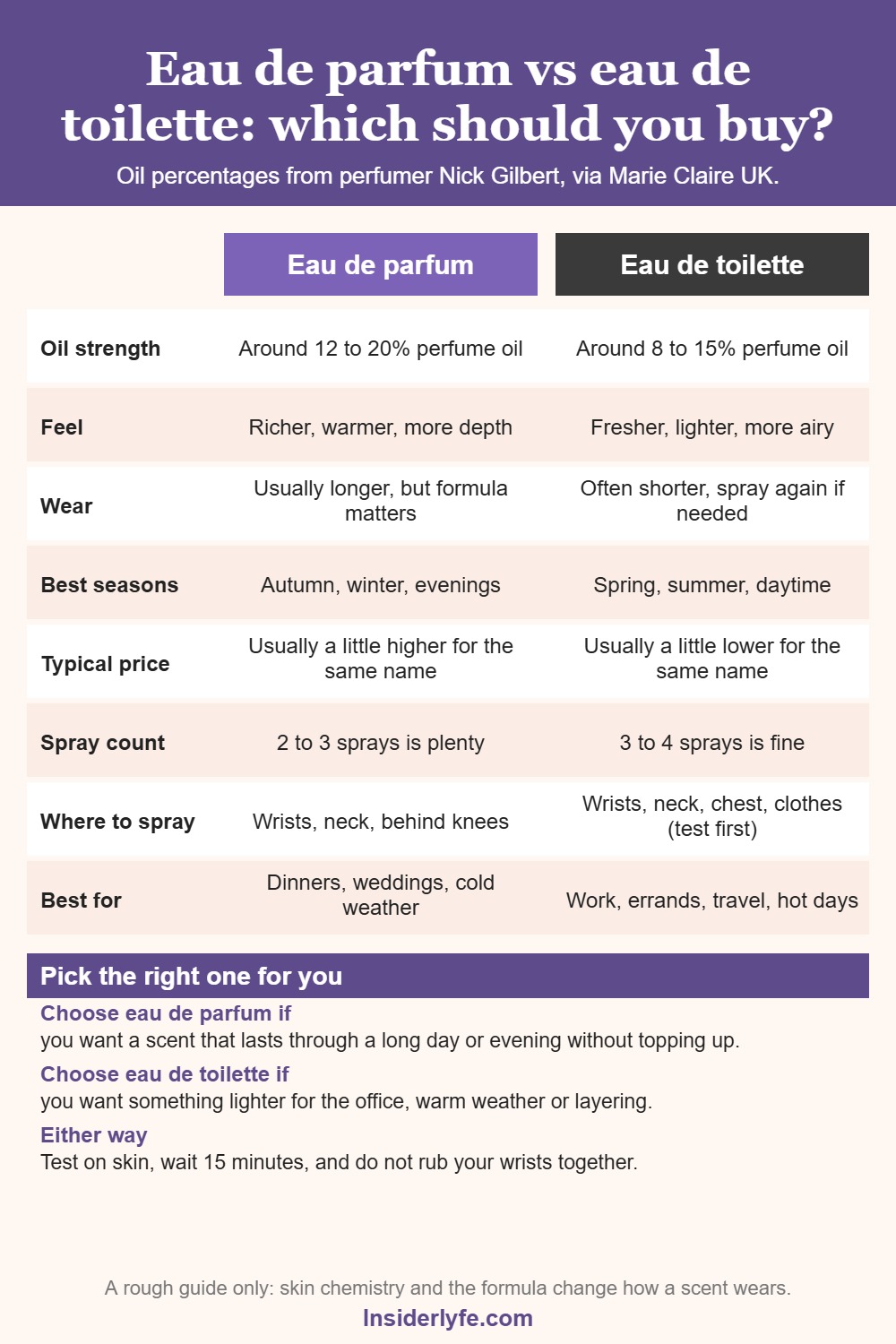
Every fragrance is a mix of perfume oil and alcohol (plus a little water). The more oil in the bottle, the richer and longer lasting the scent usually is. According to perfumer Nick Gilbert, quoted by Marie Claire UK, eau de toilette sits at around 8 to 15 percent oil, while eau de parfum sits at around 12 to 20 percent. Pure parfum, also called extrait, is the most concentrated, at around 20 to 40 percent.
Notice those ranges overlap. A rich eau de toilette can contain as much oil as a light eau de parfum, which is why the label is a clue rather than a promise.
The same article makes a point worth remembering: the formula matters as much as the strength. A woody, musky eau de toilette can outlast a floral, fruity eau de parfum, so do not assume the higher concentration will always win.
Eau de parfum vs eau de toilette at a glance
| Factor | Eau de parfum | Eau de toilette |
|---|---|---|
| Oil strength | Around 12 to 20 percent | Around 8 to 15 percent |
| Feel | Richer, warmer, more depth | Fresher, lighter, more airy |
| Wear | Usually longer on skin | Often shorter, easy to top up |
| Best seasons | Autumn, winter, evenings | Spring, summer, daytime |
| Price | Usually a little higher for the same name | Usually a little lower for the same name |
| Best for | Dinners, weddings, cold weather | Work, errands, travel, hot days |
Prices differ by brand, size and country, so check the same size side by side. Sometimes the eau de parfum costs only a few dollars or pounds more, and sometimes the gap is large. Either way, compare per millilitre before you decide.
Nine situations and the bottle that suits each
These photos are stock images of unbranded bottles, so they show shapes and colours rather than any particular scent. Use the situation, not the picture, to decide.
1. A long office day
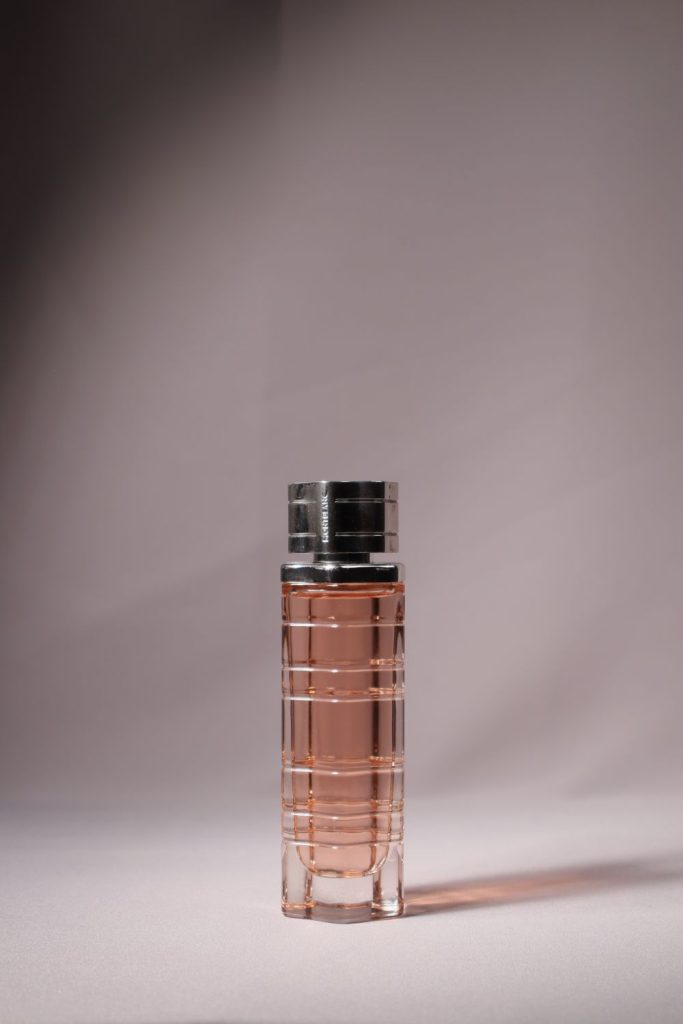
Offices are small, shared and often warm. A lighter eau de toilette keeps you pleasant without announcing your arrival in every meeting. Two or three sprays is plenty, and you can top up at lunch.
Best strength: eau de toilette. Wear tip: spray on the wrists and neck, not the coat collar. Opinion: if colleagues can smell you from the corridor, you have overdone it.
2. Dinner and date night
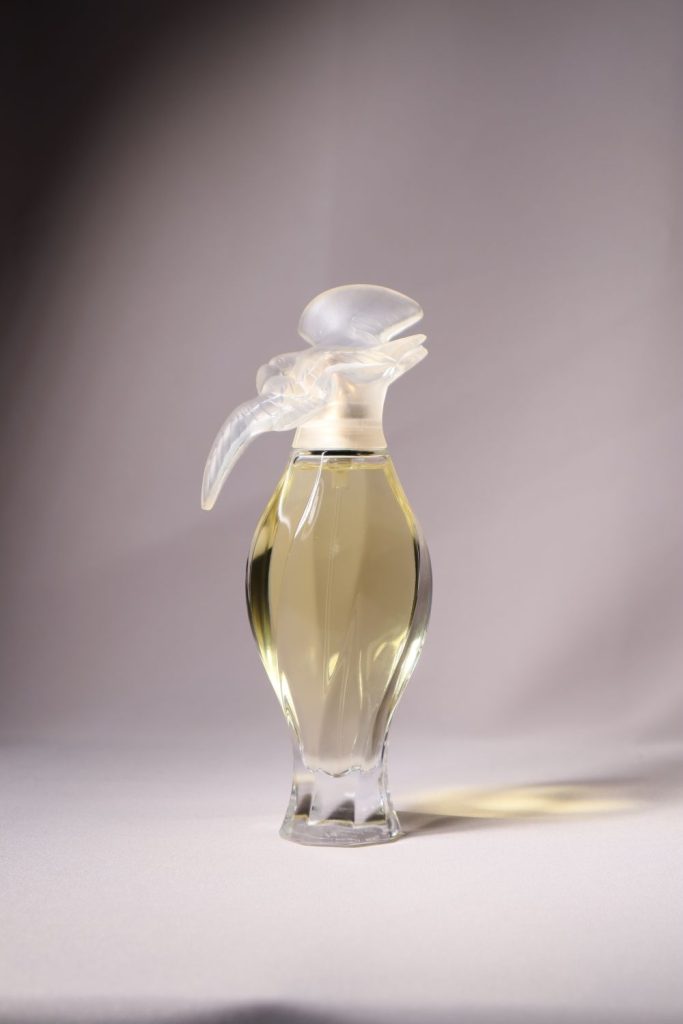
Evenings are where eau de parfum earns its price. The richer base notes settle into your skin and tend to last through dinner and the walk home, and cooler air makes warm, sweet or woody scents feel cosy.
Best strength: eau de parfum. Wear tip: add a spray behind the knees if you are wearing a dress. Opinion: save your boldest bottle for evenings, not the commute.
3. A hot summer day
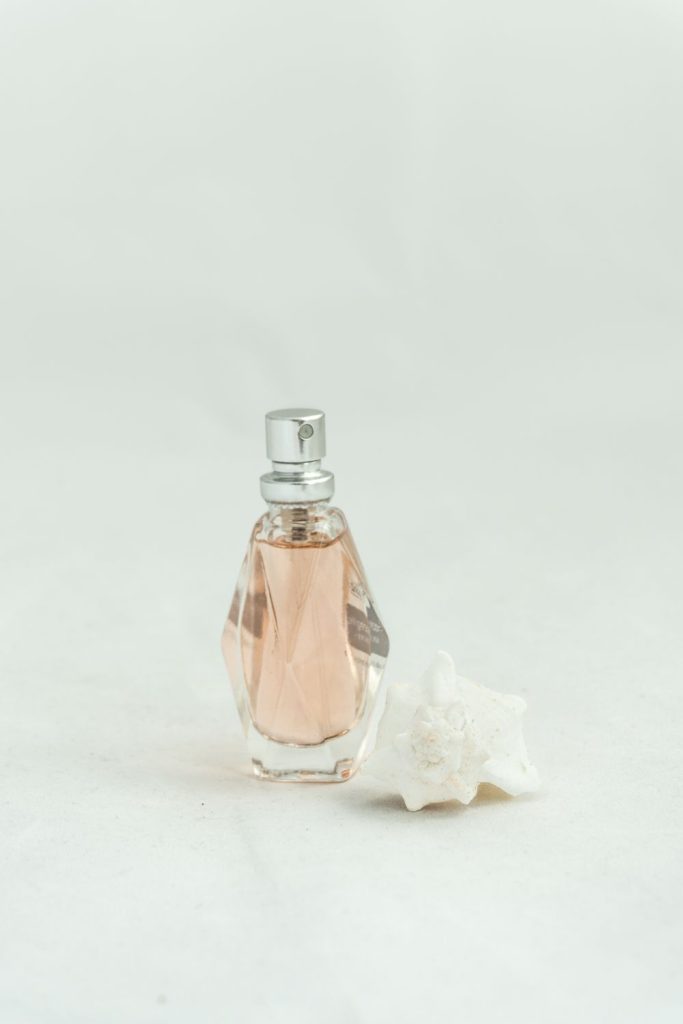
Heat makes scent louder, so a heavy eau de parfum can turn cloying by noon. A light eau de toilette or a small travel vial in a fresh, citrusy or floral style feels cleaner on warm skin.
Best strength: eau de toilette. Wear tip: keep the bottle out of hot cars and direct sun. Opinion: a small vial in your bag beats a big bottle that has baked on a windowsill.
4. Cold, coat-heavy weather
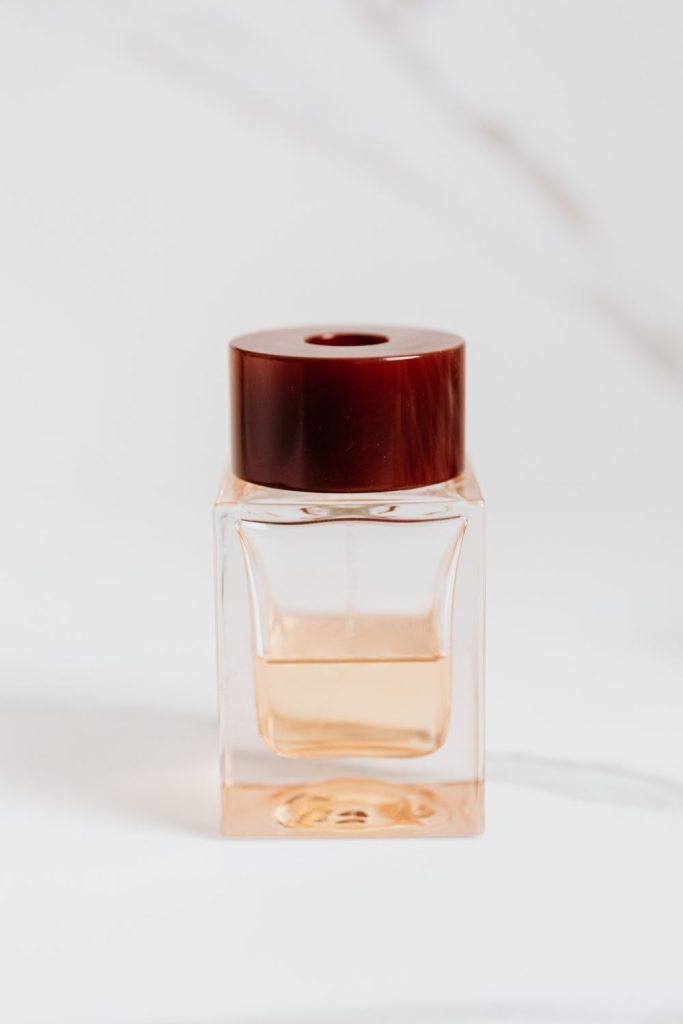
Cold air mutes fragrance, and layers of wool and scarves trap some of it. Rich eau de parfum in amber, vanilla, wood or spice holds up better and feels right with winter knitwear.
Best strength: eau de parfum. Wear tip: spray under your clothes on skin, where warmth helps the scent bloom. Opinion: winter is the season to wear the deep, dark bottle you hide in July.
5. A wedding or an all day event
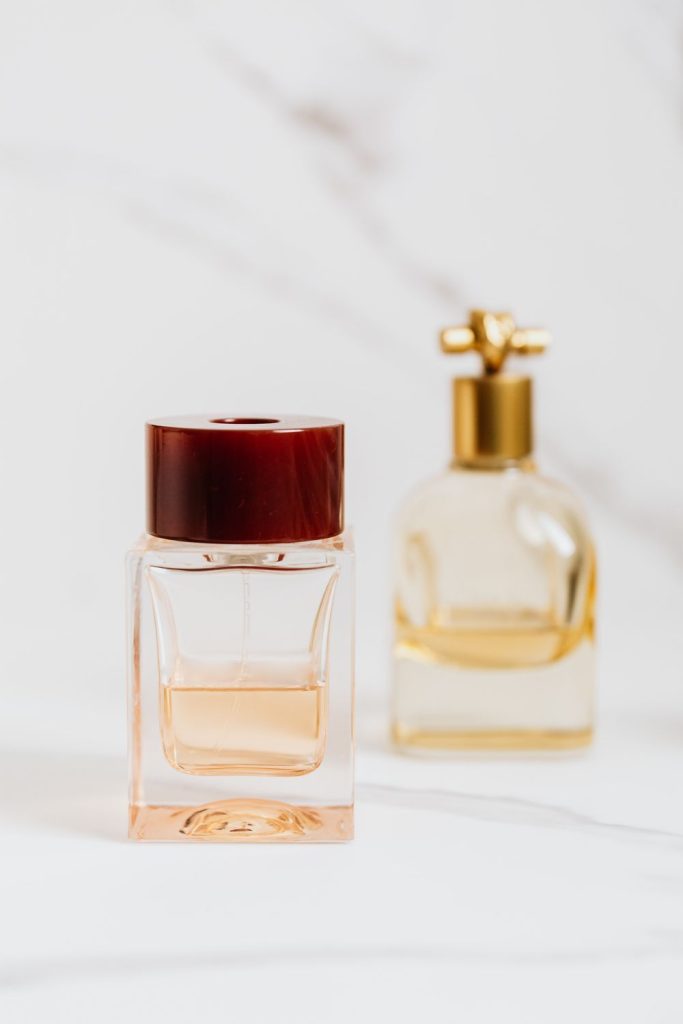
This is the one that saves money. For a wedding you may be out for twelve hours and cannot pop home to reapply. Eau de parfum gives you the best chance of lasting, and a travel atomizer in your bag covers a mid-afternoon top up.
Best strength: eau de parfum, with an atomizer. Wear tip: spray after you have dressed and done your makeup, then leave it alone. Opinion: buying a second bottle because the first faded is the most expensive mistake in this guide.
6. Errands, school runs and weekends
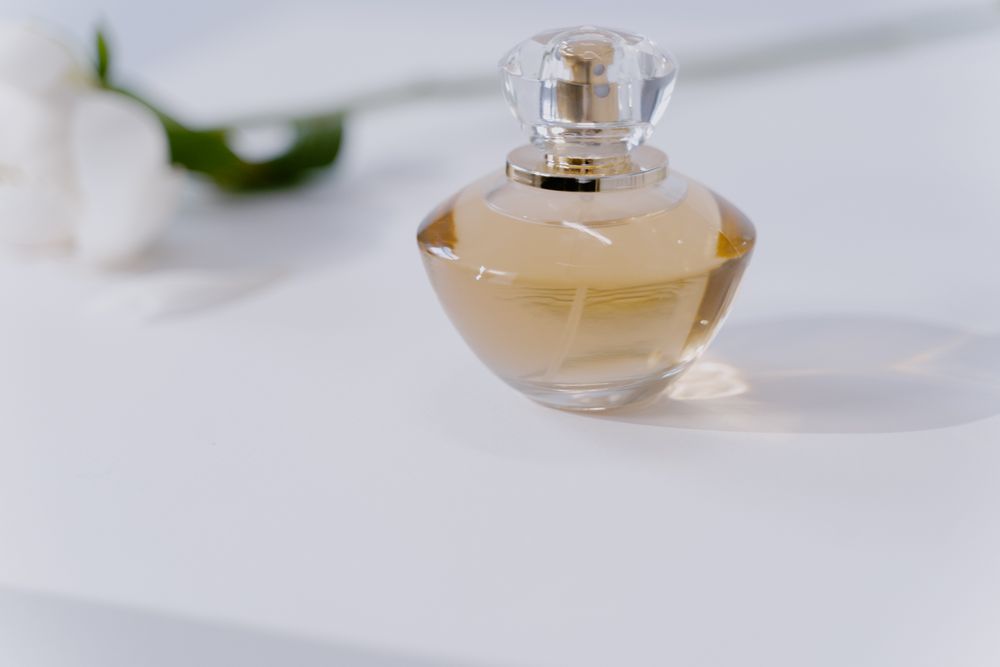
For everyday life, you want a scent that feels like a clean shirt, not a statement. An airy eau de toilette suits that mood, and you will not mind using it generously because the bottle is usually a bit cheaper.
Best strength: eau de toilette. Wear tip: apply right after a shower, when skin is warm and slightly damp. Opinion: your weekend scent can be playful, since nobody is grading it.
7. Buying a gift
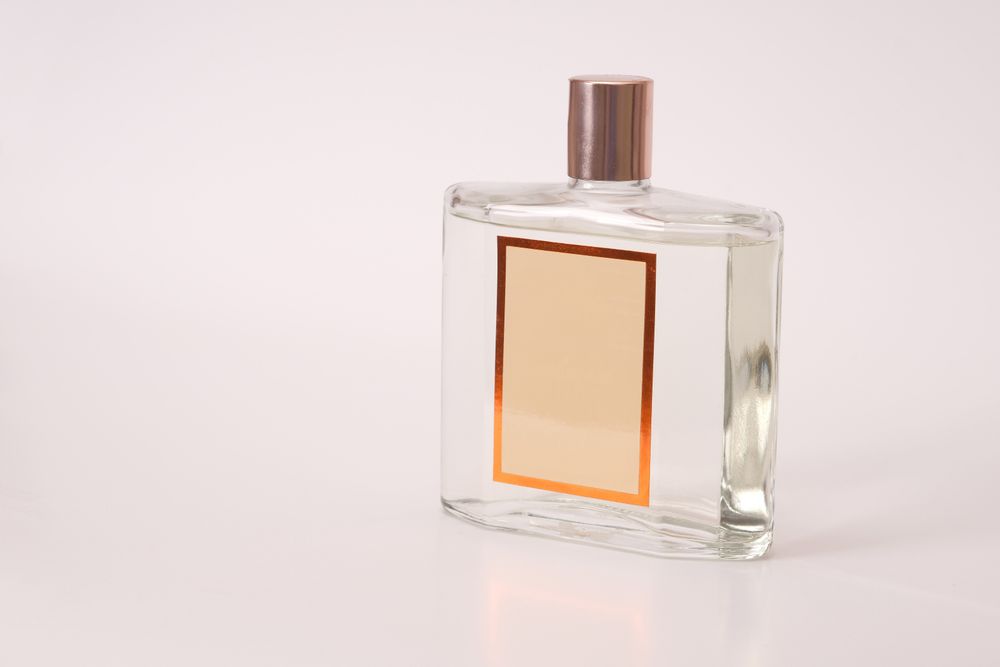
Gifting perfume is risky, because scent is personal. If you know someone loves a particular fragrance, buy the strength she already wears. If you are guessing, a smaller eau de toilette is a kinder gamble than a large eau de parfum.
Best strength: match what she already owns, or go small. Wear tip: include a gift receipt. Opinion: a travel size set often makes a better present than one big bottle.
8. Layering two scents
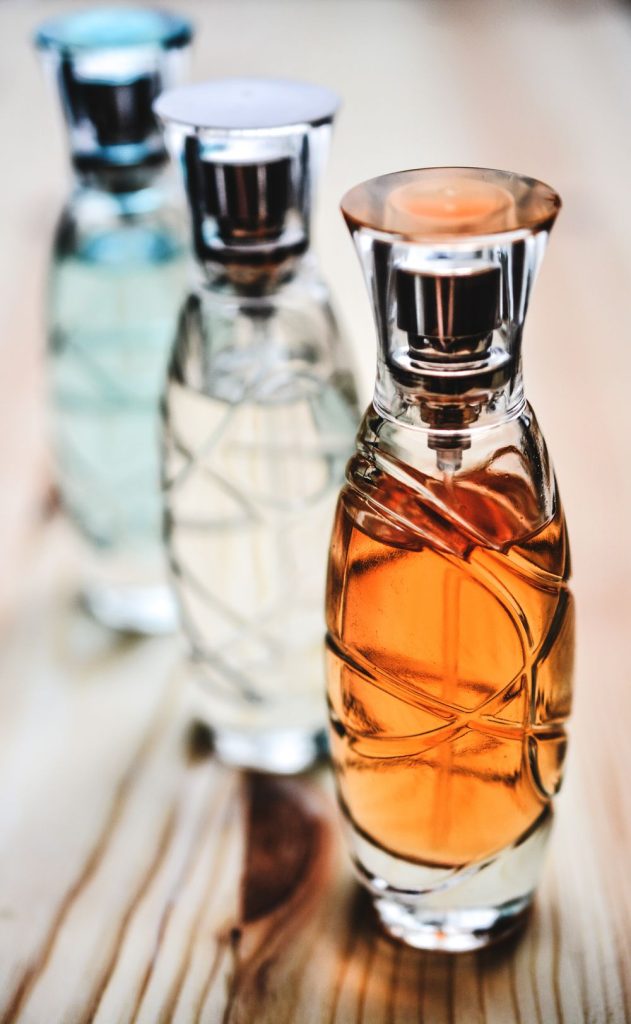
Layering means wearing more than one scent, for example a light eau de toilette over a richer base. It can create something personal, but it needs care. Stick to scents in the same family, like two florals or two woods, and test the pairing at home before an event.
Best strength: a lighter one over a richer one. Wear tip: apply the heavier scent first, then add the lighter one on top. Opinion: if you cannot tell what you smell like, simplify.
9. Travel and carry on bags
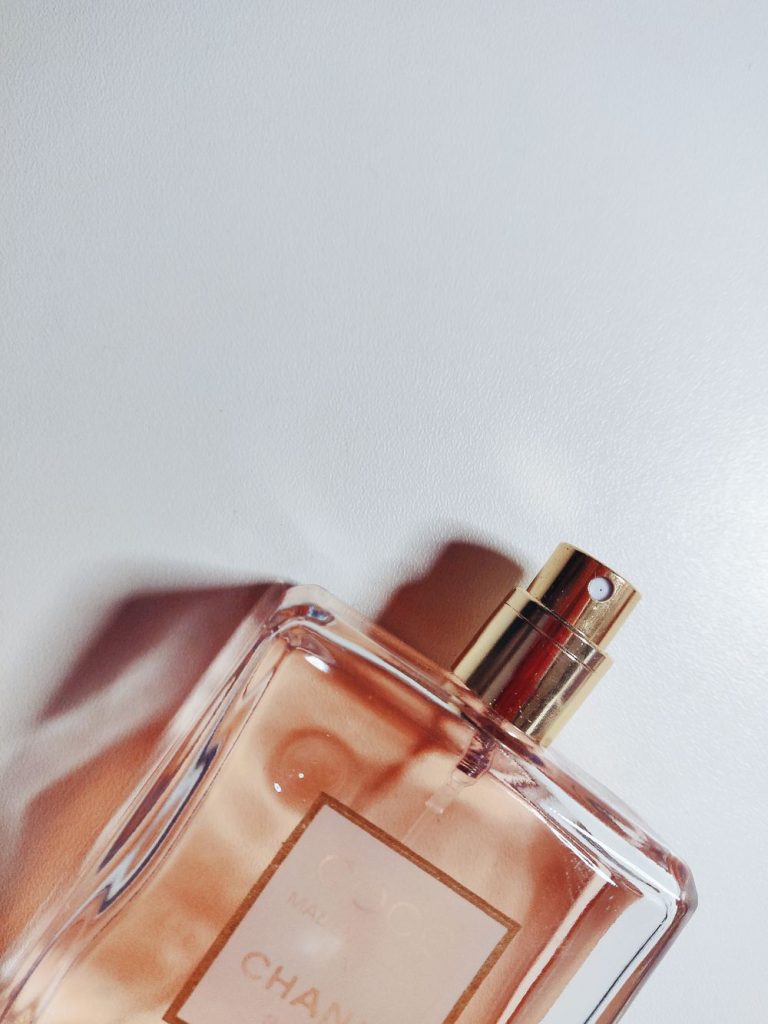
Full size bottles are heavy and fragile, and carry-on liquid limits apply. Decant a few days’ worth into a small atomizer, or buy a travel spray, and bring the strength that matches your plans. Atomizers also keep a scent handy for a touch up.
Best strength: whichever you will use most, in a small bottle. Wear tip: pack it upright and wrap the nozzle. Opinion: a sealed atomizer in your handbag is the best fragrance accessory you can own.
How to apply it so it actually lasts
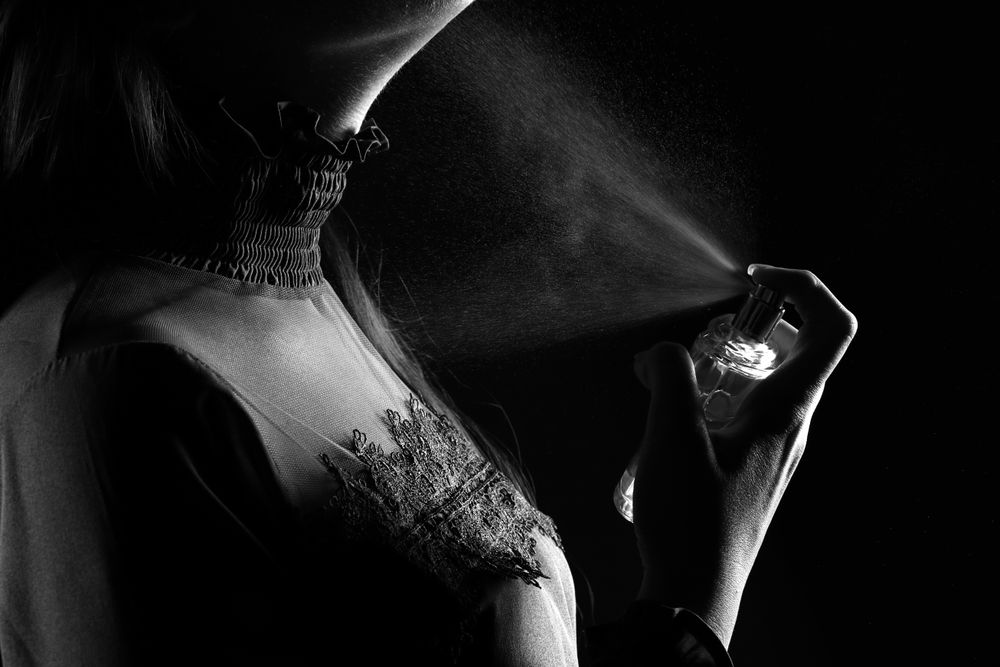
Where and how you apply a scent changes how long it lasts. Aim for warm pulse points such as the wrists, the sides of the neck and behind the knees, and spray from around 15 to 20 centimetres away so the mist spreads instead of soaking one spot.
Do not rub your wrists together. Rubbing is a common habit, and it can break down the scent faster. Moisturised skin holds fragrance better than dry skin, so an unscented lotion first is a cheap trick that helps.
Test before you buy. Spray one wrist, wait around 15 minutes for the top notes to settle, and then check again after an hour. The scent you smell later is the one you will live with.
Does the scent family change which strength you need?
It does, and this is the part most guides skip. Some scent families simply behave differently, so the same oil percentage can feel very different on your skin.
- Citrus and fresh scents: these are built from light molecules that evaporate quickly. Even a strong eau de parfum in this family can feel short lived, so many people prefer them as eau de toilette that they reapply.
- Florals: soft florals work well at either strength. Heavy white florals like jasmine or tuberose can feel overwhelming in hot weather as an eau de parfum.
- Woods, amber and vanilla: heavier base notes cling to skin and clothes, so even a modest strength can last. Eau de parfum can feel intense in a small room.
- Gourmand scents: sweet notes such as caramel, coffee or almond are cosy in winter and can be sticky in summer, so choose the strength to match the weather.
If you are unsure, sample the same scent in both strengths on opposite wrists. Within an hour you will know which version suits you.
Where body mist, cologne and pure parfum fit
Perfume labels have more than two words on them, so here is a quick map. Body mist is the lightest option, meant to be sprayed freely for a hint of scent. Eau de cologne sits near the light end of the range. Eau de toilette and eau de parfum are the middle of the shelf and the focus of this guide. Parfum, also sold as extrait, is the most concentrated, at around 20 to 40 percent oil according to the Marie Claire UK article above, and a little goes a long way.
Pure parfum is usually the most expensive per millilitre, but the bottles are often small and you use fewer sprays, so it can be better value than it looks. If you like a quieter scent, ask to test it, because richer formulas can sit differently on skin.
How to compare prices without getting fooled
Two bottles, two prices, two sizes: it is easy to get lost. Here is a simple method.
- Write down the price and the size in millilitres for each bottle.
- Divide the price by the millilitres to get a cost per millilitre.
- Compare the two numbers, not the sticker prices.
- Factor in how many sprays you use. If you only use two sprays of a richer eau de parfum but four of a lighter eau de toilette, the richer one may last longer in the bottle.
As a rough example, a 50 ml bottle at around $90 costs about $1.80 per millilitre. A 100 ml bottle of the same scent at around $130 costs about $1.30 per millilitre. The bigger bottle is cheaper per spray, but only if you will finish it before the scent changes with age. Most perfumes keep well for a few years if stored properly, so a big bottle of a scent you love is a fair deal.
Sets and gift boxes are another trap. A set can be a bargain when it includes the strength you want, or a distraction when half of it is body lotion you will not use. Check what you get before you buy.
One last budget tip: samples. Many perfume counters and online shops sell sample vials for a few dollars or pounds. Wearing a sample for a full day, through a commute, a meal and an afternoon slump, tells you far more than a quick sniff at the counter, and it can save you from paying for a full bottle you only wear twice.
Also remember that your own nose gets tired. If you cannot smell your perfume after an hour, that does not always mean it has vanished. Ask a friend, or step outside and back in, before you add more sprays.
Save this: the eau de parfum vs eau de toilette chart
Save it to your phone for your next trip to the perfume counter, or print it for your dressing table.
Download the full-size chart (free, no email needed)
What to say at the perfume counter
Sales advisers can only help if you give them something to work with. Try this.
Hi, I am looking for an everyday scent that feels fresh but not sharp. I usually like soft florals and light woods. Could I try the eau de toilette and the eau de parfum side by side, and could I take a small sample or a travel size so I can wear it for a full day before I commit?
If they only offer one strength, ask whether the other exists. Many fragrances come in several, and the lighter one is often the better bet for work.
How a scent changes over a day
- First 15 minutes: the top notes arrive. They are bright, often citrus or fruit, and they fade first.
- The next hour or two: the heart of the scent opens up, usually florals, spices or green notes.
- Later: the base notes settle in, warm woods, vanilla, musk or amber, and these stay closest to your skin.
- The next day: clothes often hold a faint trace, which is why people test scent on a scarf too, once they know their skin is not reacting.
Mistakes that waste money
- Buying from the top notes. Wait an hour before you decide.
- Assuming a higher price means better wear. Formula matters more than the label.
- Overspraying. More sprays do not make a weak scent last longer, they just make the first hour louder.
- Ignoring sensitivity. The FDA notes that some people are allergic or sensitive to fragrance components, and that fragrance may be listed on labels simply as “fragrance”. If your skin reacts, see the FDA’s page on fragrances in cosmetics and talk to a doctor.
- Storing it badly. Heat, light and humidity wear a scent down, so keep bottles in a cool, dark drawer rather than the bathroom.
Pair it with the rest of your look
A scent is part of an outfit. Read our guide to gold vs silver jewelry and hoops vs studs vs drop earrings for the finishing touches, then choose a velvet dress for an evening out or one of our classy Thanksgiving outfits and match your bottle to the occasion.
Frequently asked questions
Is eau de parfum stronger than eau de toilette?
Usually yes, because it contains more perfume oil. Typical ranges are around 12 to 20 percent for eau de parfum and around 8 to 15 percent for eau de toilette, though the two ranges overlap.
Does eau de parfum always last longer?
Not always. Marie Claire UK notes that a woody, musky eau de toilette can outlast a floral, fruity eau de parfum, so the formula matters as well as the concentration.
Which is better for summer?
Most people prefer a lighter eau de toilette in hot weather, because heat makes fragrance feel stronger.
How many sprays should I use?
Start with two or three sprays and add more only if you cannot smell it after an hour. Everyone’s skin and nose differ.
Can I wear different strengths of the same perfume?
Yes. Many people wear the eau de toilette by day and the eau de parfum for evenings. They will feel related but not identical.
So, which bottle are you reaching for?
For most wardrobes, the smartest move is one lighter bottle for day and one richer bottle for night. Which situation on the list sounds most like your week? Tell us in the comments.
Related Post