
Please note that we do not create all the designs featured in this article. Our primary focus is to curate and collect a diverse range of design collections and products to inspire and share with our audience. While we do not claim ownership or take full credit for the original designs and images, we occasionally make minor adjustments, particularly in home decor and fashion items, to present them more effectively. Additionally, we may produce and edit images to enhance their quality and composition before sharing them on our Pinterest page or website. For the design work we do on these creative designs, we also include our logo on the images shared on Pinterest and our website. This helps our audience recognize that these designs have been published on insiderlyfe.com!
Here is a question that has quietly ruined a lot of mornings: you buy a base product, apply it, and it either looks like a mask or like nothing at all. The label said foundation, or skin tint, or tinted moisturizer. Aren’t they the same thing?
Not even close. They sit on a spectrum from sheer to full coverage, and picking the wrong one for your skin and your day is the reason you end up wiping half of it off at lunch.
This guide explains the three side by side in plain English, with a free cheat sheet, a counter script, and a method for matching a shade without guessing. By the end you will know which one to reach for on a Monday, which one for a wedding, and which one to skip completely.
Don’t miss the part about SPF near the middle. It is the claim most people get wrong, and it affects your skin more than your makeup.
Foundation vs skin tint vs tinted moisturizer at a glance
The easiest way to remember the difference is to think about how much of your skin you want to see through the product.
| Product | Coverage | Texture | Looks like | Reach for it when |
|---|---|---|---|---|
| Foundation | Medium to full | Liquid, cream or stick | Even, polished skin | You want a flawless finish or need to cover redness and dark spots |
| Skin tint | Light to sheer | Thin, serum-like | Your skin, but a bit better | You want a fresh, bare face with a little evening out |
| Tinted moisturizer | Sheer | Creamy, lotion-like | A healthy wash of color | Your skin is dry or you want one step in a hurry |
Wear times and coverage differ between brands, so use this as a map, not a rulebook.
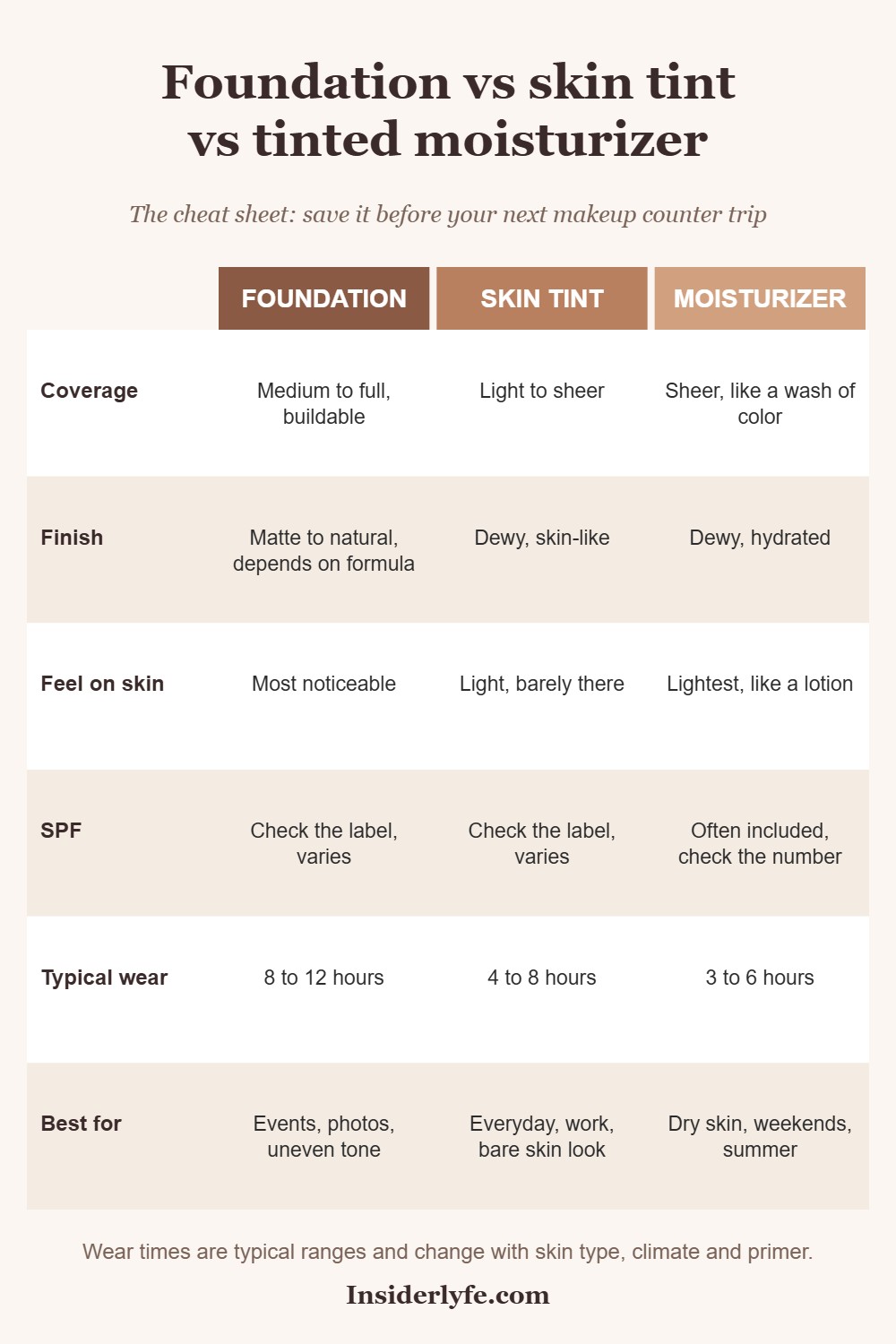
Download the full-size chart (free, no email needed), then keep it handy for your next shopping trip.
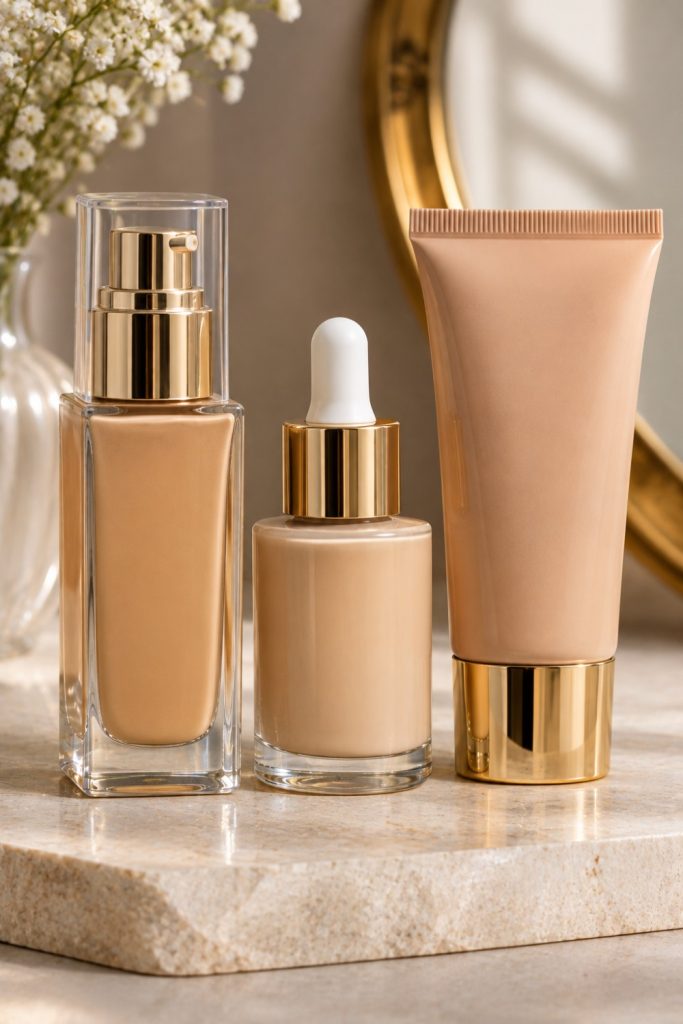
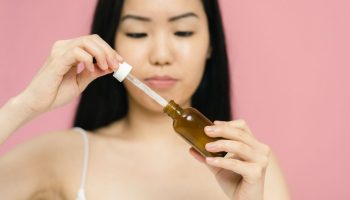
In the photo you can already see how the packaging gives it away. A pump bottle usually means a classic liquid foundation. A dropper bottle is common for skin tints and serum-style bases. A squeeze tube is usually a thicker, creamier formula like a tinted moisturizer.
Foundation: the full coverage workhorse
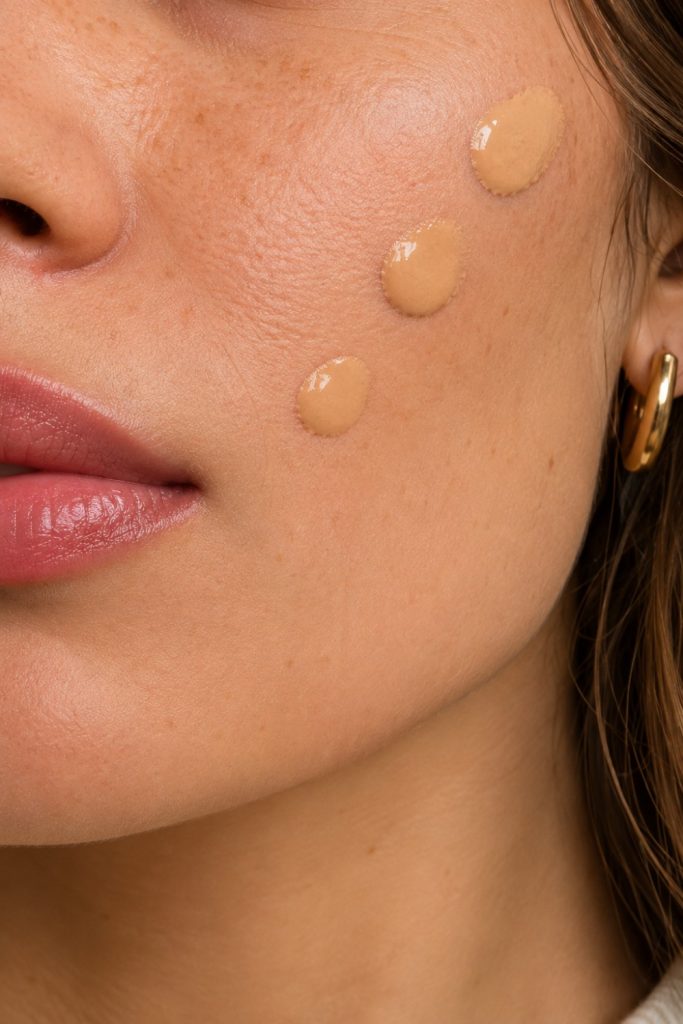
Foundation is the heavy lifter. It is designed to even out tone, cover redness and dark marks, and make the skin look uniform from every angle. The best ones feel like nothing on your skin while still looking like a flawless complexion in photos.
The trick with foundation is that more is not better. Three small dots on each cheek, one on the forehead and one on the chin is plenty for most faces. You can always add a second thin layer where you need more.
Best for: weddings, work presentations, evenings out, and anyone who wants to even out strong redness, acne marks or hyperpigmentation.
Skip it if: you want a skin look with freckles showing, or your skin is very dry and flaky. Foundation clings to dry patches.
Styling tip: keep the formula light on your skin by pressing it in, not rubbing. Rubbing makes it streaky and wears away your skincare underneath.
Blending foundation with a sponge or a brush
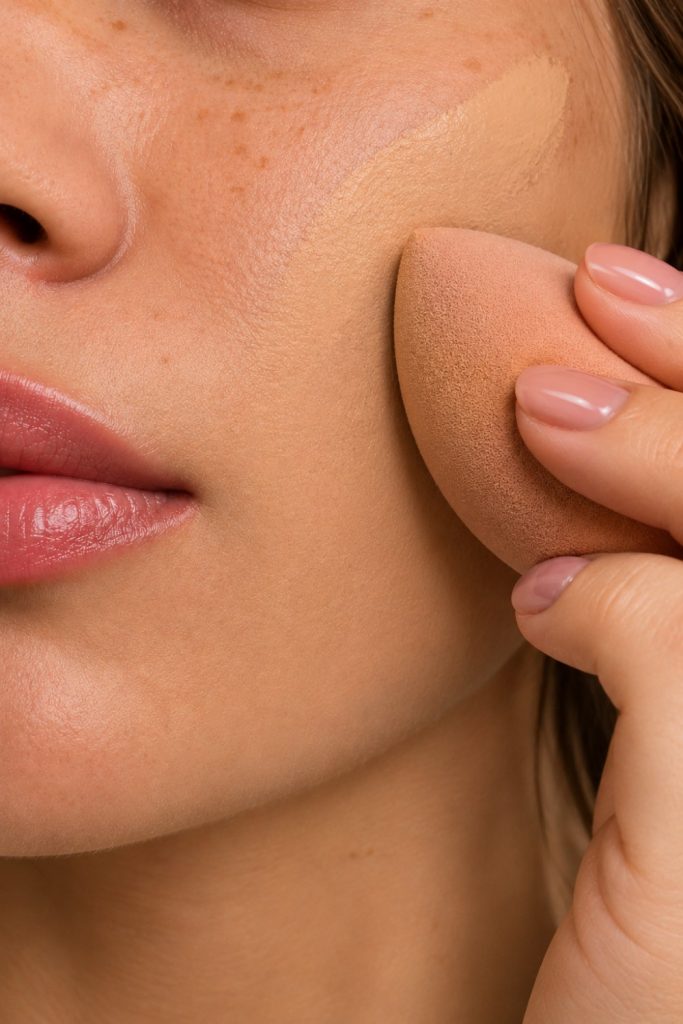
A damp sponge gives the most skin-like finish. Squeeze it out until it is barely damp, then bounce the product over your skin. Bouncing, not wiping, pushes the product into the skin so it looks like skin.
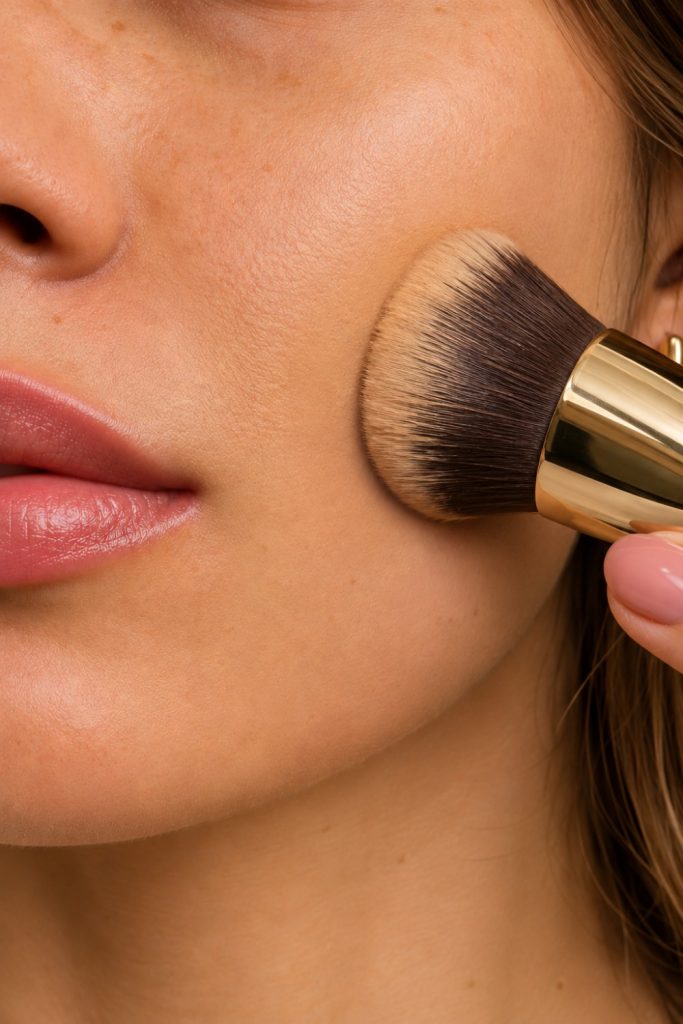
A foundation brush gives more coverage with less product, which is great for a full glam moment. Use small circles and sweep outward. A brush is also faster on days when you have four minutes to get out the door.
Honestly, a sponge is better for dry skin and for sheer formulas. A brush is better for full coverage and for oily skin that needs control. If you can only buy one tool, pick the sponge.
Skin tint: the fresh face favorite
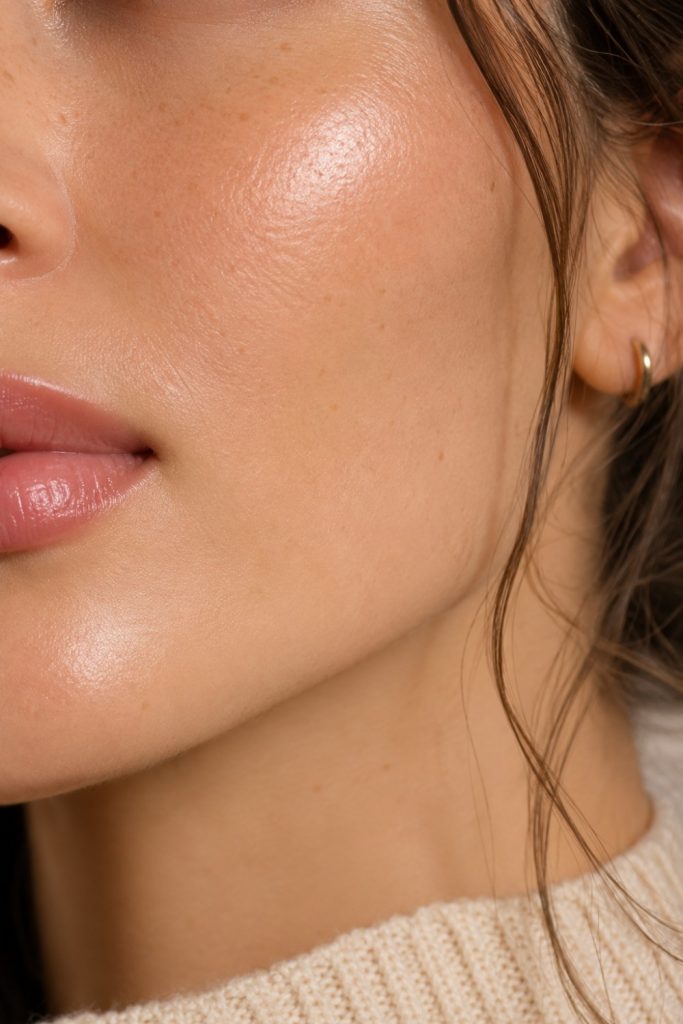
A skin tint is the middle child. It has more color than a tinted moisturizer, less coverage than foundation, and a thin, almost serum-like texture. The goal is to look like you slept eight hours, not like you are wearing makeup.
It lets freckles and natural texture show through, which is exactly why people love it. It also means it will not hide strong redness or dark circles on its own. Use a little concealer where you need extra coverage and leave the rest alone.
Best for: everyday wear, work, school, errands, and anyone who wants a healthy glow without a made-up look.
Skip it if: you need full coverage for an event or you have very textured skin and want it smoothed.
Styling tip: apply with your fingertips and press it in. The warmth of your skin melts the formula and it blends in seconds.
Tinted moisturizer: the lightest option
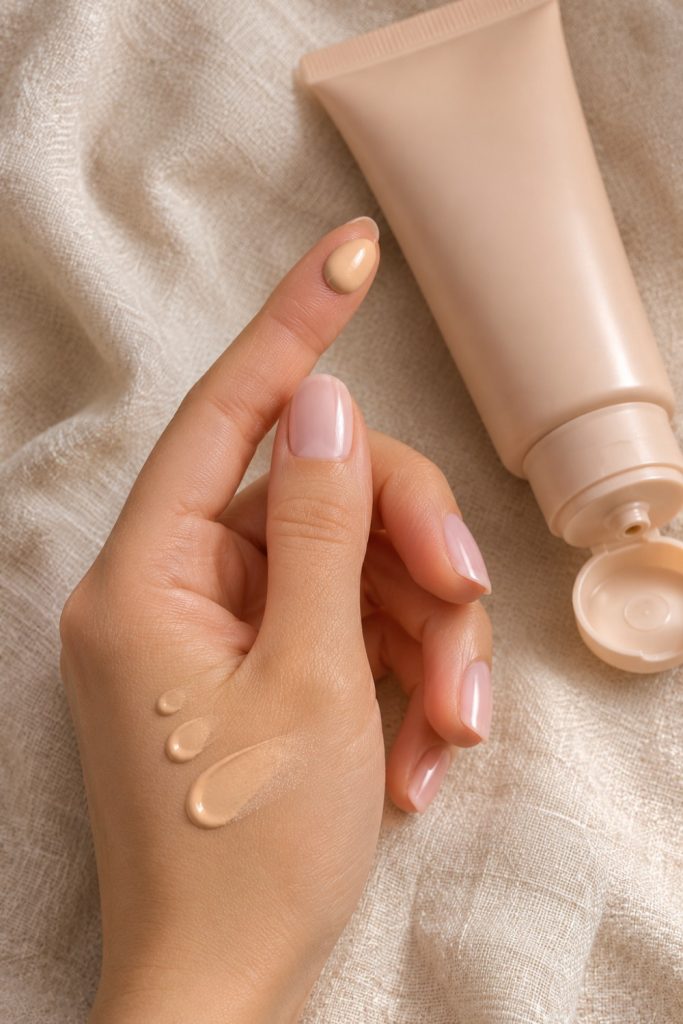
Tinted moisturizer is a skincare product first and a makeup product second. It looks like a lotion, feels like a lotion and adds a hint of color, the way a filter would. Many of them include sunscreen, and that is a big reason people reach for them in warmer months.
Dots on the back of the hand show the difference clearly: the cream spreads into almost nothing. That is the point. It evens the tone a little, makes the skin look healthy and leaves everything else to you.
Best for: dry or mature skin, weekends, summer, and anyone who wants one step and no fuss.
Skip it if: your skin is very oily or you want coverage that lasts through a long day. It is the shortest wearing of the three.
Styling tip: warm a small amount between your palms and press it over your face. Add a little extra on the center of your face where color fades first.
The three textures side by side
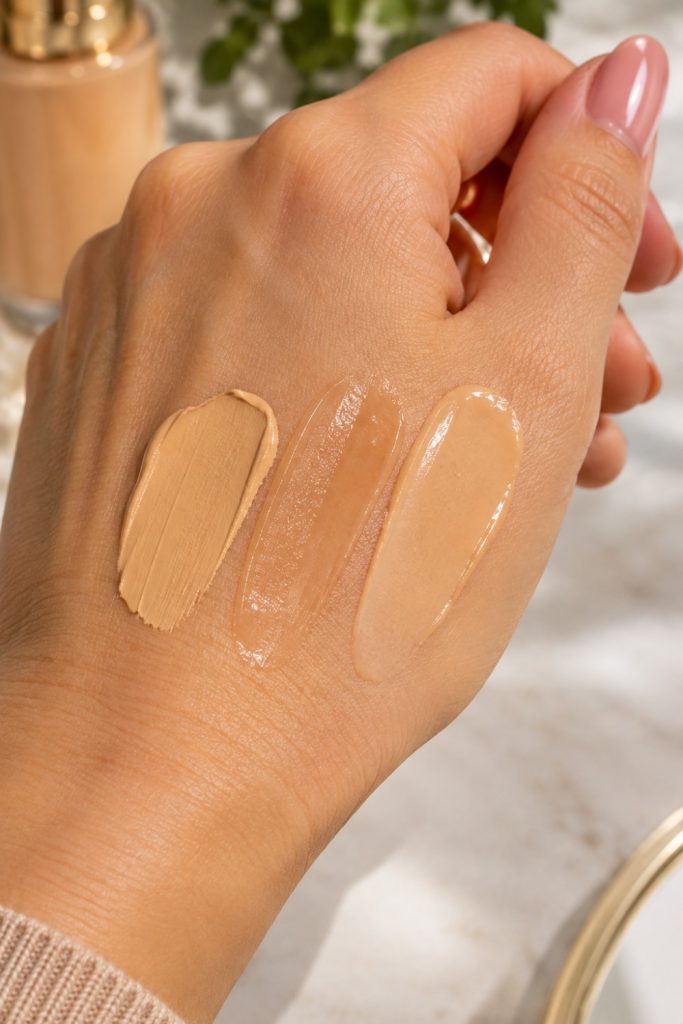
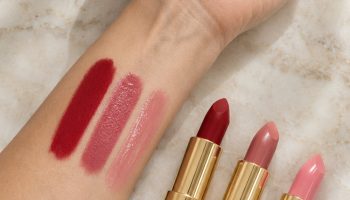
Swatching on the back of your hand shows you what a tube hides. The foundation swatch is dense and opaque. The skin tint is thinner and more see-through. The tinted moisturizer almost disappears, with only a soft stain of color.
Always test products on your jawline, not your hand. Your hand is a different color from your face, and that is the single biggest reason shade matches go wrong.
How to match your shade without guessing
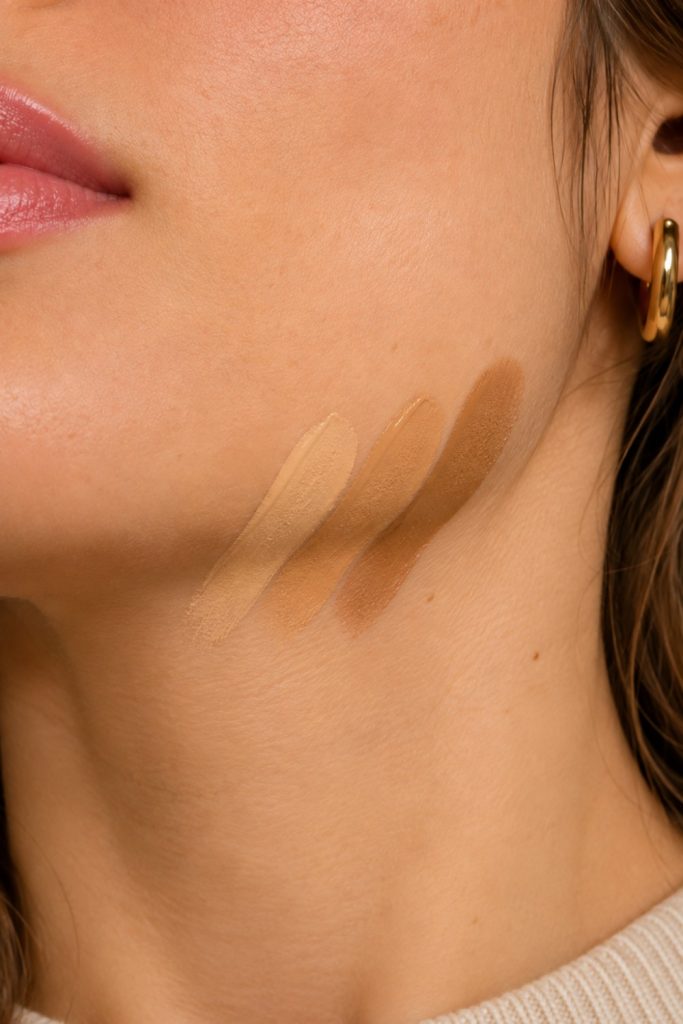
- Pick the two or three shades closest to your skin tone.
- Swipe a stripe of each from your cheek to your jawline.
- Walk to a window or step outside. Store lighting lies.
- Pick the one that disappears into your neck, not the one that looks pretty in the tube.
- Check again after ten minutes. Some formulas darken as they oxidize.
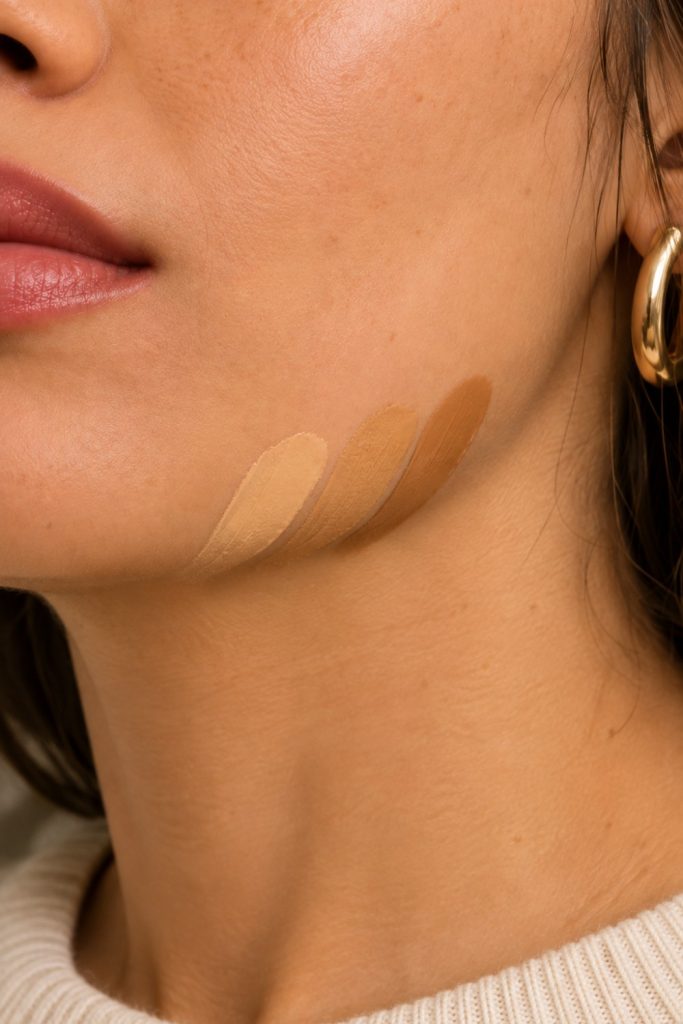
Make sure the match works on your neck too. A face that is a shade lighter than your neck is the most common foundation mistake, and it is easy to fix once you spot it.
Undertone matters as much as depth. Cool undertones lean pink or red, warm lean yellow or golden, and neutral sits between. If you cannot decide, check your wrist. Blue-looking veins suggest cool, green suggests warm, and a mix suggests neutral.
What about SPF in your base?
This is the part I promised. Many tinted moisturizers and some skin tints and foundations list an SPF. It is a nice bonus, but I would not treat it as your only sun protection.
The American Academy of Dermatology recommends a broad spectrum sunscreen with an SPF of 30 or higher, and notes that water resistance lasts either 40 or 80 minutes. A thin layer of tinted base is unlikely to be applied as generously as a dedicated sunscreen, so my own rule is simple: wear sunscreen first, then your base on top, and treat any SPF in the base as an extra layer.
If you are building a skin-first routine, our guide to retinol vs vitamin C explains which serums go under sunscreen, so your base sits on skin that is actually looking after itself.
A realistic morning routine for each base
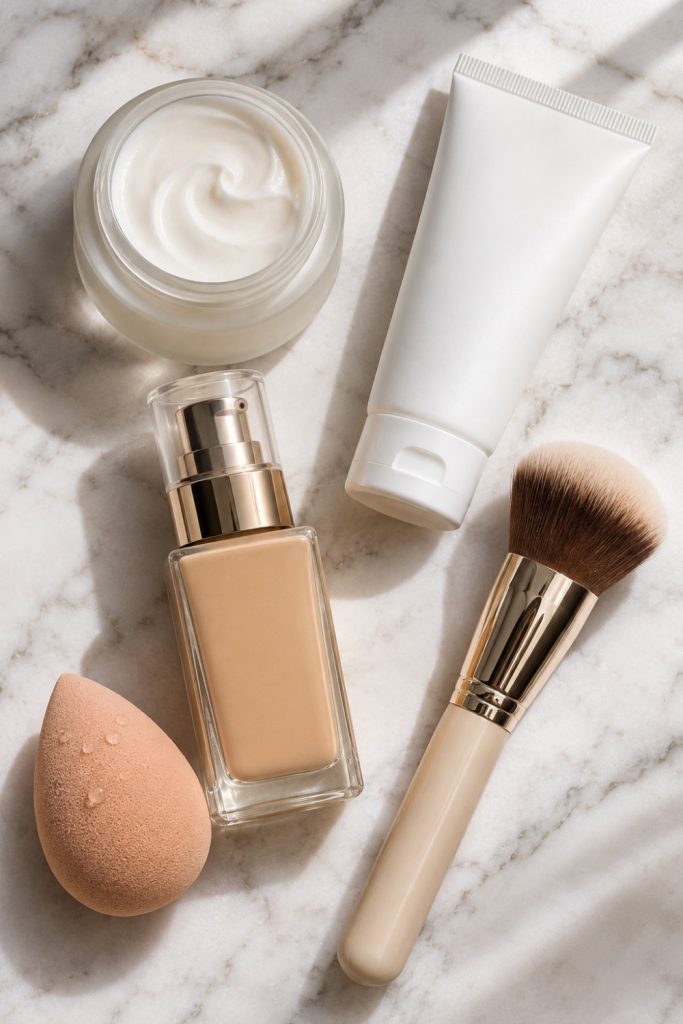
Here is how each product fits into a normal morning. Notice that the steps barely change. What changes is how many layers you add and how long it takes.
- Foundation morning (about 8 minutes): moisturizer, sunscreen, primer if you like, foundation with a sponge, concealer where needed, powder on the T-zone.
- Skin tint morning (about 4 minutes): moisturizer, sunscreen, skin tint with fingertips, concealer under the eyes only.
- Tinted moisturizer morning (about 2 minutes): sunscreen if the product has none, tinted moisturizer pressed in, done.
Your skin type changes the plan too. Oily skin does better with a lighter layer plus a little powder on the T-zone. Dry skin loves tinted moisturizer and skin tints, and benefits from a hydrating prep underneath. Combination skin can mix, using a skin tint on the dry areas and a thin layer of foundation where it is oily.
Which base for which day: a quick decision guide
Instead of agonizing every morning, match the base to the day. This is the cheat code I wish someone had given me years ago.
| Your day | Best pick | Why |
|---|---|---|
| Office, back to back meetings | Skin tint | Looks polished, does not crack when you smile and talk all day |
| Wedding, party or photos | Foundation | The coverage holds up to flash and close-ups |
| Weekend coffee and errands | Tinted moisturizer | One step, feels like nothing, and the sheer color looks natural in daylight |
| Dry winter skin | Tinted moisturizer or hydrating skin tint | Cream formulas sit nicely on dry skin and do not cling |
| Hot, humid day | Light skin tint, or a thin layer of foundation with powder in the T-zone | Heavy products slide, and lighter formulas feel less sticky |
| Bare skin days with a breakout | Skin tint plus spot concealer | You cover what matters and leave the rest to breathe |
Notice that nothing here says always or never. Your skin changes with the weather, your cycle, your stress and how much you slept, so your base can change too. Owning one light product and one fuller product covers almost every situation.
Can you mix them? Yes, and it is a great trick
Makeup artists do this all the time. If your foundation feels too heavy, mix a pump of it with a drop of moisturizer in your palm and you have a custom skin tint. If your skin tint is too sheer for one area, tap a little foundation over the redness or the dark spots only.
- Foundation plus moisturizer: lighter coverage and a dewier finish, great when your skin feels tight in winter.
- Skin tint plus a little foundation on top: targeted coverage on the center of your face without a full mask.
- Tinted moisturizer plus concealer: the classic, easy five minute face for a long Saturday.
If you mix, do it in your palm or on the back of a clean hand, not on your face, so you can control the amount. And always test the mixture on your jawline in daylight, because a custom blend can read differently from either product alone.
Concealer and powder: when you actually need them
With foundation, you often need concealer only for the darkest area under the eyes and a few spots. With a skin tint you might need it for the same two spots and nothing else. With tinted moisturizer, skip it unless something truly bothers you.
Powder is for shine control, not for all over. A small brush of translucent powder on the forehead, nose and chin is all most people need. Too much powder on a dewy base can make it look cakey and flat, and it is the fastest way to age your skin in a photo.
One more small thing that makes a big difference: let your skincare sit for a few minutes before you apply your base. Moisturizer and sunscreen that are still wet will pill under any product, and pilling is the number one thing people blame on their makeup when it is really a timing issue.
How long should a base really last?
Wear time depends on the formula, your skin type and the day. Generally speaking, foundation lasts the longest, skin tints are middle of the road, and tinted moisturizers fade fastest because they are closest to skincare. If your base is gone by noon, that is not a failure, it is how a sheer product behaves.
To make any of them last longer, apply thin layers rather than one thick one, press the product into the skin, and let each layer settle for a minute. Setting spray can help too, but it is optional and not a replacement for good prep.
Mistakes that make any base look worse
- Applying on dry skin. Any base clings to dry patches. Prep with moisturizer and wait a minute.
- Using too much. Start with half of what you think you need.
- Forgetting the jawline and ears. A visible line is the fastest giveaway.
- Powdering everything. Powder only where you shine. A dewy base looks best when it stays dewy.
- Buying in store lighting. Always check a shade in daylight.
- Matching to the back of your hand. Use your jaw.
Want a cheek color that goes with your base? Our cream vs powder vs liquid blush comparison shows which formula blends best over each type of base, and the toasty blush looks give you placement ideas for the season.
What to say at the makeup counter
Hi, I want a base that looks like skin, not makeup. My skin is on the dry side, I want something light that I can apply in two minutes, and I would like it to have some SPF. Could you show me a skin tint or a tinted moisturizer and test two shades along my jawline in daylight?
Saying the words daylight and jawline gets you a better match and a better answer.
Budget vs splurge
Drugstore bases have improved dramatically, and many shade ranges are wider than the luxury ones. Spend where it counts: a good sponge, a decent brush and a sunscreen you like wearing. Those three make any base look better, no matter the price tag.
If you want a quick pairing for the season, add a satin lipstick from our matte vs satin vs glossy lipstick guide and a bit of cream blush, and you have a full face in about five minutes.
Foundation vs skin tint vs tinted moisturizer: quick FAQ
Which one gives the most coverage?
Foundation. Skin tints are lighter and tinted moisturizers are the sheerest.
Can I wear a skin tint instead of foundation?
Yes, for everyday wear. For an event with photos, foundation gives a more even finish.
Is tinted moisturizer enough sun protection?
Only if the SPF on the label is 30 or higher, it is broad spectrum, and you apply enough of it. For most people it is safer to wear a dedicated sunscreen underneath.
Which is best for dry skin?
A tinted moisturizer or a skin tint with a hydrating formula. Pair it with a good moisturizer underneath.
Do I need primer?
Not with a skin tint or a tinted moisturizer. With foundation, a primer can help it last longer on oily skin.
Save this for later
Download the cheat sheet above and keep it in your photos. Next time you stand in front of a wall of bottles, you will know exactly which one you are holding.
If you liked this, read our guide to winter makeup looks that last all night.
Now tell me: are you a full coverage foundation person, a skin tint fan or a tinted moisturizer minimalist? And what is the one base product you will never give up?
Related Post