
Please note that we do not create all the designs featured in this article. Our primary focus is to curate and collect a diverse range of design collections and products to inspire and share with our audience. While we do not claim ownership or take full credit for the original designs and images, we occasionally make minor adjustments, particularly in home decor and fashion items, to present them more effectively. Additionally, we may produce and edit images to enhance their quality and composition before sharing them on our Pinterest page or website. For the design work we do on these creative designs, we also include our logo on the images shared on Pinterest and our website. This helps our audience recognize that these designs have been published on insiderlyfe.com!
Ask ten stylists what the difference is between a French bob and an Italian bob and you will get ten slightly different answers, and one or two blank stares.
That is because the two names float around Pinterest and TikTok with no agreed definition. People save a photo, say “French bob” at the salon, and walk out with something that is closer to a lob.
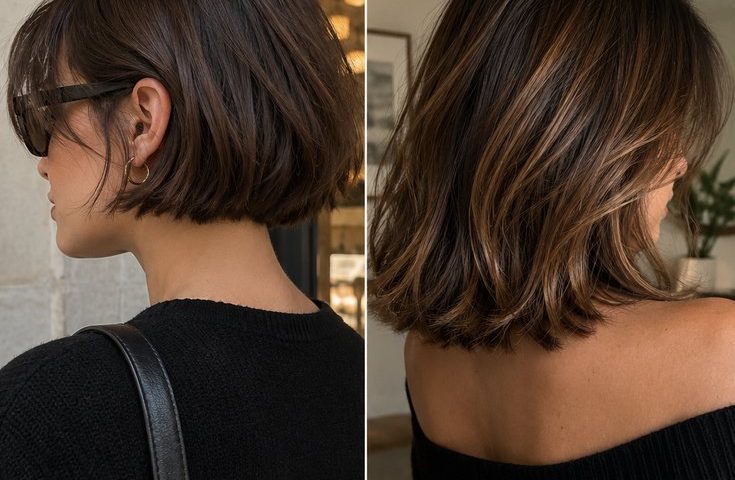
So here is the plain version. A French bob is short, roughly jaw to chin, a little undone, and usually comes with a fringe. An Italian bob is longer, fuller and bouncier, skimming the collarbone, with layers and a lot of movement.
Same family, completely different personality. One says “effortless Parisian who just woke up”. The other says “Milan, blowout, dinner reservation”.
Below are ten real looks, five from each side, each with who it suits, how often you will be back in the chair, and one styling trick. After that comes a side by side table, the exact words to say at the salon, a week by week timeline, and a cheat sheet you can screenshot.
Two to watch for. Number 4 is the French cut that stylists say flatters the widest range of faces, and it is not the one you would guess. And number 9 is the Italian detail that makes a bob look expensive for almost no extra effort. Keep scrolling.
French bob vs Italian bob: the one minute version
French bob: short and deliberate. It sits between the jaw and the chin, often with a micro fringe or curtain fringe, and it is meant to look slightly undone. Texture is welcome, polish is optional, and it works best when it looks like you did not try.
Italian bob: longer and fuller. It lands around the collarbone or just above, with soft layers cut for volume and bounce. It is usually blow-dried with a round brush, so the finish is smooth, glossy and swingy.
Neither is better. French is for personality and ease. Italian is for volume and polish. Pick based on your hair type and how much time you want to spend in front of a mirror.
1. Classic French bob with micro fringe

The original. A blunt, chin-length cut with a short fringe that sits above the brows, cut slightly shorter at the back so it tucks under the jawline.
It looks sharp but not stiff, because the ends are softened and the fringe is cut to be a little see-through. This is the version you picture when someone says Parisian.
The fringe is the real commitment here. If you have never had one, this is the cut that will make you decide.
Best for: straight to slightly wavy hair, oval and heart-shaped faces, and anyone with a high forehead.
Maintenance: medium to high. The fringe needs a trim every 3 to 4 weeks and the shape every 6 to 8.
Styling tip: dry the fringe first, while the rest of your hair is still damp, with a small round brush. Fringe dried last tends to separate and flick.
2. Wavy French bob

Same jaw-to-chin length, but cut with a touch of weight removal so it bends instead of hanging straight. Think air-dried waves with a few flicks at the ends.
This is the lazy-morning bob. You spray, scrunch and leave. The wave hides uneven growth and makes a short cut look fuller than it is.
It is also the easiest French bob to live with, because nothing about it needs to be perfectly smooth.
Best for: fine or flat hair that needs body, and people who want zero daily blow-drying.
Maintenance: low to medium. A shape trim every 8 weeks keeps the waves from collapsing into a triangle.
Styling tip: apply a sea salt or texture spray to damp hair, scrunch upward, and let it dry untouched. Diffusing on low heat speeds it up.
3. Tousled French bob with curtain fringe

A jaw-length bob with long, parted fringe that sweeps to each side and blends into the length. It is the softer cousin of the micro fringe.
Curtain fringe grows out gracefully, which is the whole reason people choose it. There is no awkward stage, only a slow slide into face-framing layers.
If you like the look of a fringe but dread the commitment, start here. The longer pieces also pair well with the choppy ideas in our guide to bold short haircuts.
Best for: first-time fringe wearers, round and square faces (the side sweep softens the jaw).
Maintenance: low. The fringe grows out into layers, so trims can wait 8 to 10 weeks.
Styling tip: blow-dry the fringe away from the face in opposite directions, then finish with a cool shot to set the curve.
4. Blunt jaw-length French bob
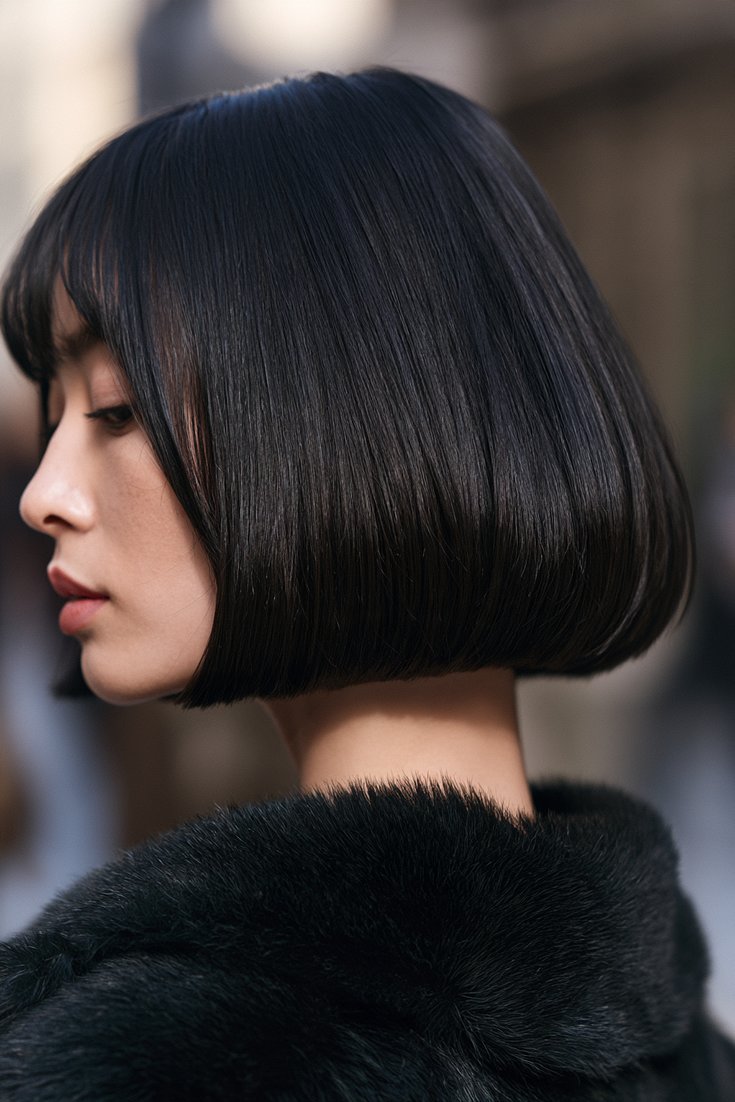
Here is the one we teased. A razor-straight cut at the jawline, no layers, no fringe, one clean line.
It is the surprise winner for face shapes. A line that stops at the jaw gives round faces definition, balances long faces by adding width, and flatters oval faces without trying. Stylists love it because there is nowhere for the cut to hide.
It also makes fine hair look thicker, since every strand ends at the same point.
Best for: fine, straight hair and anyone who wants a polished, minimal look.
Maintenance: high. A blunt line grows out fast and shows it. Trim every 5 to 6 weeks.
Styling tip: use a flat iron for one pass only, curving the ends under at the bottom, then add a drop of shine serum to the lower inch.
Halfway there, and that was the French side. The Italian bobs are next, and number 9 is still ahead, so keep scrolling.
5. Textured French bob on curls
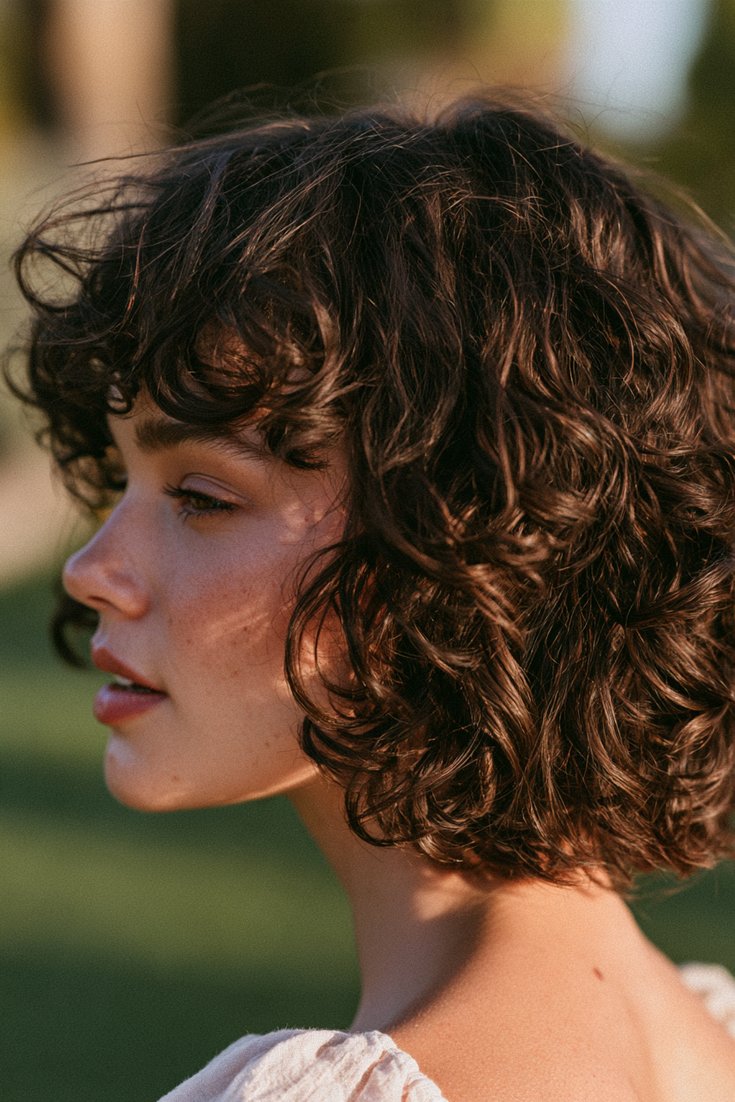
A cut made for curly hair, usually chin length when stretched and closer to the jaw once the curls spring up. It is cut dry, curl by curl, so every ringlet sits where it should.
The shape is rounded and airy rather than flat. Done properly there is no triangle effect, because the stylist removes weight from the sides and keeps it at the crown.
Curls and short hair are a great pairing, but only when the cutter understands shrinkage. Always ask for a dry cut.
Best for: curly and coily hair types (2B to 4A), and anyone tired of long, heavy curls.
Maintenance: medium. Trim every 8 to 10 weeks, and refresh the shape between if it starts widening at the bottom.
Styling tip: apply curl cream and gel on soaking wet hair, scrunch out the crunch once dry, and diffuse with the head tilted sideways.
6. Sleek Italian bob
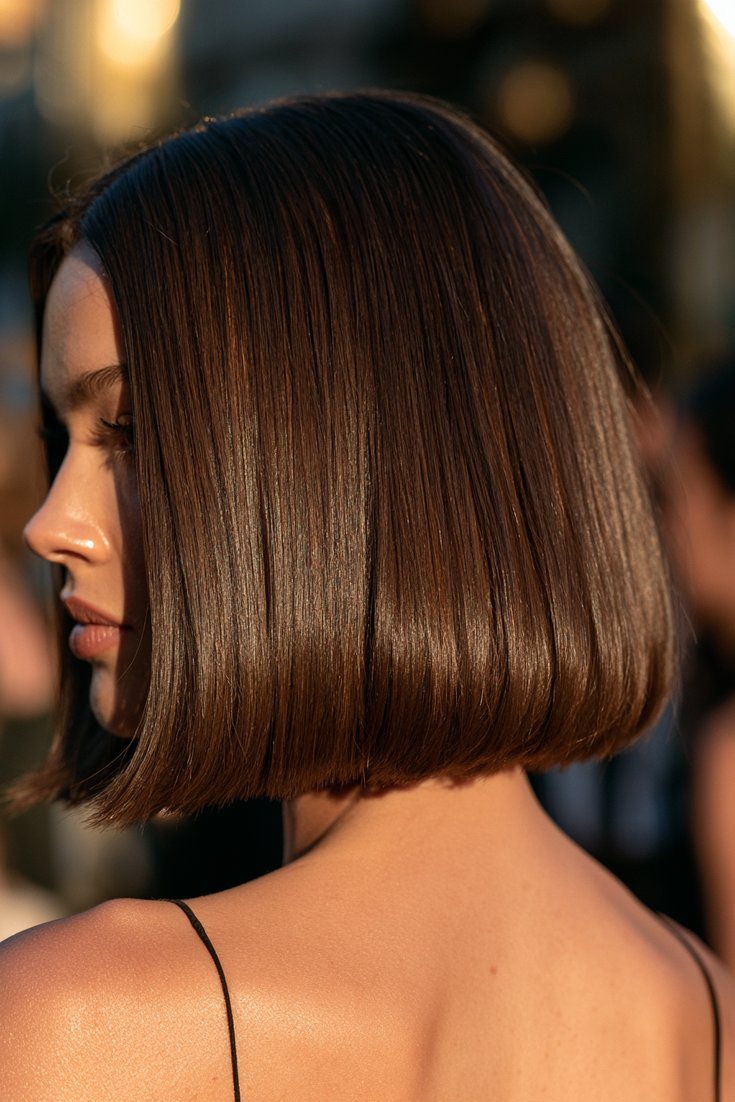
Now the other side. The sleek Italian bob lands around the collarbone, with long, slightly face-forward lines and a mirror-smooth finish.
It is the closest thing to a power cut. The length gives you movement, and the shine gives you polish. It looks expensive in a boardroom and in a restaurant.
For work, it sits in the same camp as the shapes in our guide to office haircuts, only a touch longer and softer.
Best for: thick, straight to wavy hair, long and oval faces.
Maintenance: medium. Trim every 8 to 10 weeks, and use a gloss treatment every 3 months for the shine.
Styling tip: blow-dry in sections with a paddle brush, then a round brush at the ends to turn them slightly under. Finish with a heat protectant.
7. Layered Italian bob

Same collarbone length, but cut with long, invisible layers from the cheekbone down. The result is a bob that moves instead of hanging.
Layers are what separate an Italian bob from a plain lob. They remove bulk from the ends and add lift at the crown, which is why this style looks fuller on thin hair and lighter on thick hair.
It is also much more forgiving when the day gets humid.
Best for: hair that is either very thick or very flat, and anyone who wants movement.
Maintenance: medium. Layers drop out of shape around week 8 to 10.
Styling tip: flip your head upside down for the last 30 seconds of blow-drying, then use your fingers to place the layers.
8. Voluminous bouncy blowout Italian bob
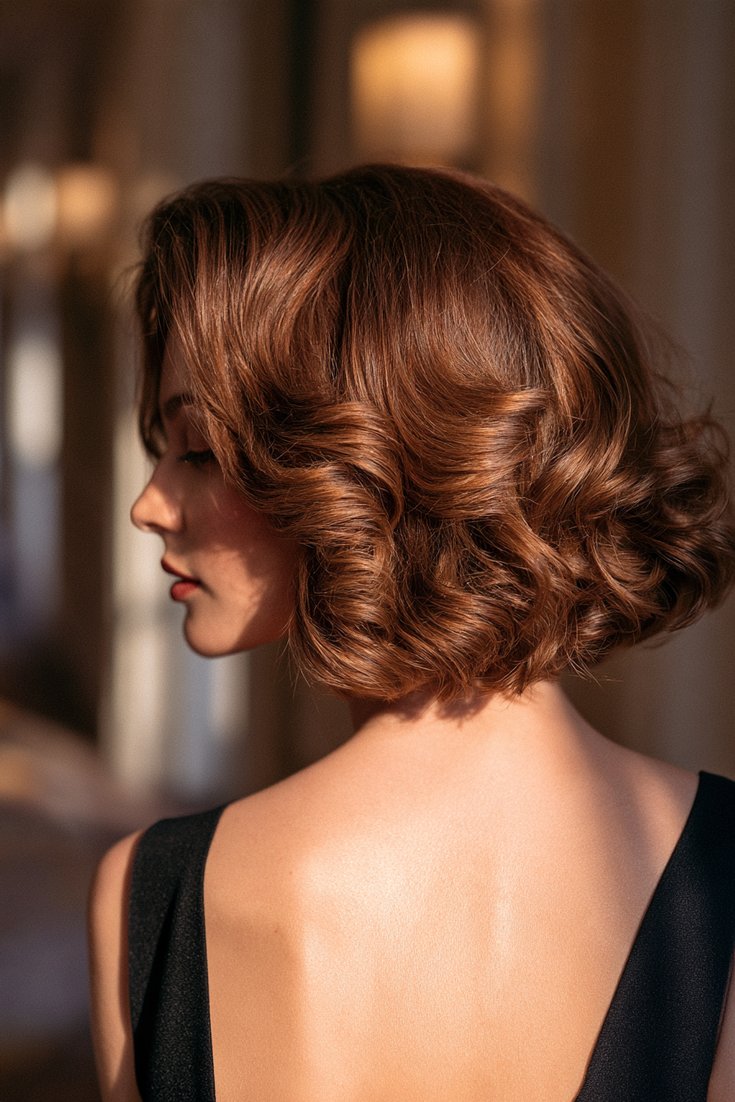
This is the signature. A full, round, bouncy shape with big curl at the ends and lift at the roots, the kind of bob that looks like a salon blowout even three days later.
Size is the point. The volume sits at the mid-lengths and the ends curl in softly, so it frames the face like a soft helmet in the best way.
It is also the best bob for a night out, and it pairs especially well with the glam looks in our New Year’s Eve hairstyles.
Best for: fine to medium hair that holds a curl, and heart-shaped or long faces that need width.
Maintenance: high on styling, medium on cuts. Plan on 25 minutes of blow-drying, or heated rollers if you want a shortcut.
Styling tip: rough-dry to 80 percent, then roll large sections around a 50 mm round brush and hold for 10 seconds before releasing. A volumising mousse at the root does half the work.
9. Italian bob with face-framing layers
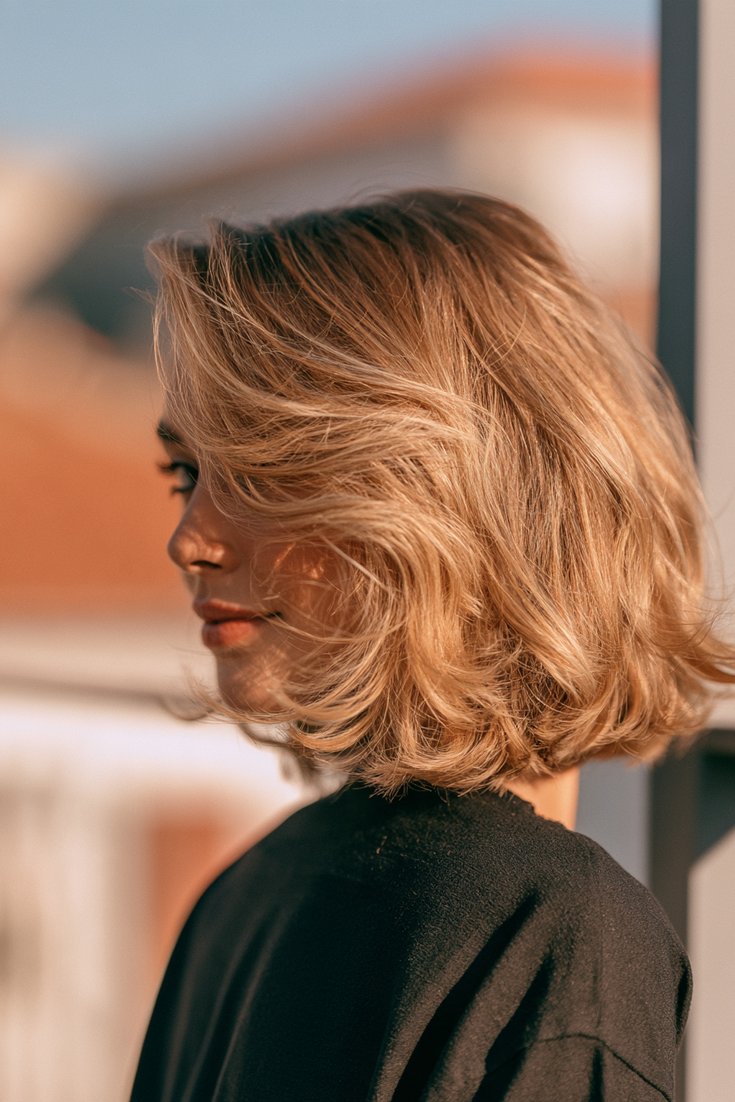
Here is the detail we teased. Take any Italian bob and add two or three longer layers that start at the cheekbone and sweep forward.
It is a tiny change that makes the whole cut look custom. The face-framing pieces open up the face, add a little shape at the jaw, and give you something to tuck behind your ear when you need to look put together.
It also lets you try the money-piece trend without committing to colour. If you want to go further, our guide to balayage vs highlights covers how to brighten just those front pieces.
Best for: anyone with a square or round face, and anyone growing out a fringe.
Maintenance: low to medium. The framing layers hold for 10 weeks before they become a single length.
Styling tip: curl the front pieces away from your face with a 25 mm barrel iron, then brush through lightly so they relax.
10. Long Italian bob (the lob)

The longest cut on the list, falling just past the collarbone and touching the shoulders. It is the Italian bob at its most relaxed.
This is for people who want change without losing length. It is a big step down from hair at the waist, but a small one from a shoulder cut, and it is easy to tie back while you decide.
It also works well for events, because it holds an updo. If you like to switch between styles, browse our updo hairstyles for ideas that suit this length.
Best for: anyone moving from long hair to short, and thick hair that needs weight removed.
Maintenance: low. Trim every 10 to 12 weeks.
Styling tip: set the ends with a medium barrel iron, turning half the sections toward the face and half away. It gives a lived-in wave in ten minutes.
French bob vs Italian bob: side by side
| French bob | Italian bob | |
|---|---|---|
| Length | Jaw to chin | Collarbone to just past |
| Fringe | Often, micro or curtain | Rarely, face-framing layers instead |
| Texture | Undone, wavy or blunt | Smooth, bouncy, blow-dried |
| Layers | Few to none | Long, soft, built for volume |
| Best face shapes | Oval, heart, round (blunt) | Long, square, round |
| Best hair types | Fine, wavy, curly | Thick, medium, wavy |
| Daily styling | 5 to 10 minutes | 15 to 25 minutes |
| Trim schedule | Every 4 to 8 weeks | Every 8 to 12 weeks |
| Mood | Effortless, Parisian | Polished, glamorous |
Products and tools that make the difference
You do not need a shelf of products. You need the right five.
- Heat protectant: essential for the Italian bob and its blow-dry.
- Sea salt or texture spray: the French bob’s best friend, applied to damp hair.
- Volumising mousse: a golf-ball amount at the roots for the bouncy Italian shape.
- Lightweight shine serum: two drops on the ends of a blunt or sleek cut.
- 50 mm round brush: the one tool that turns a flat bob into a blowout.
What to say at the salon
Copy the one that matches you.
For a French bob: “I’d like a French bob that sits between my jaw and chin, cut slightly shorter at the back. I want it textured, not too perfect, with [a micro fringe / a curtain fringe / no fringe]. I air-dry most days, so please make sure it falls well without styling.”
For an Italian bob: “I’d like an Italian bob that skims my collarbone, with long soft layers for volume and bounce. I’ll blow-dry it with a round brush, so please cut it to curl under at the ends. Face-framing layers from the cheekbone, please.”
If you cannot decide: “I’m somewhere between a French and an Italian bob. Could you cut it at the chin or just below, with soft layers, so I can wear it either sleek or tousled? Here is my photo.”
What to expect in the weeks after the cut
- Week 1: the cut looks its best. Learn the dry routine now, while the shape is fresh.
- Week 3 to 4: a French bob fringe starts touching the lashes. Book a quick fringe trim, which most salons do for free.
- Week 6: a blunt French bob loses its edge and the back starts to push out. Time for a shape trim.
- Week 8 to 10: an Italian bob’s layers soften and the ends look heavier. Book a trim and a gloss.
- Week 12: a long Italian bob is due. If you skip, it quietly becomes a lob, and then a long layered cut.
Save this: which bob to book
Screenshot this and match yourself to a line.
- I have fine, flat hair: blunt French bob (number 4).
- I have thick hair: layered Italian bob (number 7).
- I have curls: textured French bob (number 5) or a long Italian bob (number 10).
- I want zero morning effort: wavy French bob (number 2).
- I want a blowout look: bouncy Italian bob (number 8).
- I have a round face: curtain fringe French bob or face-framing Italian bob.
- I have a long face: bouncy Italian bob, or a blunt French bob for width.
- I am nervous about going short: long Italian bob.
Frequently asked questions
What is the main difference between a French bob and an Italian bob?
Length and finish. A French bob sits at the jaw or chin, is often tousled and usually comes with a fringe. An Italian bob falls to the collarbone, is layered, and is blow-dried for volume and bounce.
Which bob suits a round face?
A French bob with a curtain fringe or a face-framing Italian bob. Both add angles and avoid a chin-length line that widens the cheeks. A blunt French bob also works if it is cut at the jaw rather than above it.
Which is easier to style every day?
The French bob, by a long way. It can be air-dried with a texture spray. The Italian bob looks best blow-dried, so expect 15 to 25 minutes.
Can fine hair pull off an Italian bob?
Yes, with some adjustments. Ask for fewer layers and more blunt ends, then add a root-lifting mousse. A voluminous bob needs support from product, not from cutting more length away.
How often should I trim each cut?
A French bob needs a shape trim every 6 to 8 weeks and a fringe trim every 3 to 4 weeks. An Italian bob can wait 8 to 12 weeks, because the longer layers hide growth.
The honest answer
If you want personality and speed, book the French bob. If you want volume and polish, book the Italian bob. If you want both, ask for a chin-length cut with soft layers and bring the photo.
And whichever you choose, say the length out loud at the salon. “Jaw” and “collarbone” mean very different things, and that one word is the difference between the bob in your photo and a surprise.
Related Post