

Please note that we do not create all the designs featured in this article. Our primary focus is to curate and collect a diverse range of design collections and products to inspire and share with our audience. While we do not claim ownership or take full credit for the original designs and images, we occasionally make minor adjustments, particularly in home decor and fashion items, to present them more effectively. Additionally, we may produce and edit images to enhance their quality and composition before sharing them on our Pinterest page or website. For the design work we do on these creative designs, we also include our logo on the images shared on Pinterest and our website. This helps our audience recognize that these designs have been published on insiderlyfe.com!
Here is a curly hair truth that saves a lot of money: most “bad” curly cuts are not bad hair, they are a good pair of scissors used on straight hair logic. Curls shrink, spring and sit differently when dry, so a cut that looks perfect wet can turn into a triangle by dinner.
Layers are the fix, and they are also the risk. Done well, they give curls shape, bounce and room to move. Done badly, they leave you with a pyramid and a lot of regret.
This guide covers eight layered curly haircuts, each with what it looks like, who it suits, how it behaves day to day and the exact words to say in the chair. Two to flag: number 3 is for anyone afraid to go shorter, and number 8 shows how curly fringe can work, even if you have been told it cannot.
Layered curly cuts at a glance
| Cut | Best on | Effect |
|---|---|---|
| Long layers on spirals | Long, defined curls | Movement without losing length |
| Shoulder layers | Medium, bouncy curls | Frames the face |
| Short rounded layers | Short, tight curls | Compact, easy shape |
| Volume focused layers | Big, loose curls | Fills out the sides |
| Rounded shape cut | Coily texture | Even, balanced outline |
| Layers with movement | Medium to large curls | Lift at the crown |
| Colour with layers | Curls with volume | Shows off dimension |
| Curly fringe with layers | Springy curls | Frames the eyes |
1. Long layers on spiral curls: keep the length, lose the weight

Long spiral curls like these are beautiful, but the weight can pull them straight at the roots. A few long layers lift the shape without taking away your length.
The idea is gentle: the shortest layer starts well below the chin, so you keep the full look but get bounce at the top and ends that curl properly.
If you are scared of scissors, this is the safest place to begin. You will see the result at once, and you can always go shorter next time.
Best for: long, defined curls that feel heavy.
Upkeep: Trim about every 8 to 12 weeks to keep the ends healthy, and detangle gently when wet.
What to ask for: “Long, soft layers, cut curl by curl, and please keep my length.”
2. The shoulder skimming layered cut: the easy everyday shape

Shoulder length is the sweet spot for many people: long enough to tie back, short enough to stay light. Layers here frame the face and stop the sides from flattening.
The shape in this photo is full, springy and soft around the edges. It is the kind of cut that looks good on day one and day three.
It also grows out well, which is a real plus when you are not sure how often you will visit the salon.
Best for: medium length curls that need shape and bounce.
Upkeep: Refresh the shape every few months, and sleep with your curls in a loose pineapple ponytail.
What to ask for: “Face framing layers that keep my curls full at the sides.”
3. Short rounded layers: smaller, tighter and surprisingly easy

If you are afraid of going shorter, here is the reassuring part: short curly cuts are some of the easiest to live with. The shape is compact, it dries quickly and there is far less to detangle.
Layers matter here, too. Without them, short curls can sit in a flat, bulky shape. With them, you get a rounded, balanced outline.
This cut also shows off your jawline and neck, so it is a good one to pair with earrings.
Best for: short, tight curls and anyone who wants low maintenance.
Upkeep: Needs a trim every 6 to 10 weeks to keep the shape neat, and takes only minutes to style.
What to ask for: “A short, rounded cut with layers, shaped when dry.”
4. Volume focused layers: for big, loose curls

Big, loose curls bring a lot of volume, and it can go in every direction at once. Layers help direct it, so the volume lands where you want it rather than just at the sides.
The goal is a balanced shape: a bit of lift at the top, fullness through the middle and soft ends. Your stylist should look at how your curls sit as they dry.
A cut like this also helps with frizz, since the curls can form in their natural pattern instead of being weighed down.
Best for: big, loose curls that spread outwards.
Upkeep: Use a leave in conditioner, and avoid brushing dry hair, as the AAD advises.
What to ask for: “Layers that control volume at the sides and keep lift at the top.”
5. The rounded shape cut: coily texture at its best

For coily and tightly curled texture, a shape cut is all about balance. The outline is rounded and even, with the volume sitting evenly around the head.
This is a cut that is easy to get wrong and wonderful to get right, so go to a stylist who has real experience with your texture and ask to see their work.
Shaping is usually done on dry hair so the stylist can see how your coils sit, rather than guessing from wet hair.
Best for: coily textures that want a clean, balanced outline.
Upkeep: Moisture is key, so condition the full length, and protect your hair at night.
What to ask for: “A rounded shape, cut dry, with even volume all around.”
6. Curls with movement: lift at the crown

This look is all movement. The curls are large and lively, and the layers give them somewhere to go instead of falling flat.
Crown layers add lift, which is a lifesaver on days when your curls feel heavy at the roots. They also make it simpler to pin or clip your curls up.
If you wear your hair in different ways, such as half up or in a clip, this cut gives you more options.
Best for: curls that fall flat at the roots.
Upkeep: Diffuse on low heat or air dry, and avoid touching curls while they dry.
What to ask for: “Layers at the crown for lift, with my length kept.”
7. Colour and layers: let the dimension show

Layers and colour work well together, because layers show off tone changes through the curls. The warm auburn tones in this photo catch the light in different places, which gives the hair depth.
If you are thinking about colour, talk to your stylist about how it will fit with the cut. Healthy curls look their best with colour that is gentle and properly conditioned.
Colour can dry curls, so extra moisture is a must. Plan a deep conditioning routine from the start.
Best for: curls you want to show off with warmth and dimension.
Upkeep: Use a colour safe shampoo and a weekly deep conditioner.
What to ask for: “Layers that show off the colour, and a gentle approach to my curl pattern.”
8. Curly fringe with layers: yes, it can work
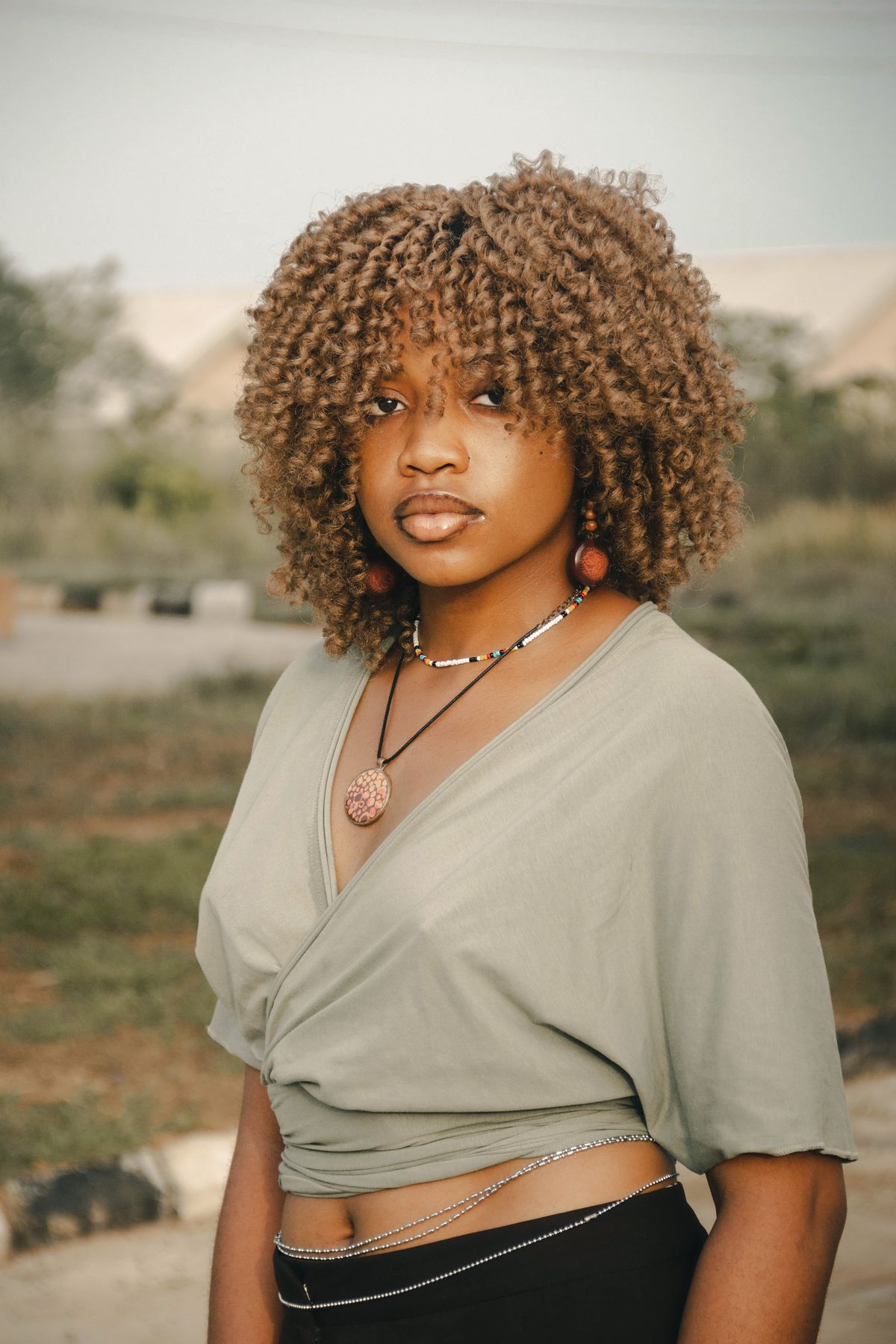
Curly fringe has a reputation for being tricky, but this photo shows how well it can work. The curls frame the eyes in a soft, fluffy shape that blends into the layers around the face.
The trick is to cut it dry and a little long, since curls spring up. Ask your stylist to leave extra length, and cut more later if you like.
If you are not sure, start with a longer fringe that sweeps to the side and see how you like it.
Best for: springy curls and anyone who wants a fresh look.
Upkeep: Fringe needs frequent small trims, so book a quick visit between full cuts.
What to ask for: “A curly fringe, cut dry and left a little long.”
How to find a stylist who actually understands curls
- Look at their curly work: scroll their portfolio for curls like yours, photographed dry.
- Ask how they cut: many curl specialists cut dry, curl by curl, so they can see the real shape.
- Book a consultation first: a 15 minute chat costs little, and tells you a lot.
- Watch for red flags: a stylist who wants to blow dry your curls straight before cutting may not be the right fit.
- Bring photos: two or three pictures of cuts you love, and one you do not.
What it costs
Prices vary a lot by city and salon level. As a rough guide, a specialist curly cut often runs around $80 to $250 in the US and about £60 to £150 in the UK, and the appointment can take 1.5 to 3 hours because it is done with care.
That sounds like a lot compared with a quick trim, but a good curly cut shapes how your hair behaves for months. Ask what is included, since some salons add a deep treatment or a style, and others charge separately.
Dermatologist tips for healthy curls
A great cut needs good care to show off. The American Academy of Dermatology shares six curly hair tips: wash less often, moisturise with a thick conditioner and a leave in, care for your scalp, detangle gently, protect from sun and heat, and protect your curls while you sleep.
On detangling, the AAD says to wet the hair thoroughly, apply a leave in conditioner and work in sections with your fingers or a wide toothed comb, and to avoid brushing dry hair, which causes breakage and frizz. For sleep, it suggests a loose ponytail on top of your head or a loose braid to reduce friction against the pillowcase.
Matching layers to your curl pattern
- Loose waves and soft curls: longer layers keep the shape without creating a pyramid. Keep the layers gradual.
- Springy ringlets: mid length layers give bounce and frame the face. These curls shrink a lot when dry, so leave extra length.
- Tight curls and coils: shape cuts and rounded layers work well. Dry cutting helps your stylist see the true outline.
- Mixed patterns: many people have several curl types on one head. Tell your stylist, and ask them to cut each section for its own pattern.
If you are not sure about your pattern, do not worry about the label. Show your stylist your hair when it is dry and natural, and describe what you do not like about it now: flat roots, too much volume at the sides, or ends that look stringy.
A simple curl routine that keeps layers looking good
- Wash gently: use a moisturising shampoo made for curls, and condition the full length of your hair.
- Detangle in the shower: work in sections with your fingers or a wide toothed comb.
- Add moisture: a leave in conditioner, then a styling cream or gel while the hair is soaking wet.
- Dry gently: air dry or diffuse on low heat, and do not touch until dry.
- Protect at night: sleep with a loose ponytail on top of your head, or a loose braid.
Keep this routine simple for the first month after a cut. Once you know how your new layers behave, you can adjust products and techniques to suit your hair.
Why not trim your layers at home?
It is tempting to snip a stray curl, but curls spring up when they are cut, so a small trim can look much shorter than you expected. Layers also depend on the relationship between lengths, which is hard to judge on your own head.
If something bothers you, such as one curl sticking out, take a photo and ask your stylist. Many salons will do a quick fix between appointments.
What to say in the chair (copy and paste this)
“I have [loose / springy / coily] curls and I would like layers that give me shape without losing length. Could you cut them dry, curl by curl, and leave a little extra length where my curls spring up?”
It is polite, specific and tells your stylist you know what you want. If they are not comfortable with it, that is useful information too.
What to expect after your cut
- Day 1: your curls may look slightly different from the salon finish, which is normal.
- Week 1: the shape settles and the curls start to bounce again.
- Week 4: your curls are at their most natural, and the layers show their effect.
- Week 8 to 12: time for a trim, since the shape begins to grow out.
Common layered curly mistakes
- Cutting wet and straight: curls shrink as they dry, so the length can end up much shorter than planned.
- Too many short layers: this can create a pyramid shape, particularly with loose curls.
- Skipping the consultation: a quick chat can prevent a lot of disappointment.
- Over washing: the AAD advises washing less often, since curly hair is prone to dryness.
- Brushing dry curls: use fingers or a wide toothed comb on wet, conditioned hair instead.
Styling your layered curls
Start with soaking wet hair, apply a leave in conditioner and a styling cream or gel, and scrunch upwards. Then let your curls air dry or use a diffuser on low heat, and avoid touching them until they are fully dry.
Once they are dry, scrunch out any crunch gently with your hands. That is the secret to soft, defined curls that move.
Looking for more curly ideas? Our guide to the curly shag with bangs is a great next read, and the butterfly haircut for curly hair post shows another layered shape.
Save this: layered curly haircut cheat sheet
Screenshot it, print it or keep it on your phone. It has the key details from this guide in one place.
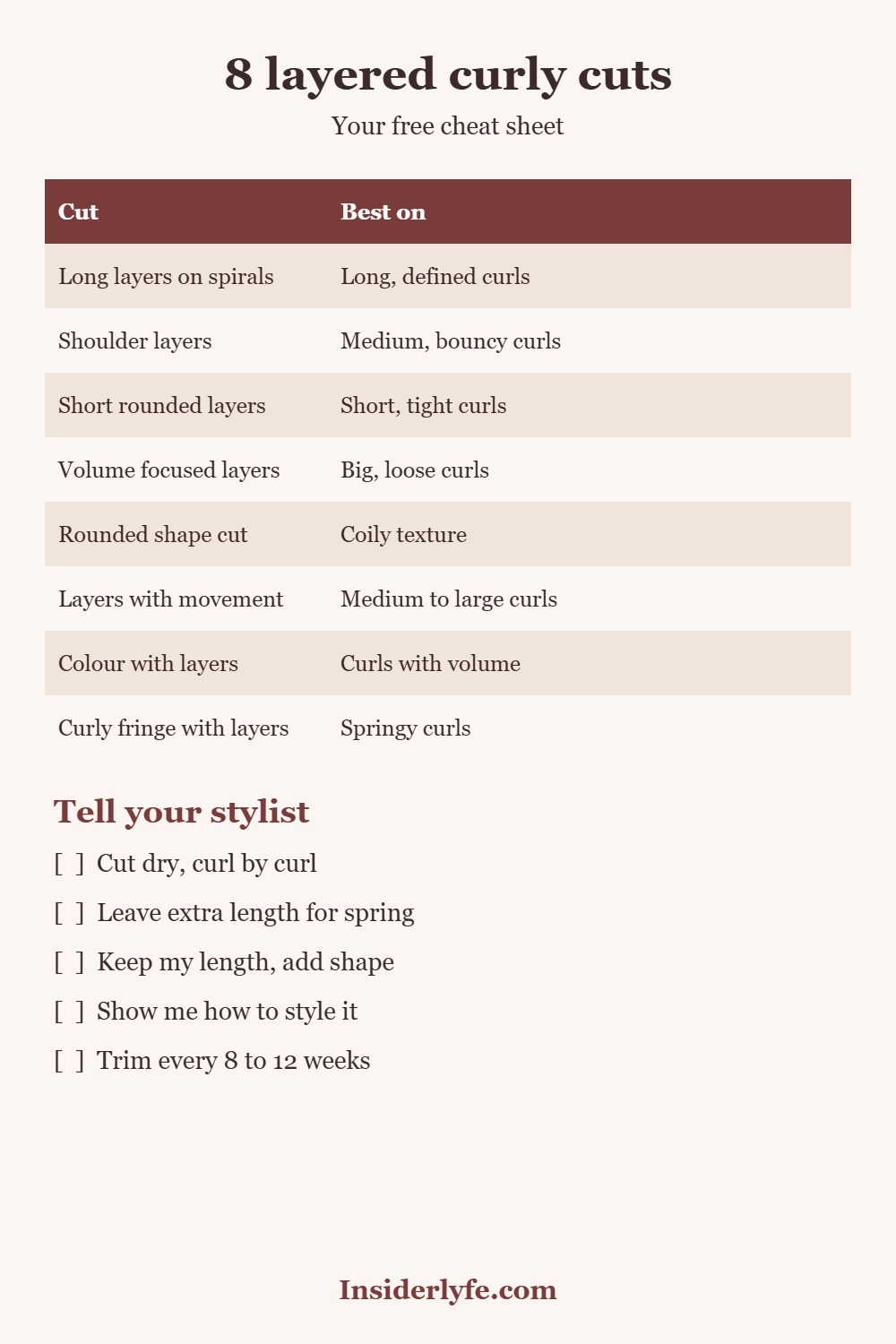
Download the full-size chart (free, no email needed)
Frequently asked questions
Do layers make curly hair look thinner?
Not if they are cut well. Layers remove weight in the right places, and they can make curls look fuller, though too many short layers on fine hair can look thin.
Should curly hair be cut wet or dry?
Many curl specialists prefer dry cutting, since they can see the real shape. Ask your stylist which method they use and why.
How often should I trim layered curls?
A trim every 8 to 12 weeks suits most people, and shorter styles may need it a little more often.
Can I get layers if I grow my hair out?
Yes. Long, soft layers keep your length and add shape, and they make the grow out stage easier.
How often should I wash curly hair?
The AAD advises washing at least every 2 to 3 weeks, and adding conditioner and moisture between washes. Check with your dermatologist or stylist for your own scalp.
Final thoughts
Good layers make curls look like they were meant to be that way. Choose a stylist who knows curls, bring photos and ask for the length and shape you want.
Which of these shapes would you try first, and what is the worst curly cut you have ever had? Tell us in the comments.
Related Post