

Please note that we do not create all the designs featured in this article. Our primary focus is to curate and collect a diverse range of design collections and products to inspire and share with our audience. While we do not claim ownership or take full credit for the original designs and images, we occasionally make minor adjustments, particularly in home decor and fashion items, to present them more effectively. Additionally, we may produce and edit images to enhance their quality and composition before sharing them on our Pinterest page or website. For the design work we do on these creative designs, we also include our logo on the images shared on Pinterest and our website. This helps our audience recognize that these designs have been published on insiderlyfe.com!
Three people is the hardest group size to dress. Two is a pair and four splits neatly, but three has an awkward habit of turning into two costumes and one person who came as themselves.
The fix is picking a reference where all three parts are equally recognisable. Every option below has three distinct roles, so nobody ends up as the spare.
Each one breaks down what all three wear, who has the most work to do, and how to divide the making so it does not land on one person.
How to Choose a Trio That Actually Works
All three parts must be nameable. If one of you is the background character, that person will spend the night explaining themselves and will not enjoy it.
Share one visual element. A colour, a silhouette, a repeated accessory. Without it, three separate costumes standing together read as three separate costumes.
Split the work before anyone starts. The person with the most complicated costume should not also be the person making all three. Agree it early.
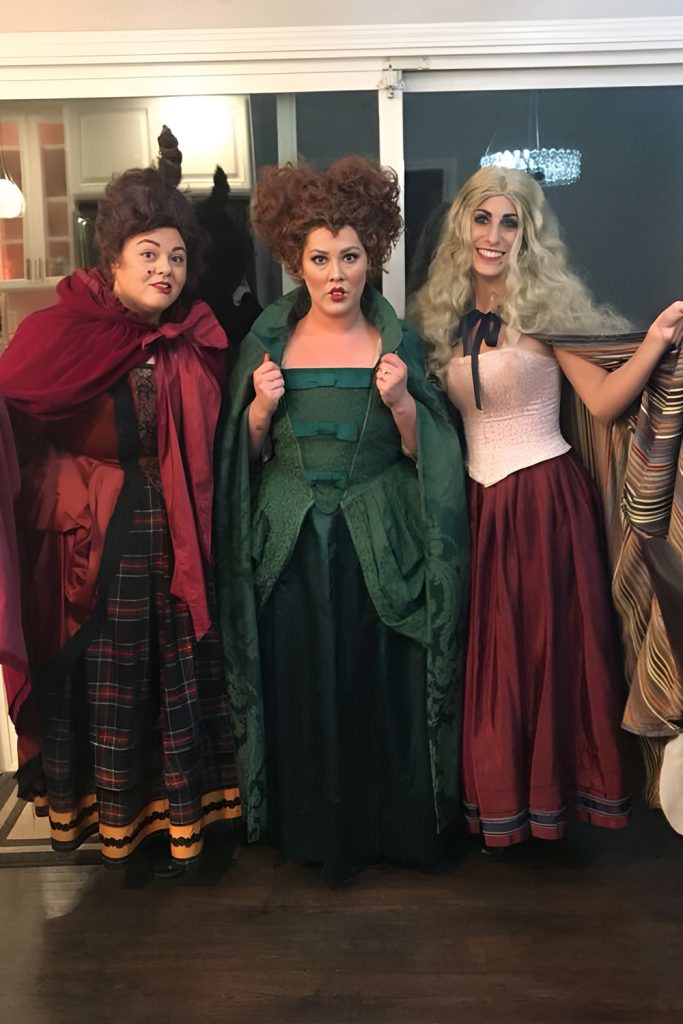
1. The Witch Sisters
Three long dresses in distinct jewel tones, three different hat shapes, and three very different hairstyles. Red, green and purple keeps them separate at a glance.
The split: everyone sources their own dress secondhand, and one person makes all three hats from card and fabric in an afternoon.
The shared element: matching pointed collars or belts, so the three silhouettes clearly belong together.
2. The Three Musketeers
Wide-brimmed hats with feathers, tabards or sashes over dark clothing, boots, and a prop sword each. Blue and gold is the traditional palette.
The split: identical base outfits from everyone own wardrobe, with one person making three matching tabards from a single length of fabric.
The shared element: the tabards, which is why making all three from one piece of cloth matters.
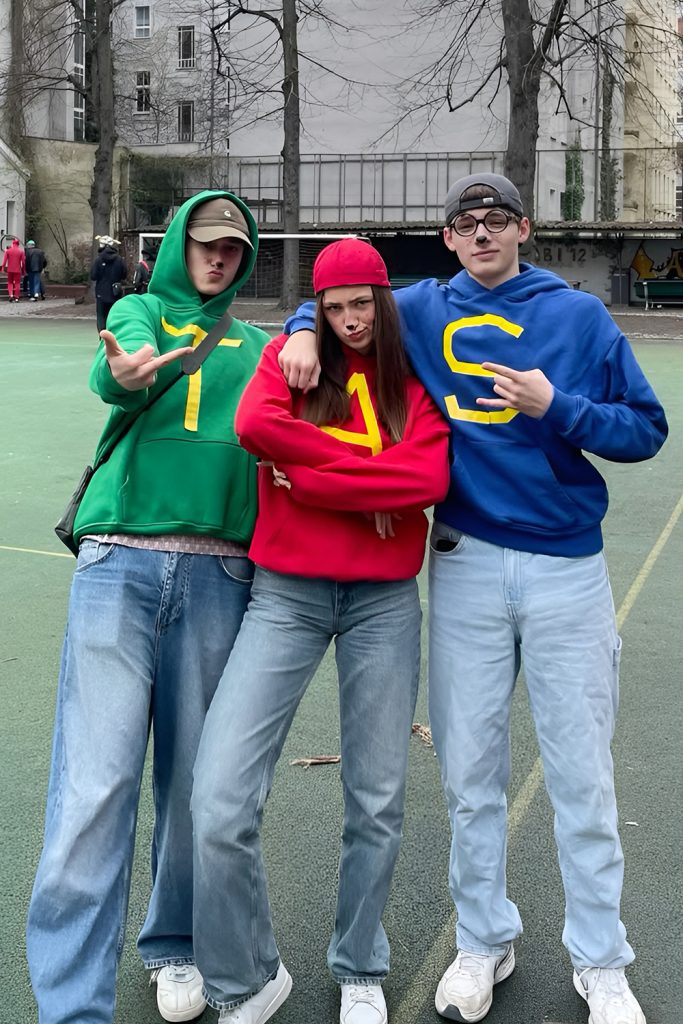
3. Rock, Paper, Scissors
One in grey with a rounded padded shape, one in white and flat, one in silver with two long blades built from card. Simple, funny and instantly understood.
The split: each person builds their own shape, because all three are roughly equal work and none takes more than an evening.
The shared element: keep all three in the same flat graphic style rather than letting one person go realistic.
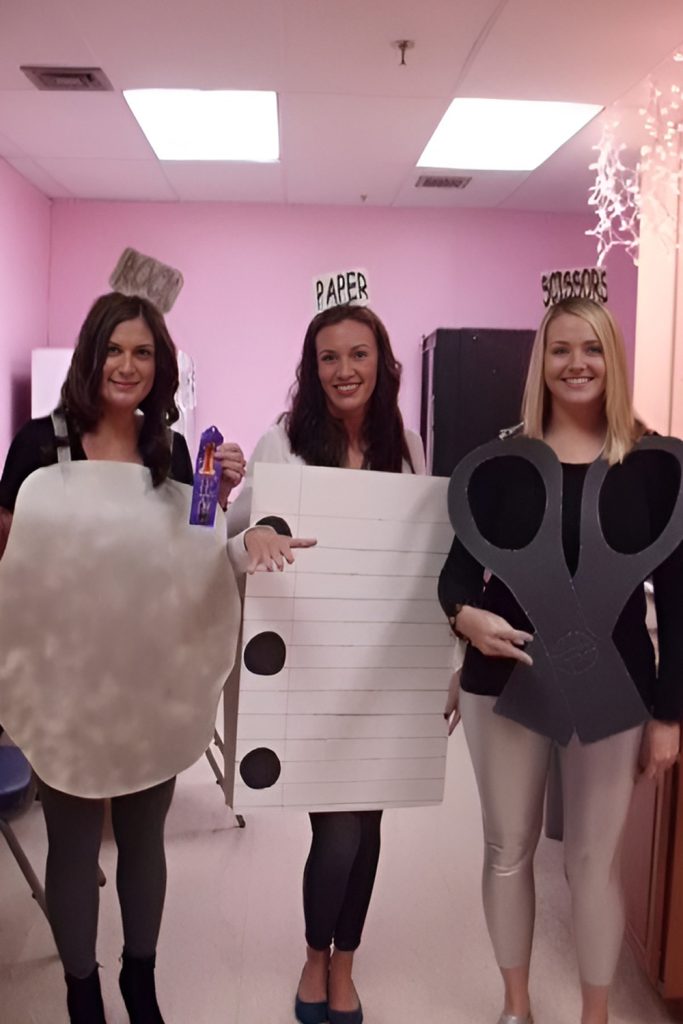
4. Cartoon Band Trio
Three oversized coloured tops, one red, one blue, one green, with matching caps or ears and a lot of energy.
The split: everyone buys or borrows their own colour, and one person makes three sets of ears from felt and headbands.
The shared element: identical shapes in three colours, which is the whole visual joke and the easiest one to execute.
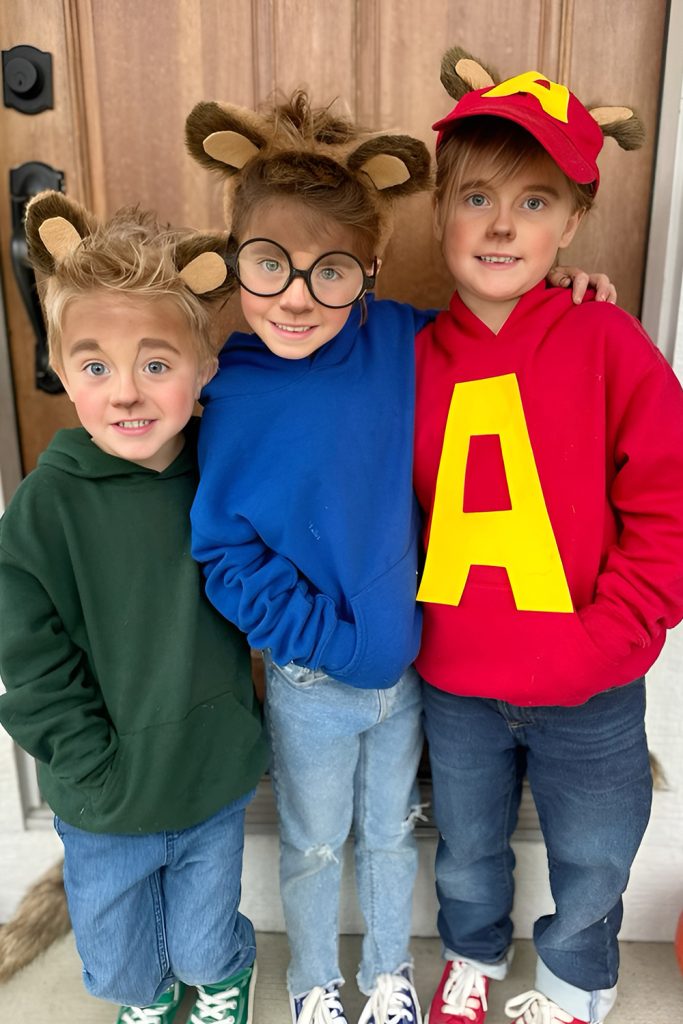
5. The Wizarding Students
Black robes over grey trousers or skirts, white shirts, striped ties and scarves, plus a wand each. Round glasses on one of you.
The split: everyone handles their own uniform base, which is largely school-style clothing, and one person sources three matching ties.
The shared element: the ties and scarves. They are what turns three people in black into a group.
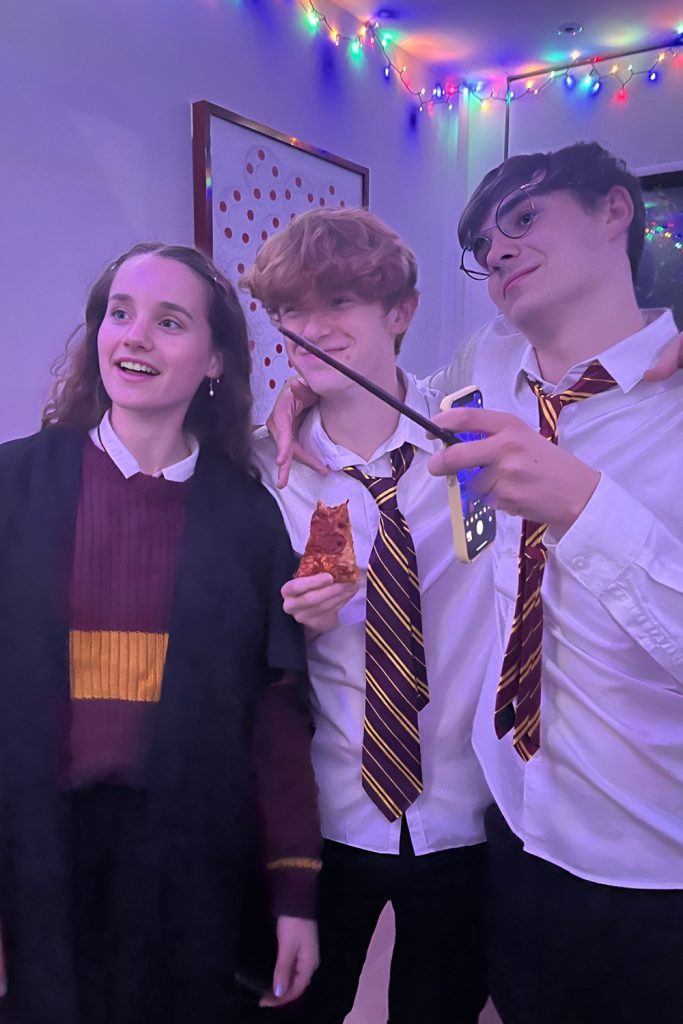
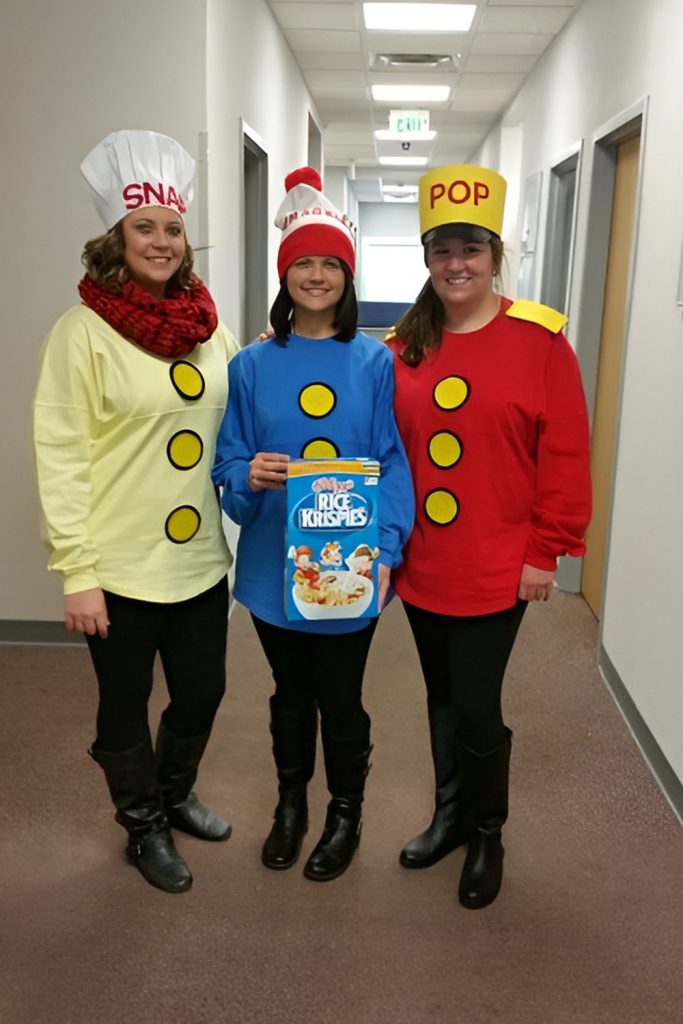
6. Breakfast Cereal Mascots
Three red and white outfits with different hats, and a name across each chest in large letters. Bright, simple and very readable.
The split: one person makes the three chest panels in one sitting, and everyone assembles their own red and white base.
The shared element: identical lettering on all three. Different fonts would undo the entire effect.
7. Three Blind Mice
All grey, with round ears on headbands, dark glasses, painted noses and whiskers, and a walking cane each.
The split: the easiest trio here to divide, because all three costumes are identical. One person makes three sets of ears, everyone wears grey.
The shared element: everything, which is exactly why this works for a group who left it late.

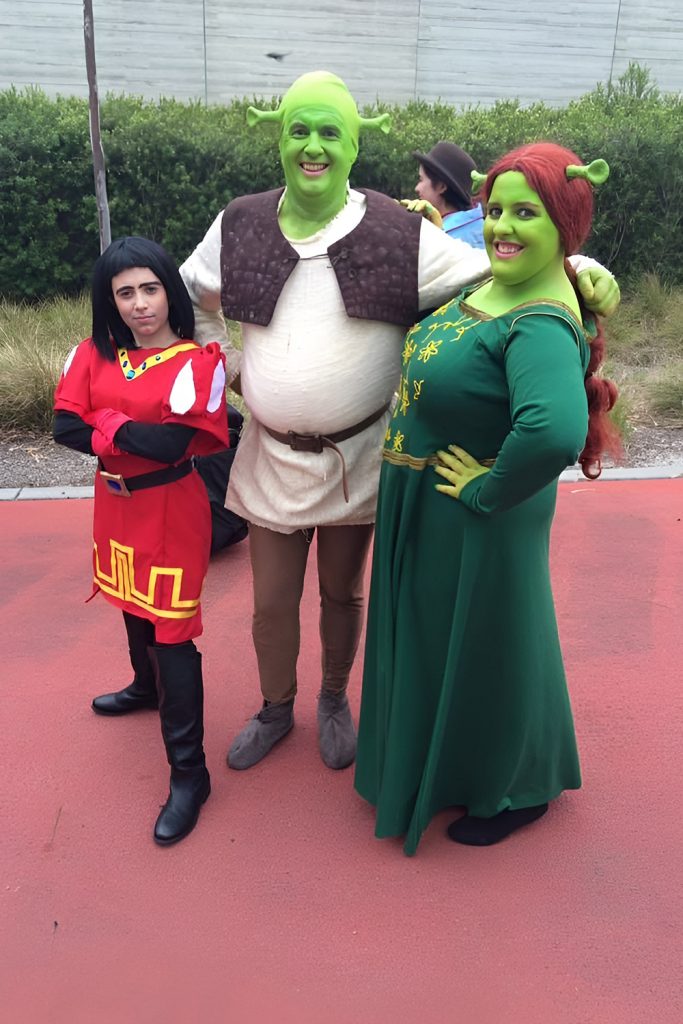
8. Fairytale Swamp Trio
Green face paint and a brown waistcoat on one, a green dress and red wig on the second, and grey with long ears on the third.
The split: uneven, so agree it first. The green makeup takes real time, so whoever wears it should be exempt from making anything.
The shared element: the green, carried across at least two of the three costumes.
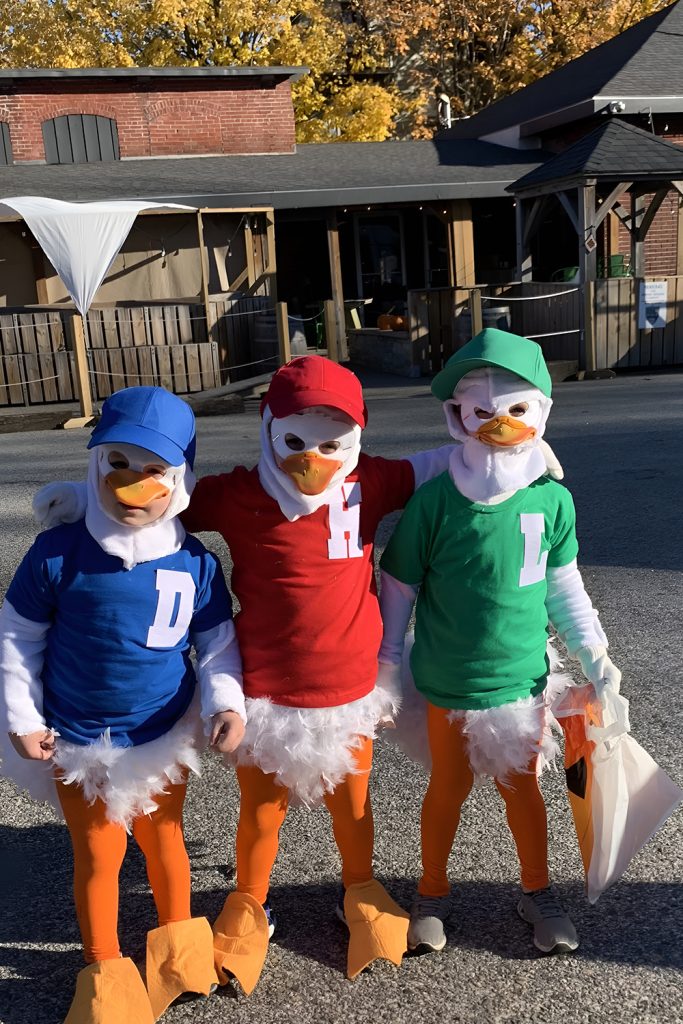
9. The Duckling Nephews
Identical white tops with three different coloured caps and matching coloured shirts. Red, blue and green, with everything else the same.
The split: everyone sources their own colour. There is nothing to make here at all, which makes this the fastest trio on the page.
The shared element: identical outfits in three colours. Keep the garments the same shape or it falls apart.
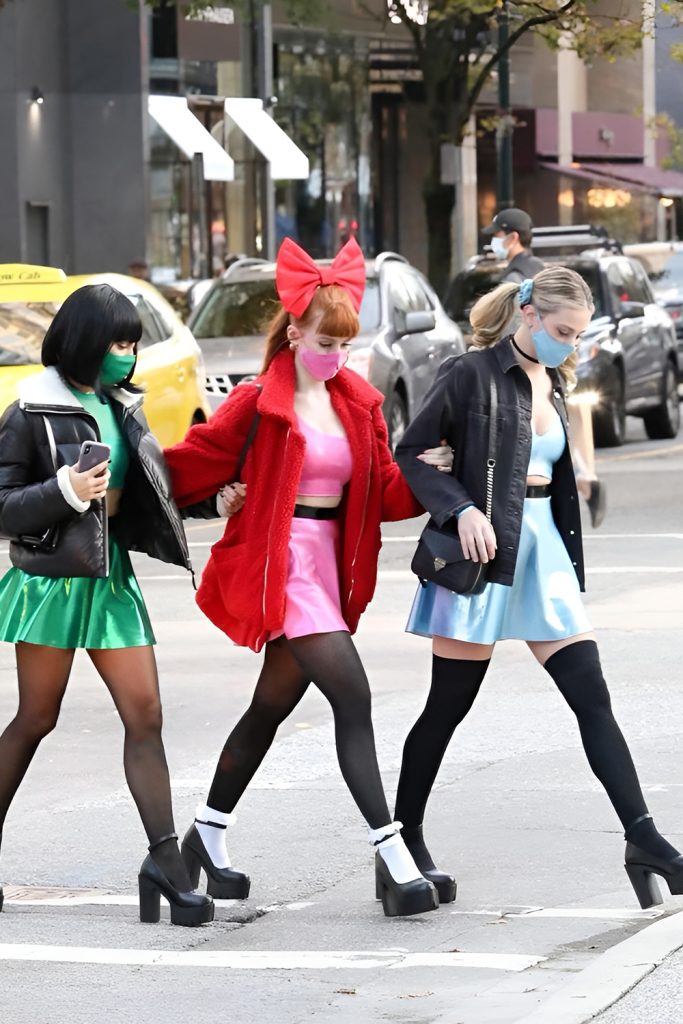
10. The Superhero Girls
Three simple dresses in pink, blue and green with black belts and matching striped detail, plus three very different hairstyles.
The split: everyone finds their own dress, and one person makes three identical belts, which takes about twenty minutes.
The shared element: the black belt and stripe across all three. That single repeated line is what groups them.
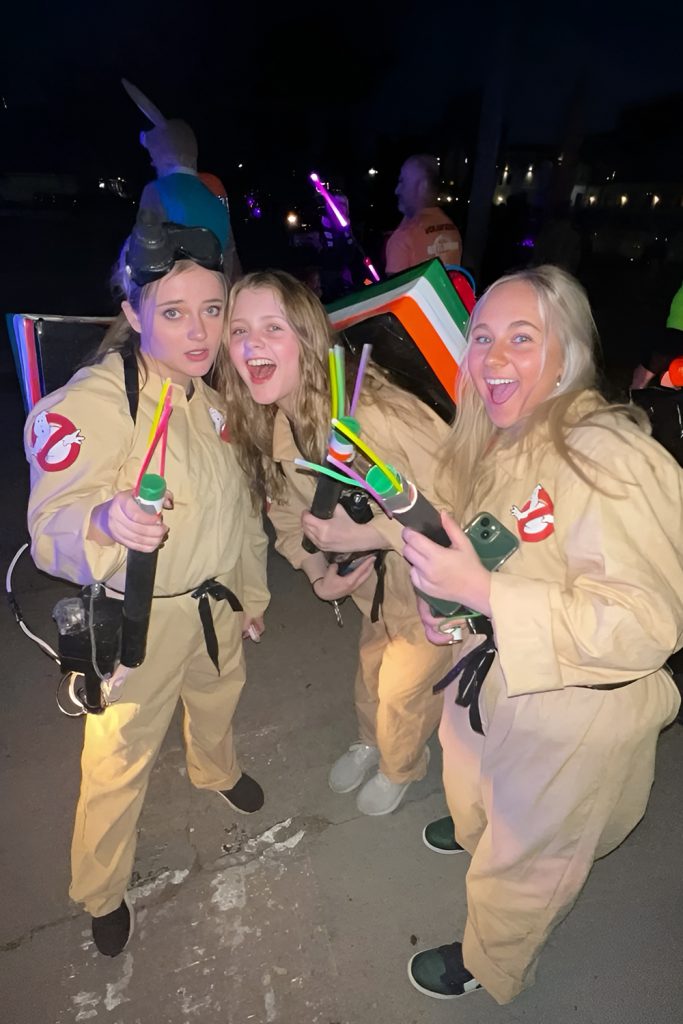
11. The Ghost Hunters
Beige or khaki boiler suits, utility belts, and backpack props built from cardboard boxes covered in foil with a hose attached.
The split: the most work of any trio here. Build all three packs together in one session rather than separately, or the third one never gets finished.
The shared element: identical jumpsuits, which makes the mismatched homemade packs read as intentional.
12. The Golden Girls
Pastel blouses, shoulder pads, pleated skirts and pearls, with three distinctly different wigs or set hairstyles.
The split: entirely individual. Everyone raids a charity shop for their own pastel outfit, which makes this the least coordinated effort required.
The shared element: the pastel palette and the era. Keep all three in the same soft colour family.

Splitting the Work Fairly
Count the making, not the costumes. A group where one person sews three tabards and the other two turn up in their own clothes will produce resentment by about the second week of October.
Let one person own the shared element. Whoever makes the three ties, belts or ears should be excused from everything else, because that is the job that holds the trio together.
Build the matching items in one sitting. Three of anything made together take about half the time of three made separately, and they actually match, which is the point.
And set a date to try all three on together. Every trio on this page has at least one detail that only reveals itself when the three of you are standing side by side.
A Shared Shopping Trip Beats Three Separate Ones
Go to the charity shops together. Trio costumes fail on colour matching more than anything else, and three people choosing green separately will arrive with three different greens.
Buy the shared fabric in one piece. Whether it is tabards, belts or chest panels, one length cut three ways guarantees they match and costs less than three separate purchases.
Agree a budget out loud before you start. Groups of three tend to contain one person who will happily spend forty dollars and one who will not, and that is much easier to settle in advance.
Keep receipts for anything reusable. Boiler suits, plain dresses and belts all return to ordinary wardrobes, and a trio costume built mostly from those is the cheapest per person.
Photographing a Group of Three
Stand in a line rather than a cluster. Three people bunched together lose their individual silhouettes, which is the one thing a trio costume depends on.
Put the busiest costume in the middle. If one of the three carries more visual weight, centring it balances the photograph rather than making one side heavy.
Take the picture early in the evening. Homemade props, face paint and anything glued all look their best in the first two hours and noticeably worse after that.
And get one photograph where all three of you are doing something rather than standing still. Trio costumes with a shared action read far better than three people posing separately.
Frequently Asked Questions
What is the easiest trio costume to make?
The duckling nephews or the three blind mice. Both are three near-identical outfits, so there is almost nothing to build and nothing to coordinate beyond colour.
How do we stop one person looking like an afterthought?
Pick a reference where all three parts are equally well known. If you have to explain one of the three, the balance is already wrong.
What works if one of us hates dressing up?
The wizarding students or the golden girls. Both are essentially ordinary clothing in a particular style, so the reluctant member is barely in costume at all.
Which trio is best for a cold night?
The ghost hunters or the musketeers. Boiler suits and layered dark clothing with coats underneath both handle late October properly.
The Bottom Line
A trio works when all three parts are equally recognisable and one visual element runs through all of them. Everything else is detail.
Agree the reference early, decide who makes the shared piece, and try the three costumes on together before the night rather than on it.
Going as a pair instead? Try the DIY couple costume guide, these matching couple costumes, or these last-minute couple costumes if time is short. For family groups, see these family costumes with a baby.
Related Post