
Please note that we do not create all the designs featured in this article. Our primary focus is to curate and collect a diverse range of design collections and products to inspire and share with our audience. While we do not claim ownership or take full credit for the original designs and images, we occasionally make minor adjustments, particularly in home decor and fashion items, to present them more effectively. Additionally, we may produce and edit images to enhance their quality and composition before sharing them on our Pinterest page or website. For the design work we do on these creative designs, we also include our logo on the images shared on Pinterest and our website. This helps our audience recognize that these designs have been published on insiderlyfe.com!
You buy the beige trench in October because it looks effortless on every woman in your feed. By the first properly cold morning in December you are standing at the bus stop in it, arms folded, with a polo neck, a scarf and a sinking feeling that the wind is walking straight through the fabric.
Or you do the opposite. You buy a sturdy navy peacoat, and the first heavy rain of the season turns the shoulders dark and soggy while the coat stays stubbornly short, leaving your thighs and your good trousers soaked.
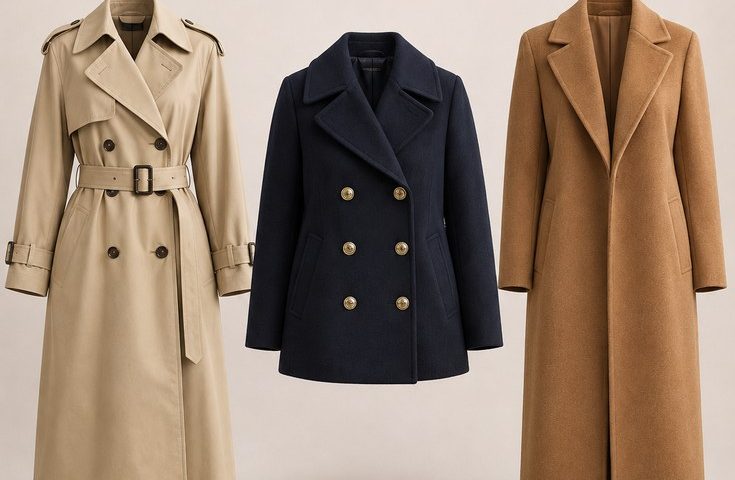
Both coats are classics, and both are easy to get wrong, because they were designed for completely different jobs. One was built to shed rain. The other was built to hold in heat.
This guide is for anyone stuck on trench coat vs peacoat, and for anyone wondering where a plain wool coat fits in between. Below you will find a quick verdict, a side by side table, general temperature ranges, how length changes your proportions, what to wear underneath, and eight specific coats to compare, from a classic beige trench to a cropped wool jacket.
Number 7 is the coat that fixes the most common proportion problem, and it is not the one most people buy first. Keep scrolling.
Trench coat vs peacoat vs wool coat: the quick verdict
Pick a trench if you deal with rain, mild winters, or lots of in between weather. It is light, water resistant and made to layer. Pick a peacoat if you want a short, structured coat with real warmth that looks sharp with trousers and boots. Pick a wool coat (long, belted, wrap or double-breasted) if you want one coat to carry you through genuine cold and dress up with almost anything.
The short version: trench for wet and mild, peacoat for cold and compact, wool coat for cold and polished. If you only get one, most women in a cold, damp climate end up happiest with a long wool coat and a trench in the closet for the shoulder seasons.
Trench vs peacoat vs wool coat: side by side
| Trench coat | Peacoat | Wool coat | |
|---|---|---|---|
| Typical length | Knee length or longer | Hip to upper thigh | Knee to mid-calf (cropped styles sit at the hip) |
| Warmth (general guide) | Light, about 10 to 18°C / 50 to 65°F alone | Warm, about -5 to 8°C / 25 to 45°F | Warm, about -5 to 8°C / 25 to 45°F, more with a lining |
| Rain | Best of the three: tight cotton gabardine or treated fabric, storm flap | Limited: wool absorbs water | Limited, unless the label says water repellent |
| Best for | Spring, autumn, drizzle, commuting | Cold, dry days, casual and smart casual | Winter, work, dressier plans |
| Care | Spot clean or follow the label, re-proof now and then | Dry clean or brush, air out after wear | Dry clean once or twice a season, brush between |
| Typical price seen | About $120 to $355, designer from £1,650 | Varies widely, check the fibre content | About $140 to $450, designer in the thousands |
| Biggest downside | Little insulation on its own | Short length leaves legs exposed | Bulkier, and wet wool takes a day to dry |
How the three coats really differ
The trench grew out of the Mackintosh raincoat and the water resistant gabardine fabric credited to Thomas Burberry. Its signature details all have a job: the storm flap over the shoulder directs rain away, the belt cinches the waist, and the long length protects your clothes. It is a coat for wind and wet, not for deep cold.
The peacoat comes from 18th century naval wear. It is cut short, usually ending somewhere between the hip and mid-thigh, in thick felt-like wool, with a double-breasted front and large buttons. It is a cold weather coat first, and it is traditionally navy.
The wool coat is the broad category in between: any tailored coat in wool or a wool blend, from a sharp single-breasted overcoat to a soft camel wrap. It borrows the warmth of the peacoat and the length of the trench, which is why it is the safest all round winter buy.
Temperature ranges: which coat for which weather
These are general guidelines, not guarantees. Wind, humidity, lining and what you wear underneath all shift the numbers, and everyone runs warm or cold differently.
- 10 to 18°C (50 to 65°F): an unlined trench, worn with a light knit.
- 5 to 10°C (40 to 50°F): a trench with a removable lining or a thick knit underneath, or a cropped wool jacket.
- 0 to 8°C (32 to 45°F): a peacoat or a mid-weight wool coat with a sweater.
- Below freezing: a long, lined wool coat with a polo neck or fine merino layer, a scarf and gloves.
A tip stylists repeat: dress for the coat’s lowest comfortable temperature, then add or remove the layer underneath. A coat you have to unbutton constantly is the wrong weight for the day.
Length and proportion: the part that changes everything
Length does more to your silhouette than colour or fabric. A hip length peacoat cuts you off at the widest point of your hips, which flatters long legs but can feel boxy on a shorter torso. A knee length trench lengthens the line and balances wider trousers or boots. A mid-calf wool coat is the most elegant and the most dramatic, and it can swamp a petite frame if the shoulders are too big.
- Petite (under 5’4″): aim for just above or at the knee, with a defined shoulder. Very long coats can swallow you.
- Tall: mid-calf coats and maxi trenches look intentional rather than overwhelming.
- Pear shape: a structured shoulder and a belt draw the eye up. Skip hip length styles that stop at the widest point.
- Short torso: try a cropped wool jacket with high waisted trousers, or a longer coat belted lightly.
- Curvy: single-breasted or wrap styles skim better than heavy double-breasted fronts.
Check the sleeve and shoulder seam before anything else. A coat that fits across the shoulders can be hemmed and taken in, but one that is too tight there cannot be fixed.
8 coats to compare: trench, peacoat and wool styles
Each card covers who the coat suits, how to wear it, the price range I could verify, and one honest downside. Prices are what I found at the time of writing and move with sales, so treat them as a guide.
1. Classic beige trench
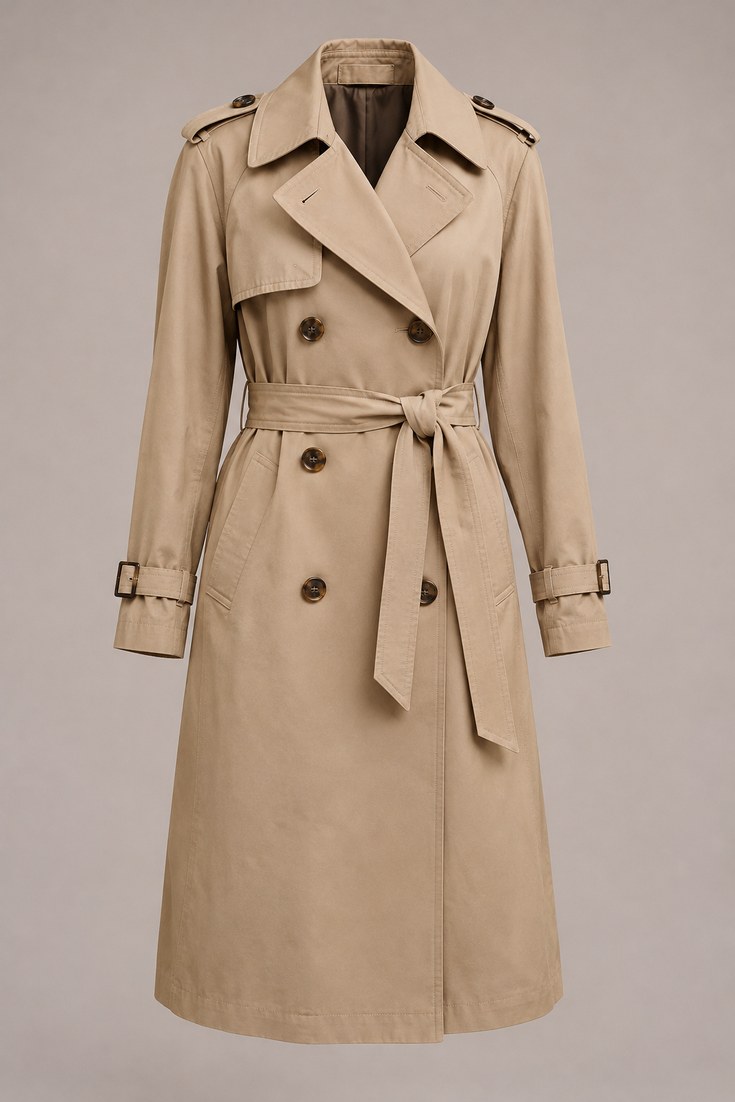
The coat everyone imagines when they hear the word. Stone or sand gabardine, double-breasted, a belt, a storm flap, and a hem that lands at or just below the knee. It suits most body shapes.
General guidance: about 10 to 18°C (50 to 65°F) alone, a little colder with a thick knit under it. Gabardine and treated fabrics repel light rain, but a trench is not fully waterproof in a downpour. Wear it with a fine merino or cotton shirt, straight leg jeans and loafers or ankle boots.
Price range: roughly $120 to $355, for example Banana Republic Factory at $120 (regularly $200), Everlane’s drapey twill trench at $298, or Sézane’s Clyde at $355 (about £185 to £190 when reduced from £275). Burberry’s trenches run about £1,650 to £2,790. Downside: beige shows every mark, so budget for cleaning.
2. Black trench
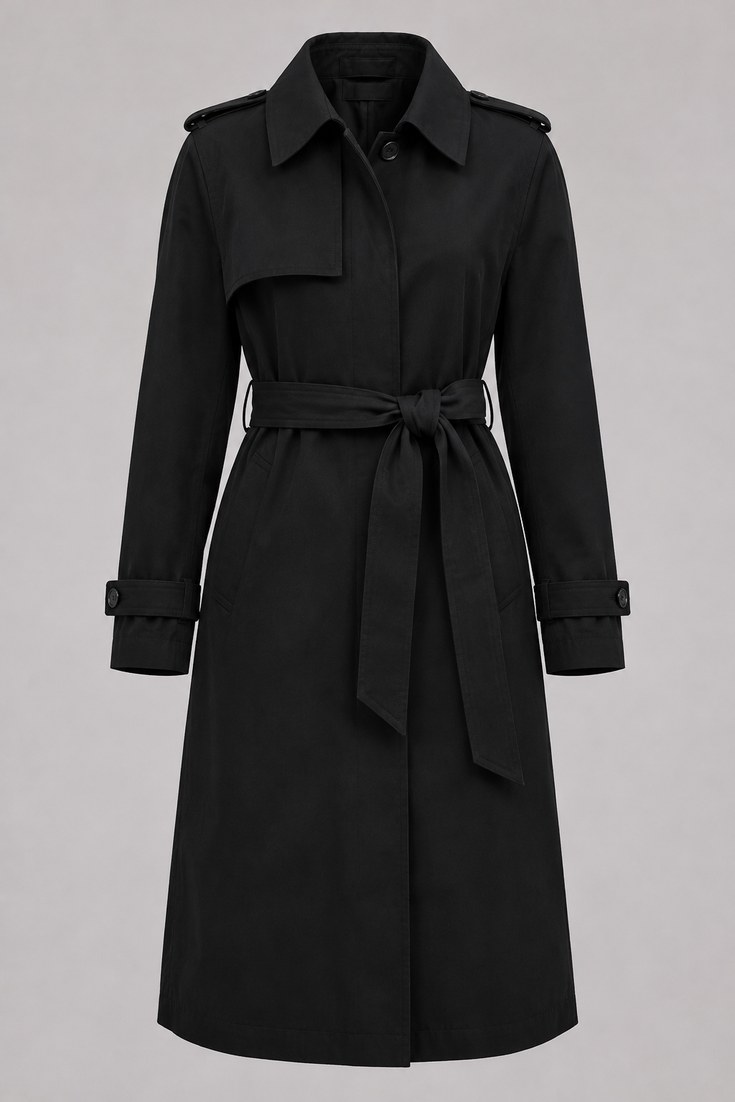
A black trench is the city version: sharper, more evening friendly and far more forgiving of rain splashes and coffee. It reads modern with leather boots or wide trousers.
General guidance: the same 10 to 18°C (50 to 65°F) range as the beige. Look for a water repellent finish and a lining you can zip or button out, which stretches the season. Underneath, try a black polo neck and tailored trousers for a column look, or a bright knit to stop it feeling severe.
Price range: Sézane’s lightweight, water repellent Clyde comes in black and was around £185 on sale. Cheaper options like Banana Republic Factory’s twill mac sit near $120 to $200. Downside: black fades to grey with sun and washing, and shows lint and pet hair.
3. Navy peacoat
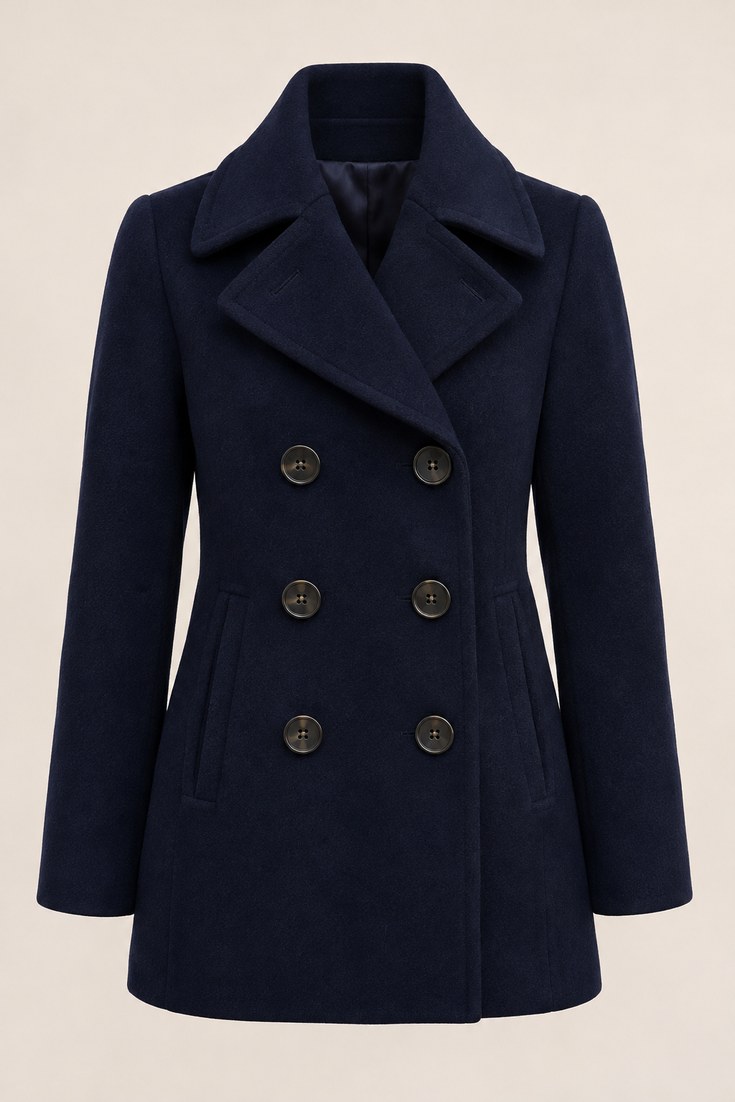
The original cold weather coat. A navy peacoat is short, thick and structured, with a wide double-breasted front and big buttons that hold the wool closed against wind. It looks best with trousers or straight jeans and boots, and it is the easiest coat to wear casually.
General guidance: about -5 to 8°C (25 to 45°F), depending on layers. Wool is not waterproof, so it handles snow and light drizzle but soaks through in a real downpour. Wear it over a chunky knit with a scarf, and keep the bottom half narrow.
Brand example: Oliver Wicks makes a signature peacoat, and the brand warns that cheaper synthetic peacoats wear out quickly, so check the fibre label for a high wool content. Downside: the short length leaves thighs cold and does nothing for a skirt or dress.
4. Double-breasted wool coat
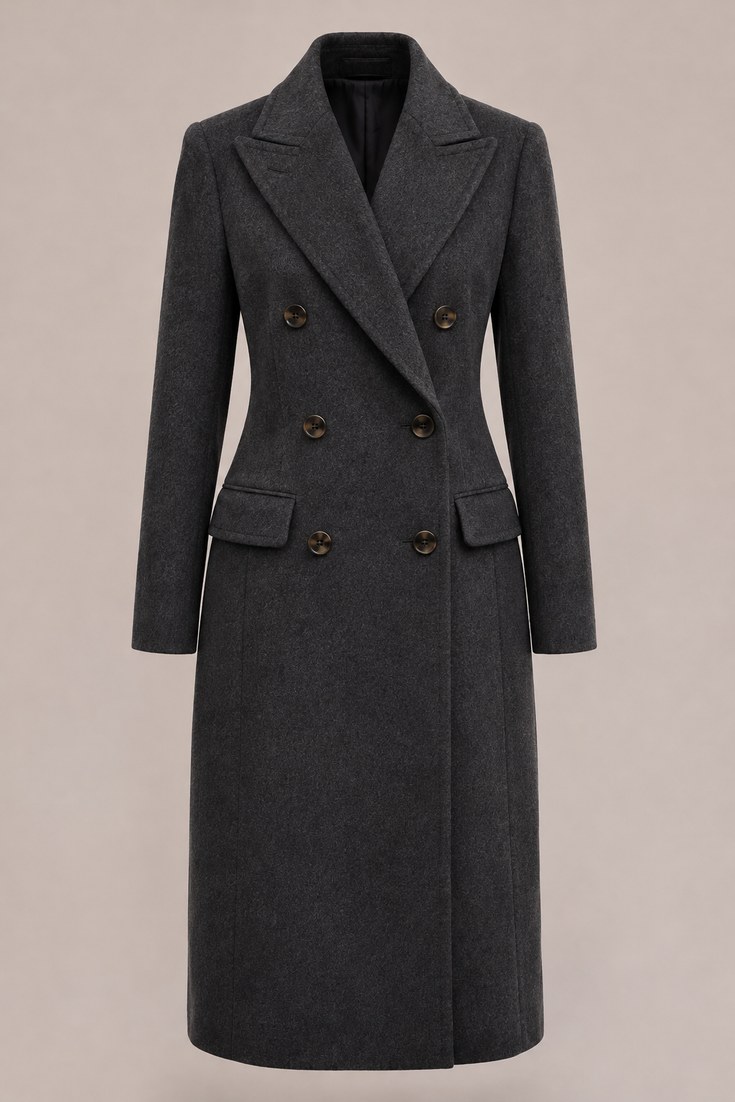
Picture a tailored blazer made into a coat. A double-breasted wool coat is polished, a little formal, and the best option for the office or a winter evening out. Charcoal, black and navy are the easiest colours.
General guidance: about -3 to 8°C (27 to 45°F). Wear it over a fine knit and tailored trousers, or a slip dress with tights and boots. A tip tailors give: leave the bottom button undone, and keep the top button closed in wind.
Price range: roughly $140 to $290. Banana Republic Factory’s Timeless Topcoat was $140, J.Crew’s Toscana coat in Italian wool blend about $242.50 on sale, and Lands’ End’s insulated double-breasted wool coat $289.95. Downside: the double front adds bulk across the torso, so it suits a defined waist more than a boxy one.
5. Camel wool wrap coat
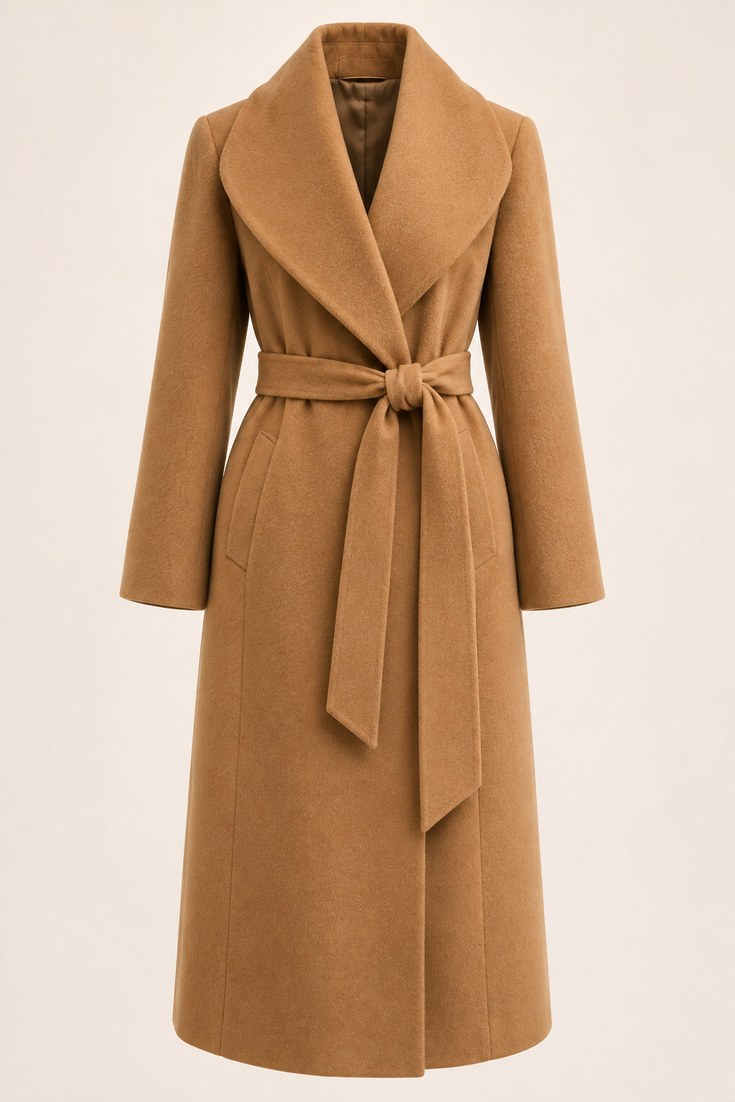
The cosy luxury coat. A wrap coat closes with a tie belt instead of buttons, so it feels almost like a robe, and camel is the shade that always looks expensive. It flatters a soft waist and works beautifully with cream knits and dark denim.
General guidance: about -3 to 8°C (27 to 45°F), but the open construction can let wind in, so pair it with a scarf. Wear it over a cream turtleneck and wide leg jeans, or a knit set. The splurge reference is Max Mara’s camel Madame coat at £2,715 (90% virgin wool, 10% cashmere), though that one is double-breasted.
A similar feel for less: Quince’s wool cashmere cocoon coat was $175. Downside: camel and cream show dirt fast, and the open front is less wind proof than a buttoned coat.
6. Long single-breasted wool coat
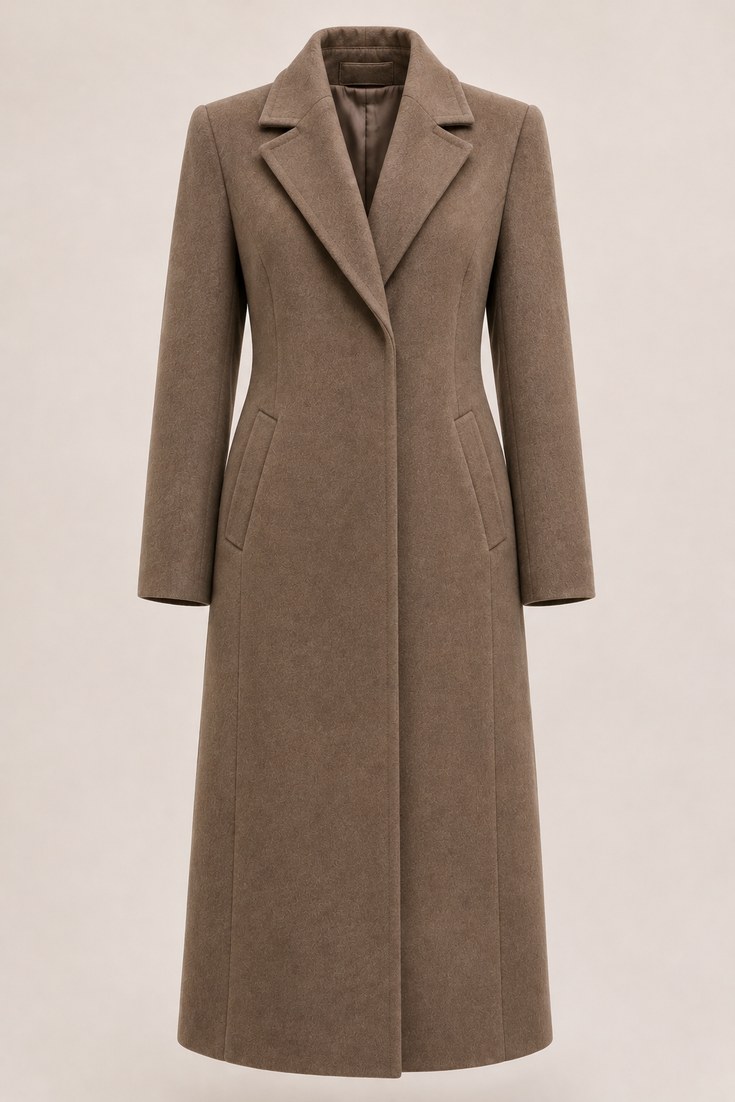
Clean, long and quiet. The single-breasted overcoat has one row of buttons, often hidden behind a placket, and falls to mid-calf for a long vertical line that makes the whole outfit look taller and calmer. It is the most versatile winter coat on this list.
General guidance: about -5 to 7°C (23 to 45°F), with a lining adding warmth. Wear it over tailoring, knitwear or a dress. Quince’s 100% boiled merino wool shawl collar long coat, with a hidden snap placket, was $164 down from $395, and boiled wool resists pilling and fraying better than many blends.
Pair it with ankle boots and a tonal scarf. Downside: the longest versions can overwhelm a petite frame, so check the hem in the mirror before buying.
7. Belted wool coat
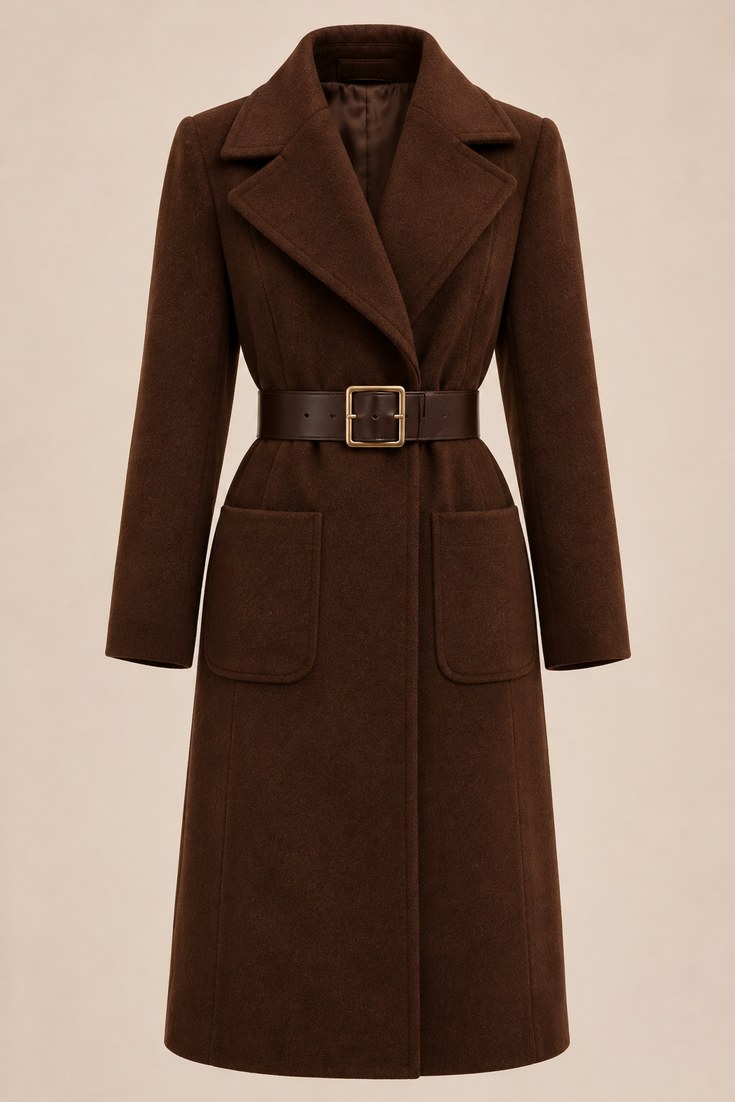
This is the proportion fixer. A belt creates a waist on a coat that would otherwise hang straight, and it balances wide legged trousers or a full skirt. If you often feel your coat makes you look square, this is the style to try.
General guidance: about -3 to 8°C (27 to 45°F). Wear it over a fitted knit with straight trousers, and tie the belt a little looser in the evening so the coat still moves. J.Crew Factory’s belted wrap coat was $148 on sale (61% off), a good test of the shape before spending more.
It suits pear and curvy shapes best. Downside: the belt can crush the fabric after long wear, so loosen it when sitting.
8. Cropped wool jacket
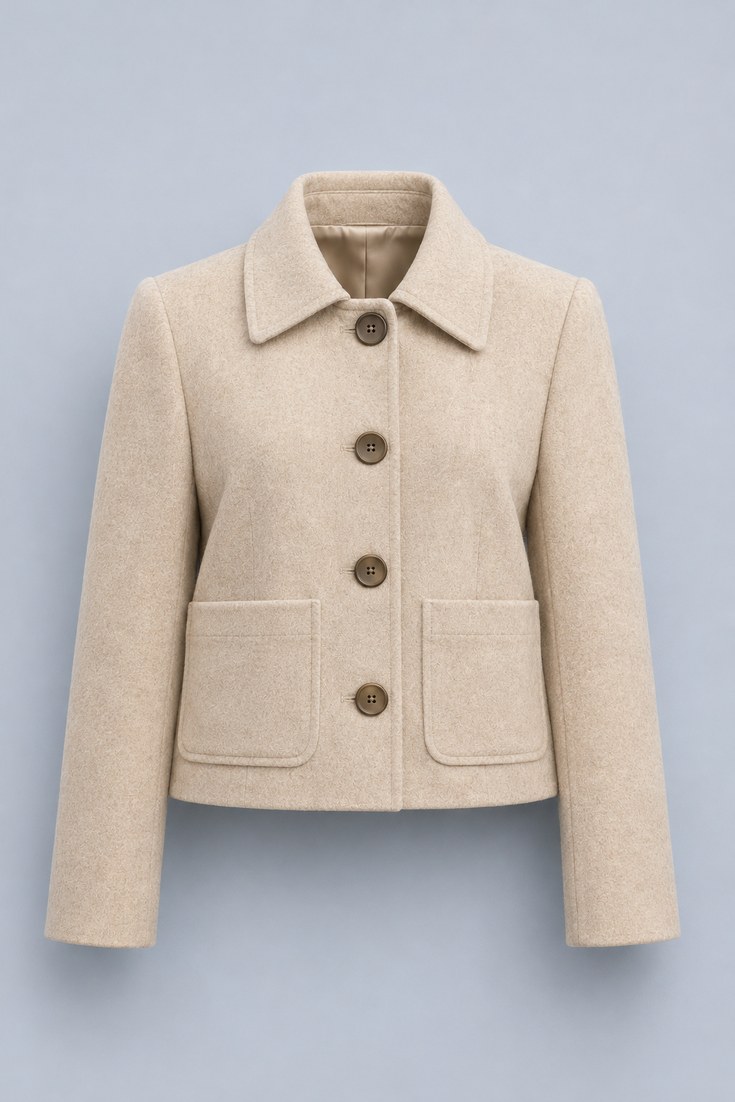
The cropped wool jacket is a peacoat’s lighter cousin, usually ending at the hip. It is the best coat for high waisted trousers, wide leg jeans and midi skirts, and a good one for short or petite shapes.
General guidance: about 0 to 10°C (32 to 50°F) with a thick knit. It is not warm enough for hard winters. Wear it over a fine polo neck and a long pleated skirt, with knee boots to bridge the gap.
Check that the hem meets the waistband of your bottoms, because a gap looks accidental. Downside: legs and hips get cold, and it will not work over dresses.
How to choose by lifestyle
- Rainy commute: a trench in black or navy, with a removable lining.
- Cold, dry winters: a lined wool coat, long or belted.
- Walk to work in boots: a peacoat or cropped jacket.
- Dressier jobs or events: double-breasted or long single-breasted wool.
- One coat only: a camel or charcoal wool coat at knee length, since it will work with the most outfits.
For outfit ideas once you have chosen, the winter outfit guide shows how coats work with everyday layers, and the knee high boot outfit ideas are a good match for cropped and knee length coats.
What to wear underneath each coat
Under a trench: thin merino, shirts, silk blouses, light dresses. Skip bulky knits, since the trench is cut slim and you will not be able to button or belt it comfortably.
Under a peacoat: chunky knits, flannel shirts and polo necks. The thick wool has room, so you can wear real bulk.
Under a wool coat: fine knits, a sweater dress and tights, or tailored trousers. If your coat is fitted, choose a thinner knit so the sleeves do not bunch.
For a colder day with a lighter coat, add a thermal layer such as a fine wool or silk base, rather than a thick sweater. If you are layering with faux fur or textured pieces, see these faux fur coat outfits for contrast ideas. For a clean, bright look, try winter white outfits under a camel wool coat.
What to say when you shop or visit a tailor
- “Can I see this in a wool content over 70 percent?” Higher wool content usually means more warmth and better shape.
- “Does it have a removable lining?” Useful for stretching a trench through the seasons.
- “Is the fabric water repellent or just treated?” This tells you how long the protection lasts.
- “Can you take the sleeves up a half inch?” A common, inexpensive fix.
- “Can I try it over a thick sweater?” Always test the coat with the layer you will actually wear.
Common mistakes to avoid
- Buying a coat that only fits over a thin top: try it over your thickest knit, then size accordingly.
- Assuming a trench is a winter coat: add a lining or move up to wool below about 8°C.
- Choosing a long coat that hits the wrong point on your calf: aim for just at or above the knee, or clearly past mid-calf.
- Ignoring the shoulder seam: it should sit at your shoulder bone, since this is the one thing a tailor cannot easily fix.
- Buying cheap polyester that looks like wool: check the fibre label, because it wears out faster and traps sweat.
- Leaving the belt tied tight all day: loosen it when sitting.
Care and how long each coat lasts
Brush wool coats with a soft clothes brush after wearing, hang them on a wide shaped hanger, and let them air out for a day before putting them away. Dry clean only once or twice a season, since too much cleaning wears the fibres. Trenches usually need spot cleaning or machine washing at low temperatures if the label allows, and a re-proofing spray when water stops beading on the surface.
A well-made wool coat can last many winters, and a good trench can last for years if the fabric is not left damp. Store both in a breathable garment bag, never plastic.
Frequently asked questions
Is a trench coat warmer than a peacoat?
No. A peacoat is made from thick wool and is much warmer. A trench is light and designed for wind and rain, so on its own it works best from about 10 to 18°C (50 to 65°F).
Can I wear a peacoat in the rain?
Light rain is fine, since dense wool resists a drizzle for a while. In a downpour the wool soaks through and takes a long time to dry, so a trench or an umbrella is the better call.
Which is more versatile, trench or wool coat?
A knee length wool coat covers more of the year in cold climates, while a trench covers more of the year in mild, wet ones. If you live somewhere with real winters, choose wool first.
What length coat suits a short woman?
Stylists usually suggest a hem around the knee or just above it, with a fitted shoulder. A cropped jacket with high waisted bottoms also works well.
How do I stop a wool coat looking frumpy?
Pay attention to fit and finish: shoulders that sit right, sleeves that end at the wrist bone, and a hem that is a deliberate length. Add a belt, a scarf in a contrasting texture and good boots.
Save this guide to your coat board on Pinterest so you have the temperature ranges and length tips with you when sales start. A coat is the one piece everyone sees first in winter, so it is worth taking your time.
Related Post