
Please note that we do not create all the designs featured in this article. Our primary focus is to curate and collect a diverse range of design collections and products to inspire and share with our audience. While we do not claim ownership or take full credit for the original designs and images, we occasionally make minor adjustments, particularly in home decor and fashion items, to present them more effectively. Additionally, we may produce and edit images to enhance their quality and composition before sharing them on our Pinterest page or website. For the design work we do on these creative designs, we also include our logo on the images shared on Pinterest and our website. This helps our audience recognize that these designs have been published on insiderlyfe.com!
You buy the black boots because they look like the answer to everything. Then the first rainy commute arrives and your toes are damp, or the heel rubs by lunchtime, or the chunky sole makes your favourite midi skirt look like it is wearing a different outfit. Boots are the hardest shoe to choose online because three very different styles all get called “black ankle boots”.
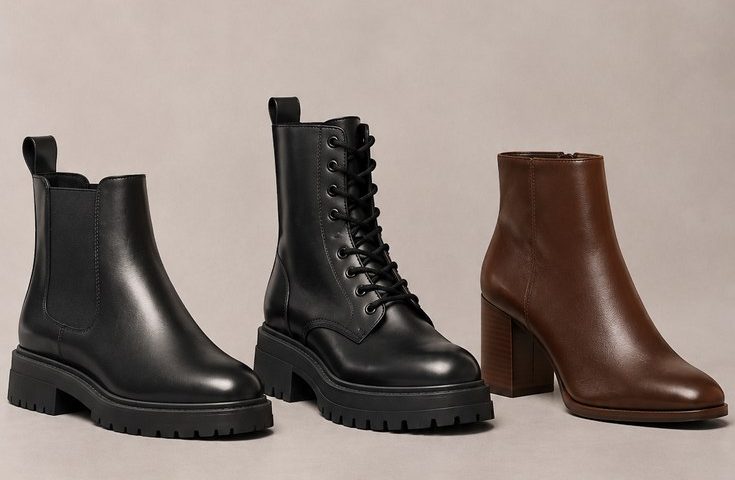
This guide is for anyone standing between a sleek Chelsea, a lace-up combat boot and a classic ankle boot with a heel (or without one) and wondering which will actually earn its place in the wardrobe this winter.
The short version: a Chelsea is the tidy, pull-on workhorse. A combat boot is the sturdy, edgy one that goes with everything casual. A classic ankle boot is the dressy one, and it splits into heeled and flat versions that behave quite differently. Below you get a verdict, a table, eight specific variants, sizing and waterproofing notes, researched prices and 12 outfit formulas.
One to watch for: number 3, the lug-sole Chelsea, is the one that quietly fixes the main complaint people have about Chelseas. Keep scrolling.
Chelsea boots vs combat boots vs ankle boots: the quick verdict
Pick Chelsea boots if you want one pair that goes from office to dinner, you hate laces and you wear a lot of trousers and straight jeans. Pick combat boots if you walk a lot, want maximum grip and wear dresses and skirts with a harder edge. Pick a classic ankle boot if you want a dressier or more feminine shape: a block heel for all day wear, a stiletto for evenings, a western style for denim and statement outfits.
The comparison table
| Chelsea boots | Combat boots | Classic ankle boots | |
|---|---|---|---|
| Price range (researched) | Blundstone Chelsea styles list at about $185 to $275 at REI; Dr. Martens 2976 is £170 on the UK site | Dr. Martens 1460 is £170 on the UK site | Wide range by material and brand; no single typical figure verified |
| Comfort and durability | Slim, flexible, lasts for years with resoling | Heaviest and most durable, stiffest at first | Varies: block heels are comfortable, stilettos are not |
| Best for | Work, dinners, smart casual | Walking, concerts, rainy city days | Dresses, occasions, denim looks |
| Care | Brush, condition, waterproof suede | Wipe and wax smooth leather | Depends on heel and material |
| Biggest downside | Elastic gusset can wear out | Break-in period, can look bulky | Heels limit how far you can walk |
1. Black leather Chelsea boot
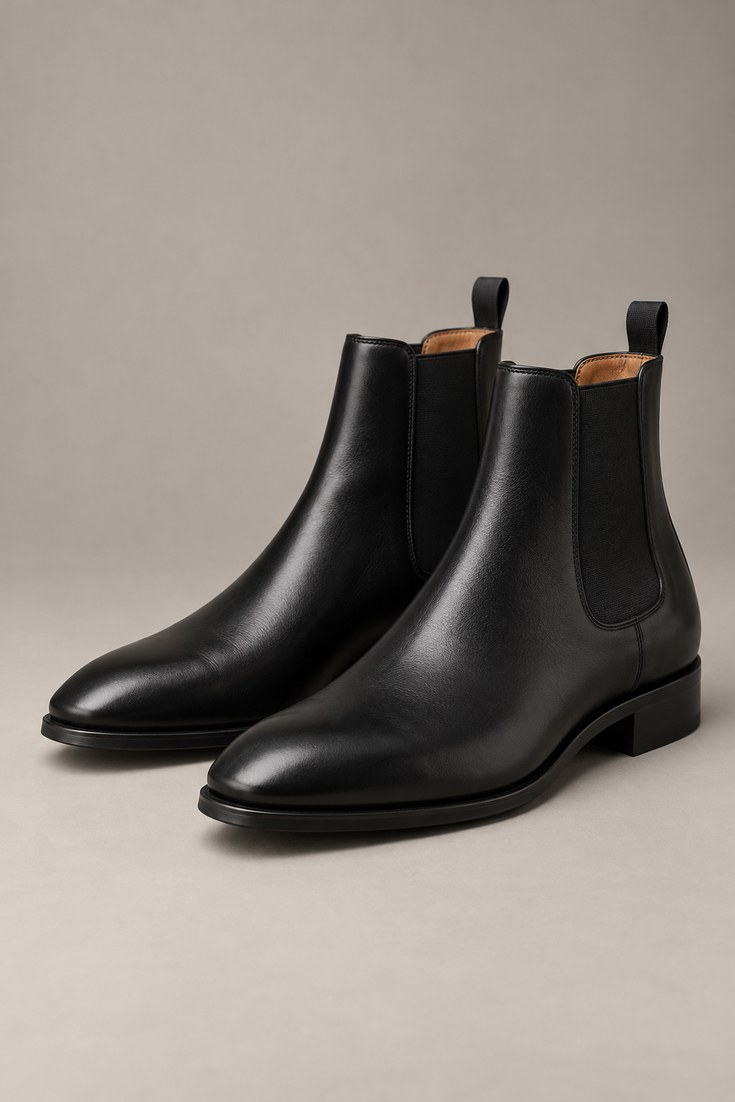
A slim, pull-on ankle boot in smooth black leather, with an elastic side panel and a small pull tab. It is the most versatile shape in this guide.
Wear it with straight or slim jeans, tailored trousers, a midi skirt and tights, or a long coat over knit dresses. It suits most foot shapes, though very wide calves can make the shaft feel snug. Stylists generally say to choose a rounded toe for everyday wear and a slightly sleeker toe for work.
A real example is the Dr. Martens 2976, listed at £170 on the UK site in black, cherry red and burgundy smooth leather. Downside: the elastic gusset is the first part to go, so ask whether a cobbler can replace it before you buy.
2. Suede Chelsea boot
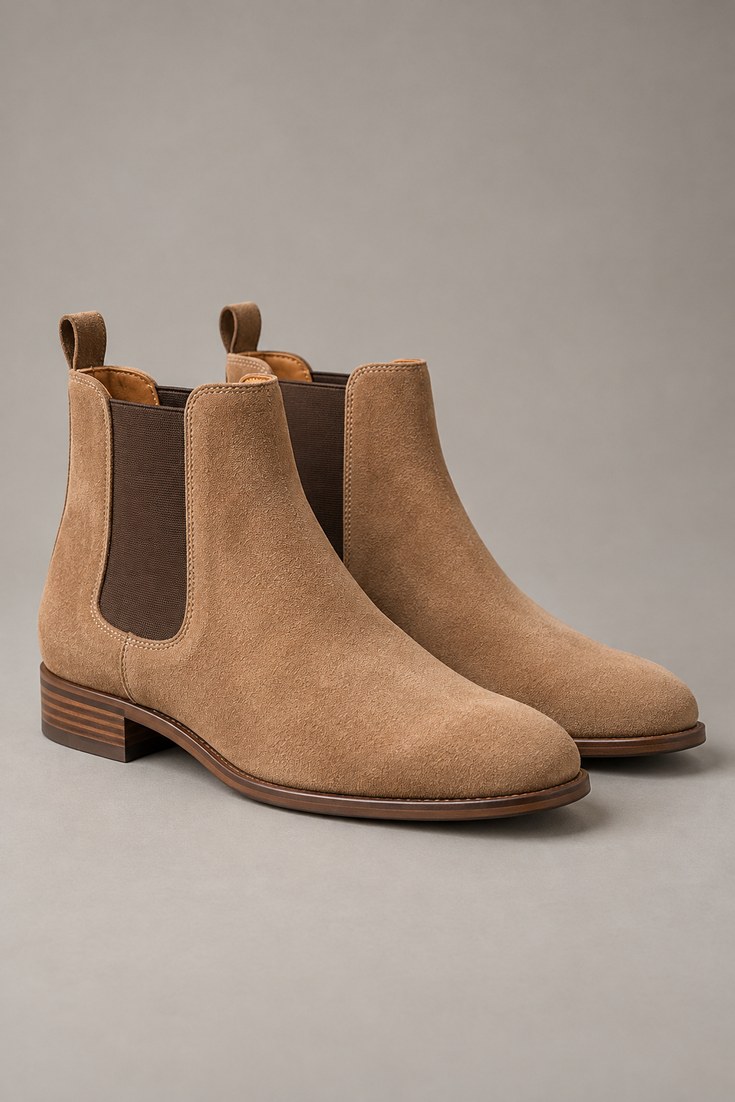
The same silhouette in tan, chocolate or taupe suede, softer on the eye than black leather and a natural match for denim, camel coats and cream knitwear.
It suits anyone building a warmer, more relaxed palette, and it flatters pale and olive skin tones alike because the matte surface looks less severe. Blundstone’s Original Suede Chelsea Waxed boot was listed at $184.95 on REI, slightly under its leather siblings.
Ask for a suede protector spray before the first outing, and keep a suede brush by the door. Downside: salt stains and rain spots are the reality of city winters, so this is a dry day boot for most people.
3. Lug-sole Chelsea boot
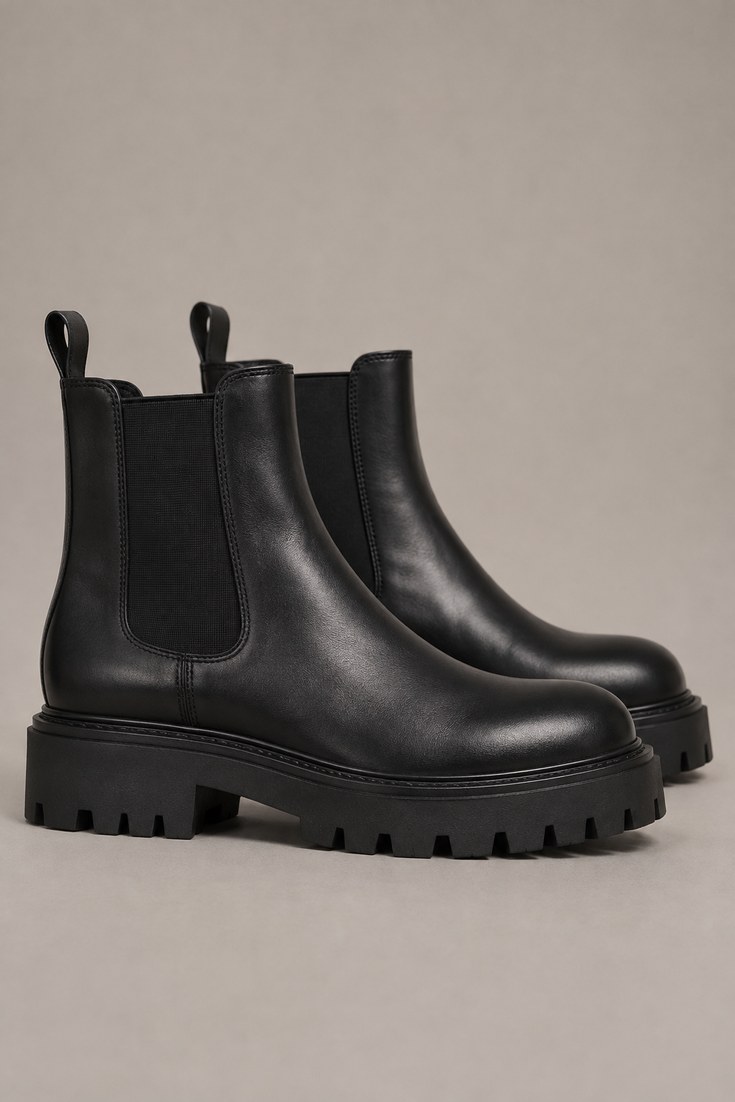
A Chelsea with a thick, treaded rubber sole. It keeps the clean upper but adds grip and height, usually about an inch or more over a flat Chelsea.
This is the fix for anyone who wants a Chelsea that works on wet pavements and long walks. It looks good with wide-leg trousers, jeans that stack at the ankle and slip dresses with a chunky knit over the top. The Dr. Martens 2976 is the best known version, with its grooved sole and yellow welt stitching.
Tip: choose a sole that is thick but not so heavy that it feels like a workboot. Downside: the extra weight will tire your calves if you are used to ballet flats.
4. Classic lace-up combat boot
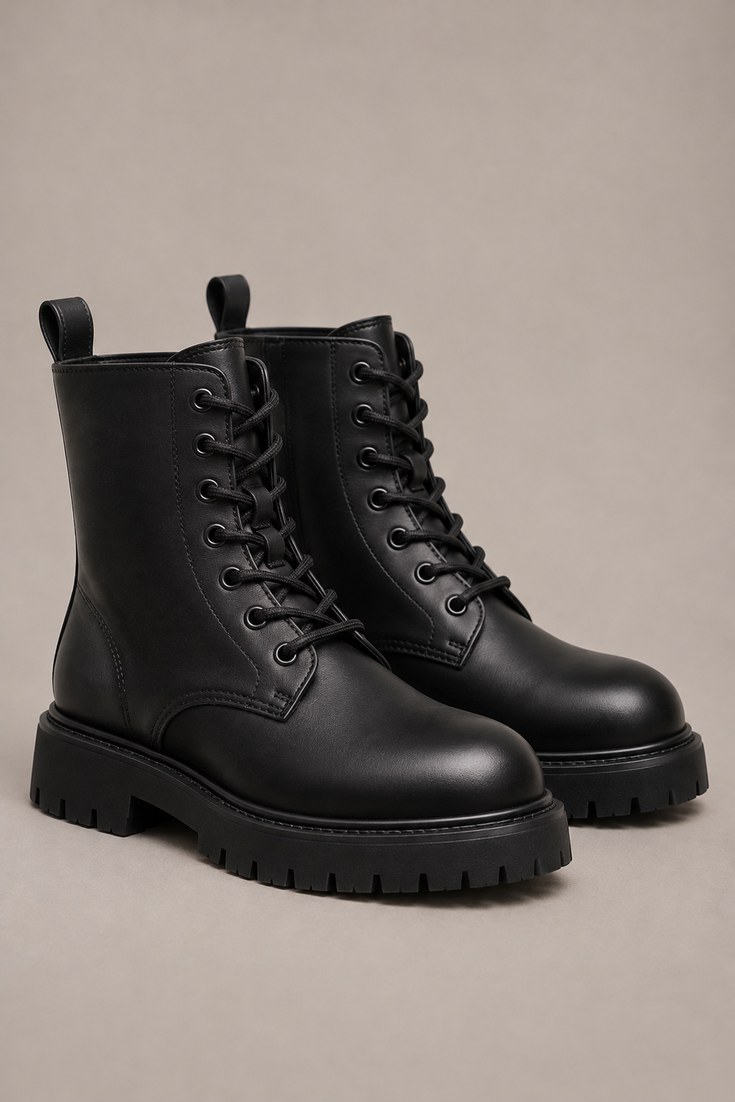
The original eight-eye boot with a smooth leather upper, a thick sole and a rounded toe. Think of it as the casual, indestructible option.
It works best with denim, cargo or leather-look trousers, mini skirts with opaque tights and oversized knitwear. It suits people who walk for transport and anyone who wants a boot that improves with age. The Dr. Martens 1460 in black smooth leather is the obvious example, at £170 on the UK site.
Practical tip: lace it loosely over the instep for the first week. Downside: leather this stiff takes time, so plan on a proper break-in period before a long day out.
5. Platform combat boot
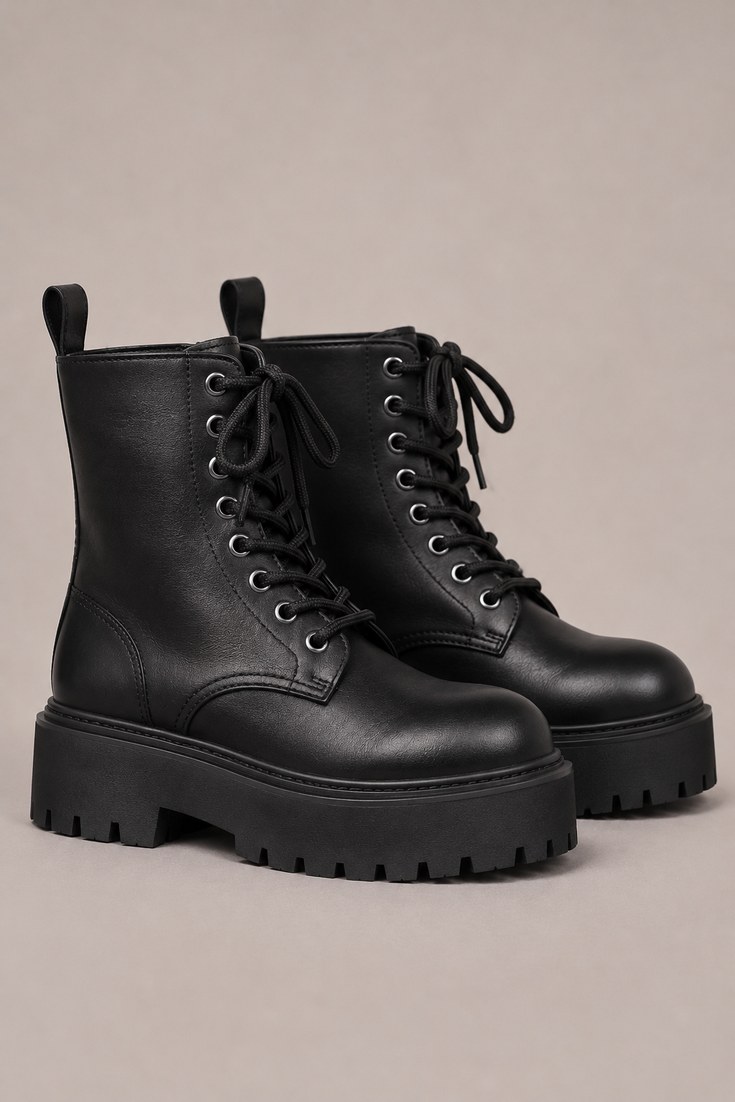
A combat boot with a flatform sole around two inches thick or more, which adds height without a heel.
It suits shorter wearers who want length without discomfort, and works with maxi skirts, tailored shorts with tights and wide-leg jeans. Dr. Martens’ Jadon is the best known example, with a platform sole built on the same bones as the 1460.
The heel-to-toe drop is slight, which makes it kinder to feet than a high heel. Downside: the weight is real, and a platform can make a delicate midi dress look overpowered. Try it with a slimmer, more structured silhouette on top.
6. Block-heel ankle boot
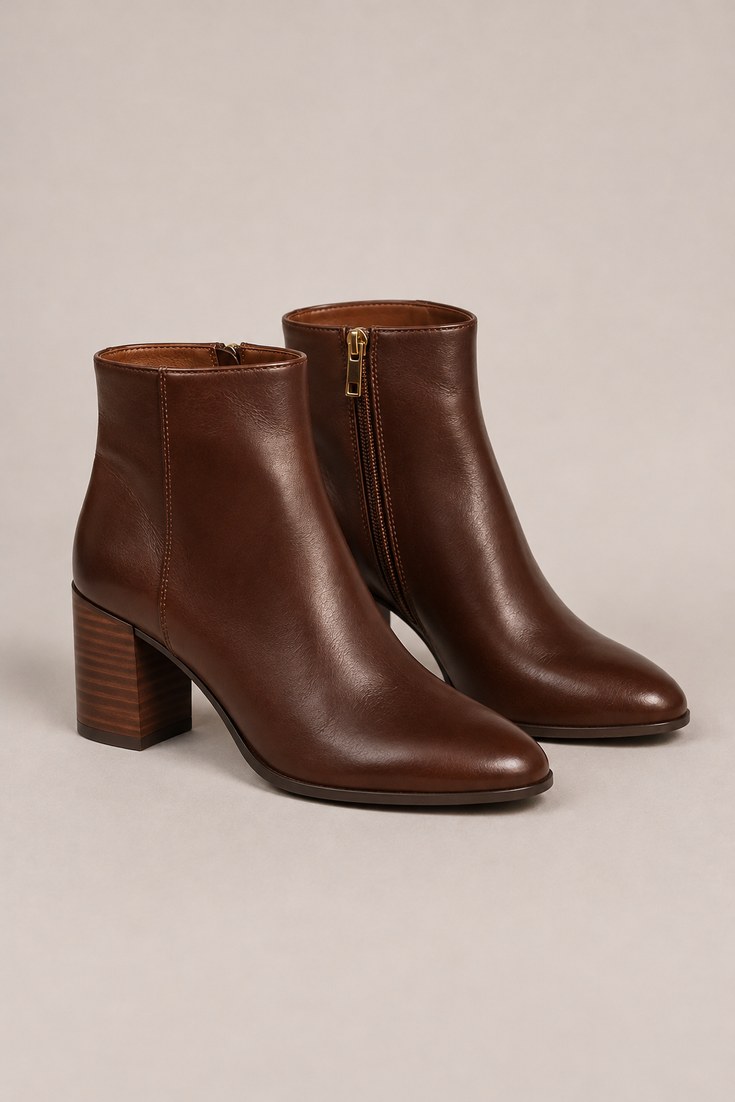
A smooth leather or suede ankle boot on a stacked or block heel of roughly two to three inches, usually with a side zip.
Stylists often call this the all rounder for dressier outfits: it works with midi dresses, cropped trousers, tailored jeans and wrap skirts. It suits long days where you need height without strain, and it flatters almost every leg length.
A brand that regularly turns up in this style is Sam Edelman, though prices vary by season so check the current listing. Tip: look for a rubber heel tip so you are not slipping on wet leaves. Downside: if the heel is too chunky it can make slim ankles look heavy.
7. Pointed stiletto ankle boot
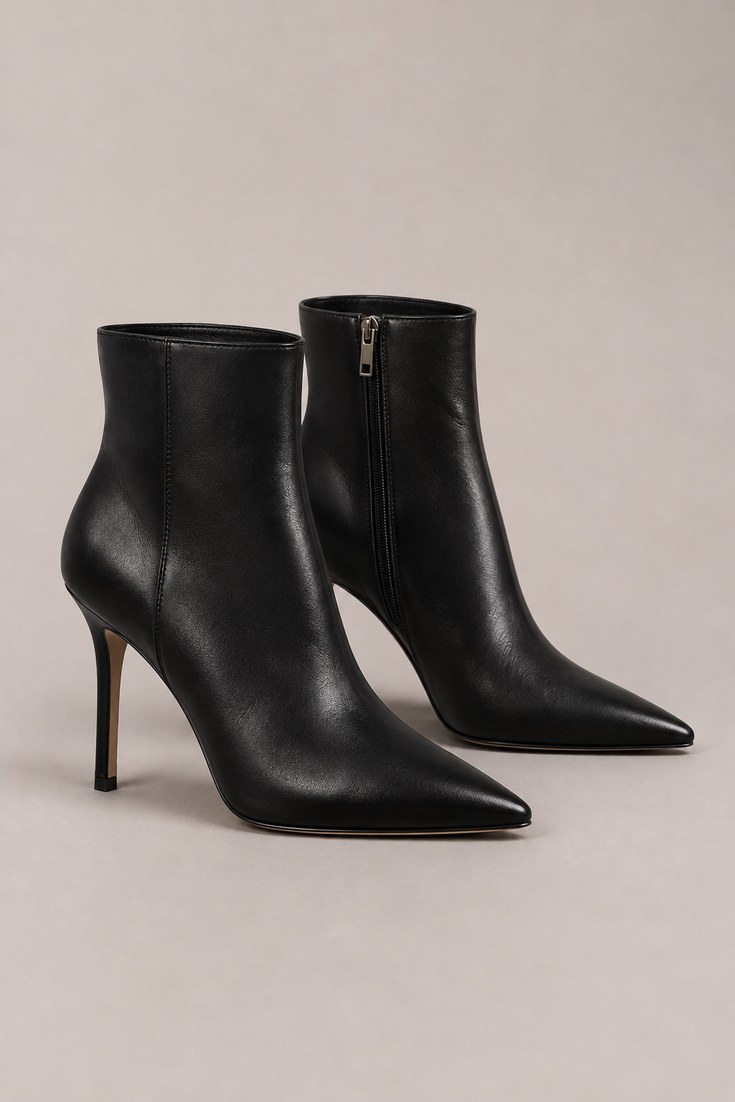
A sharp, pointed-toe ankle boot on a thin heel of three inches or more. It is the evening version of the category.
Wear it with a satin slip dress, a velvet mini, black tights and a tailored coat, or slim trousers that sit just above the ankle. It elongates the leg, which is why it suits petite wearers and anyone who wants a polished finish to a party look.
A half size up is common advice for pointed toes, since the toe box narrows quickly. Downside: it is the least practical boot here. Treat it as a dinner and event shoe, and keep a pair of flats in your bag for the journey home.
8. Western-style ankle boot
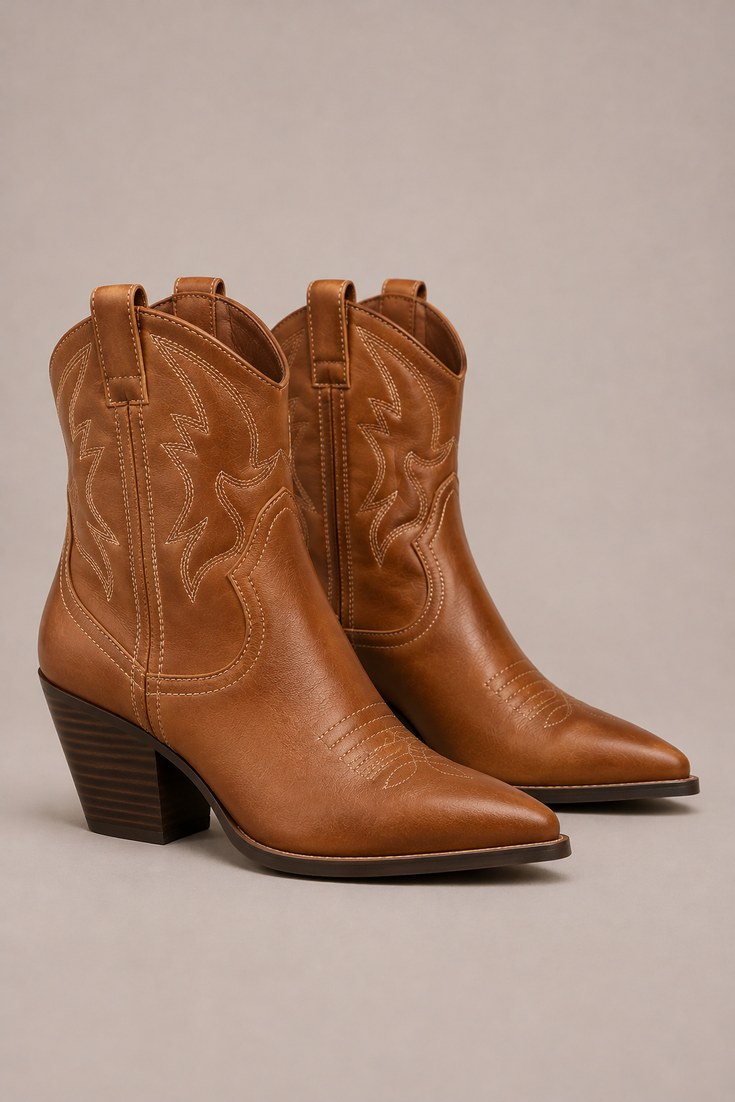
A leather ankle boot with a stitched shaft, a slightly angled heel and usually a pointed or snip toe. It is the statement piece of the group.
It works best with straight denim, prairie skirts, suede jackets and slip dresses, where its detail becomes the point of the outfit. It suits anyone who finds classic Chelseas a little predictable and wants something with character.
Tip: choose neutral tan, black or brown first, then add a contrast stitch version later. Downside: the angled heel and stitching can look costume-like if every other piece is also western, so mix it with something plain.
Not sure where to start? Think about your week in three parts: how far you walk, what the weather does and what your dress code asks for. Whichever of those is the strictest rule decides the boot, and the other two become tie-breakers.
Sizing and fit: what to know before you order
Chelsea boots should fit snug through the heel and ankle with a little room at the toes; the elastic gusset gives and softens within a couple of weeks. If you are between sizes, size up and use an insole. Combat boots are the opposite: they are made on a wider last, and you want your heel locked while the toes have space to move. Check the maker’s size guide, since lace-up styles are often cut differently from pull-ons.
Classic ankle boots depend on the heel. A block heel can fit true to size, while a pointed stiletto often needs half a size up. If you have a high instep, favour zip boots over pull-on Chelseas. If you have wide calves, a Chelsea with a stretchy gusset is more forgiving than a rigid shaft.
Socks matter more than people expect. A thin sock in a snug Chelsea feels completely different from a thick wool sock in the same size, so decide your winter sock first. Insoles also change the volume of a boot, which can turn a perfect fit into a tight one.
Always try boots in the afternoon, when feet are slightly larger, and with the socks or tights you plan to wear.
Waterproofing: what really works
Waterproof and water-resistant are not the same. In the Blundstone range listed at REI, only the Thermal All-Terrain boot was labelled waterproof, at $274.95, while the standard Original Chelsea styles were not described as waterproof. Treat that as a reminder to read the product page carefully.
For leather boots (Chelsea, combat, western), a wax or cream-based protector keeps water out and is easy to reapply. For suede, use a spray designed for suede and test on a hidden patch first. A stiletto heel is the least practical in rain, because the tip catches in gutters and grates. Whatever you choose, let wet boots dry at room temperature, away from radiators, and stuff them with paper.
Break-in: how long and how to do it
A good rule: plan on one to two weeks of short wears for leather Chelseas, and often longer for a stiff combat boot. Start with a couple of hours at home, then short walks, then a full day. Thick socks help a stiff pair stretch, and a cobbler can stretch a tight toe in a few minutes if you are in a hurry.
Use a blister plaster on the heel or the ankle bone before you head out, not after. Leather conditioner on the creases helps, and heel grips solve the slipping that new boots cause. If a pair is still painful after a month, it is not a break-in issue: it is the wrong size or shape.
What boots really cost
Prices vary widely by material, brand and season, so use these as starting points. Researched figures: Blundstone’s women’s Chelsea styles were listed at roughly $185 to $275 at REI in the US, and the Dr. Martens 1460 and 2976 are both £170 on the UK site. There was no reliable typical price for classic ankle boots, so check current listings and compare cost per wear: a boot you wear 60 times a season beats a cheaper pair that sits in the box.
Think in tiers rather than brands: a budget pair for occasional wear, a mid-range leather pair for your daily boot, and a splurge only if you have a clear gap in your wardrobe. Sales in late winter are the best time to buy for next year.
Resoling is worth knowing about. A cobbler can replace worn soles and heels on many leather boots, which makes a mid-priced pair a better long term buy than a fast-fashion one.
12 outfit formulas, four per type
Chelsea boots
- Straight jeans, a fine knit and a camel coat: the foolproof weekday uniform.
- Tailored trousers, a silk blouse and a black Chelsea for the office.
- Midi skirt, opaque tights and a chunky cardigan. See the cozy winter outfit ideas for more layers.
- Wide-leg trousers with a lug-sole Chelsea and an oversized blazer.
Combat boots
- Black skinny jeans, a slouchy sweater and a puffer: the easy weekend look.
- Floral midi dress, denim jacket and a classic combat boot to toughen it up.
- Mini skirt, thick tights and an oversized knit; swap in a sweater dress for a one-piece version.
- Cargo trousers, a fitted tee and a platform combat boot for city days.
Classic ankle boots (heeled and flat)
- Block-heel ankle boot with cropped trousers and a trench: smart and comfortable.
- Pointed stiletto boot with a satin slip dress and a wool coat for evenings.
- Western boot with straight denim, a white shirt and a suede jacket.
- Flat ankle boot, a pleated midi skirt and a faux fur coat for a polished winter look.
If you are weighing these against taller styles, our knee-high boot outfits cover the next step up.
How to choose by lifestyle
- Office or hybrid work: black leather Chelsea or block-heel ankle boot. More ideas in winter work outfits.
- Lots of walking: lug-sole Chelsea or classic combat boot.
- Rain and snow: a waterproof-labelled boot with a rubber sole, not suede.
- Dressier evenings: pointed stiletto or block-heel ankle boot.
- One pair only: black leather Chelsea, because it goes with the most outfits.
What to say in the shop
- “Can I try these with the socks I will wear in winter?”
- “Does this come in a half size, and does it run small?”
- “Is the upper waterproof, or only water-resistant?”
- “Can the sole be replaced by a cobbler?”
- “What do you recommend to stop the heel slipping?”
Common mistakes to avoid
- Buying a heel you cannot walk in: stand and walk the length of the shop before you pay.
- Assuming suede is fine in rain: use a protector spray and save it for dry days.
- Skipping the break-in: wear new boots for short outings first.
- Choosing a platform that overpowers the outfit: balance it with slimmer pieces on top.
- Ignoring your calf width: check the shaft measurement for pull-on styles.
- Never cleaning them: a quick wipe each week saves the leather.
If you can only fit one pair in the budget, buy the black leather Chelsea or the classic combat boot: both go with the widest range of outfits, and both can be resoled. Add a heeled or western ankle boot second, when you know which events you actually dress up for.
Boot care timeline
Day one: apply a protector spray or wax. Weekly: brush or wipe off dirt and salt. Monthly in winter: condition leather and refresh the water protection. End of season: clean, dry thoroughly, stuff with paper and store away from direct heat. Yearly: check heels and soles, and ask a cobbler to replace them before they wear through.
Dr. Martens’ own care advice for smooth leather is simple: wipe with a damp cloth, apply a neutral or colour-matched wax polish, then buff with a brush.
Frequently asked questions
Are Chelsea boots or combat boots more comfortable?
Chelsea boots are usually more comfortable on day one because the leather is thinner and more flexible. Combat boots can be more comfortable long term for walking, because of the thick sole, but the break-in period is longer.
Can I wear combat boots to the office?
Yes, in a smooth black leather with a simple shape, paired with tailored trousers or a midi skirt. Choose a slimmer sole and keep the rest of the outfit crisp.
Do ankle boots make legs look shorter?
They can if the boot cuts across the widest part of your calf. A shaft that ends at or just above the ankle bone, a pointed toe or a heel all help lengthen the leg. Wearing tights or trousers in the same colour as the boot also helps.
Are suede Chelsea boots a bad idea in winter?
Not if you treat them. A suede protector spray, a brush and a rule against wearing them in heavy rain will keep them in good shape. If your winter is mostly wet, go for leather instead.
What size should I buy in Chelsea or combat boots?
Start with your usual size and check the brand’s size guide. Chelseas are usually true to size, combat boots can feel roomier, and pointed ankle boots often need half a size up. If you are between sizes, size up and add an insole.
Save this for your next boot shop
Whichever shape you pick, the best boot is the one you will wear 50 times, not the one that looks best on the shelf. Save this guide to Pinterest so the table and outfit formulas are with you the next time you are choosing a pair.
Related Post