
Please note that we do not create all the designs featured in this article. Our primary focus is to curate and collect a diverse range of design collections and products to inspire and share with our audience. While we do not claim ownership or take full credit for the original designs and images, we occasionally make minor adjustments, particularly in home decor and fashion items, to present them more effectively. Additionally, we may produce and edit images to enhance their quality and composition before sharing them on our Pinterest page or website. For the design work we do on these creative designs, we also include our logo on the images shared on Pinterest and our website. This helps our audience recognize that these designs have been published on insiderlyfe.com!
You buy the sweater because it felt like a hug on the hanger. Three weeks later it has little grey bobbles under the arms, it has stretched at the cuffs, and you are still cold on the walk to the station.
Or the opposite: you save up for the cashmere, wear it twice a week, wash it like everything else, and watch it turn into a doll sized version of itself. Both mistakes come from the same place. Cashmere, merino and ordinary wool get lumped together as “the warm soft stuff,” and they behave very differently on a real body in a real winter.
This guide is for anyone standing in front of a rail of knitwear this season wondering whether the price jump is worth it. Below you get a straight answer on cashmere vs merino, a comparison table, eight specific sweaters worth buying (with the fibre facts, price ranges and one honest downside each), and the exact checks to do in the shop before you pay.
Keep scrolling for number 4, the merino crewneck, because it is the one most people should buy first, and number 6, which is warm enough to replace a light coat.
Cashmere vs merino vs wool: the quick verdict
Pick cashmere if you want the softest, lightest warmth and you will wear the sweater gently, a few times a week at most. Pick merino if you want a sweater that survives commuting, bags and the washing machine, with less pilling. Pick lambswool or a chunky wool if you want the most warmth per dollar and you do not mind a slightly more textured hand feel.
Alpaca sits between them for softness and warmth, and a cotton and wool blend is the budget friendly workhorse for mild days.
Comparison table: cashmere, merino and wool at a glance
| Cashmere | Merino | Lambswool / chunky wool | |
|---|---|---|---|
| Typical fibre thickness | About 14 to 19 microns | Roughly 15 to 24 microns | Lambswool about 24 to 30 microns |
| Price range found | From $50 (Quince) to $250+ in the US; about £79 to £349 in UK round ups | Blends around £140 to £175 in UK round ups; 100% Irish merino fisherman about €115 on sale | Shetland lambswool cable knit $375 (Drake’s); wool blend Aran knit $205 (Finisterre) |
| Warmth | Highest for its weight | Warm and breathable | Warm, bulkier |
| Pilling and durability | Prone to pilling in friction areas, more delicate | More resistant to pilling, more durable | Coarser fibre, can feel prickly to some |
| Best for | Dressy layers, close fit, special pieces | Everyday, commuting, travel | Cold days, outdoor walks, casual weekends |
| Care | Hand wash cold or dry clean, dry flat | Often machine washable on a gentle cycle (check the label) | Usually hand wash, dry flat |
| Biggest downside | Fragile and pricey | Less luxurious feel than good cashmere | Can itch on bare skin |
Fibre facts that actually matter
Fibre thickness is measured in microns, and the lower the number, the softer the knit tends to feel. Cashmere is typically cited at about 14 to 19 microns. Merino runs roughly 15 to 24, so the best merino is nearly as fine as cashmere while cheaper merino is noticeably coarser. Lambswool sits around 24 to 30. Fibre guides put the itch threshold somewhere around 25 to 30 microns for most people, which is why a lambswool crew can be fine over a shirt and miserable on bare skin.
Ply is the number of strands twisted together to make the yarn. A two ply yarn is stronger and pills less than a single ply one of the same fibre, but a thicker yarn also feels less fluid. Gauge is how tightly the sweater is knitted. A fine, tight knit gives a smoother surface and a more durable sweater, while a loose chunky one traps more air.
On itch, merino contains lanolin, which can bother some people with very sensitive skin, though most find it comfortable. Cashmere and alpaca contain little or none. On pilling, merino is widely described as more resistant than cashmere, while alpaca’s long fibres are said to pill less than wool. Treat that last point with some care, since it comes from retail and shopping editorials rather than lab tests.
The eight sweaters, from cashmere to cotton blends
Each pick below is a specific style rather than a fibre in the abstract, so you can screenshot the name and go. Prices are what turned up on product pages and in UK round ups, so check the live price before you buy.
1. Cashmere crewneck in oatmeal
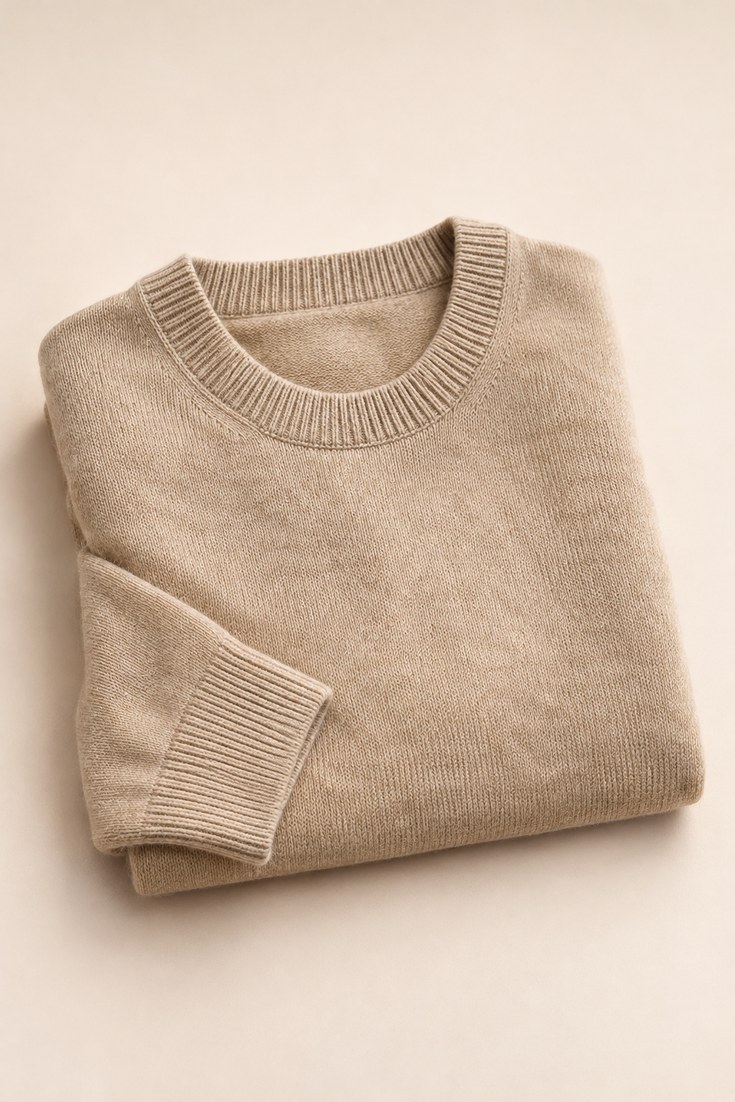
The classic. A fine gauge cashmere crewneck in oatmeal goes under blazers, over shirts and with nearly everything, and it looks especially good in a winter white outfit like the ones in our winter white outfit ideas.
On price, Quince lists a Grade A Mongolian cashmere crewneck at $50 (marked down from $148), and a shrunken fit at $69.90. In the UK, M&S, H&M and John Lewis have all been listed at roughly £79 for cashmere crew necks in a round up, though prices move, so check today’s tag.
The honest downside: cashmere is prone to pilling where fabric rubs, such as under the arms and where a bag strap sits. Rotate it, wear it no more than two days in a row, and own a pill comb.
2. Cashmere cardigan in black
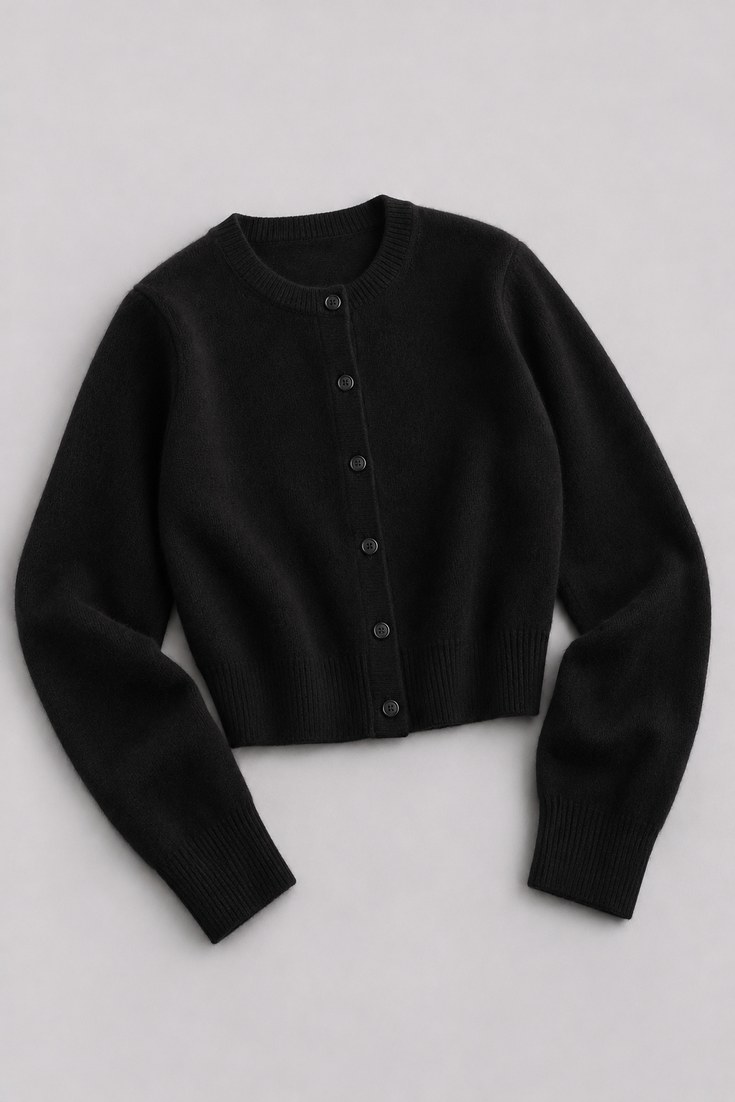
A cashmere cardigan is the sweater you will actually wear more than the crewneck, because it works as a light jacket indoors and a mid layer outside. Buttoned up, it reads like a sweater. Open, it adds a long line over a slip dress or tee.
Quince lists a Mongolian cashmere cardigan at $79.90 and a black cropped crew cardigan at $89.90, with a baby cashmere cable cardigan at $249.90. For UK shoppers, Boden’s Margot cashmere jumper appeared at £150 in one round up, which gives a sense of the mid range.
Who should skip it: anyone who hates fuss. Buttons and open fronts catch on door handles and bag hardware, and a cardigan stretches at the elbow faster than a pullover does.
3. Merino turtleneck in charcoal
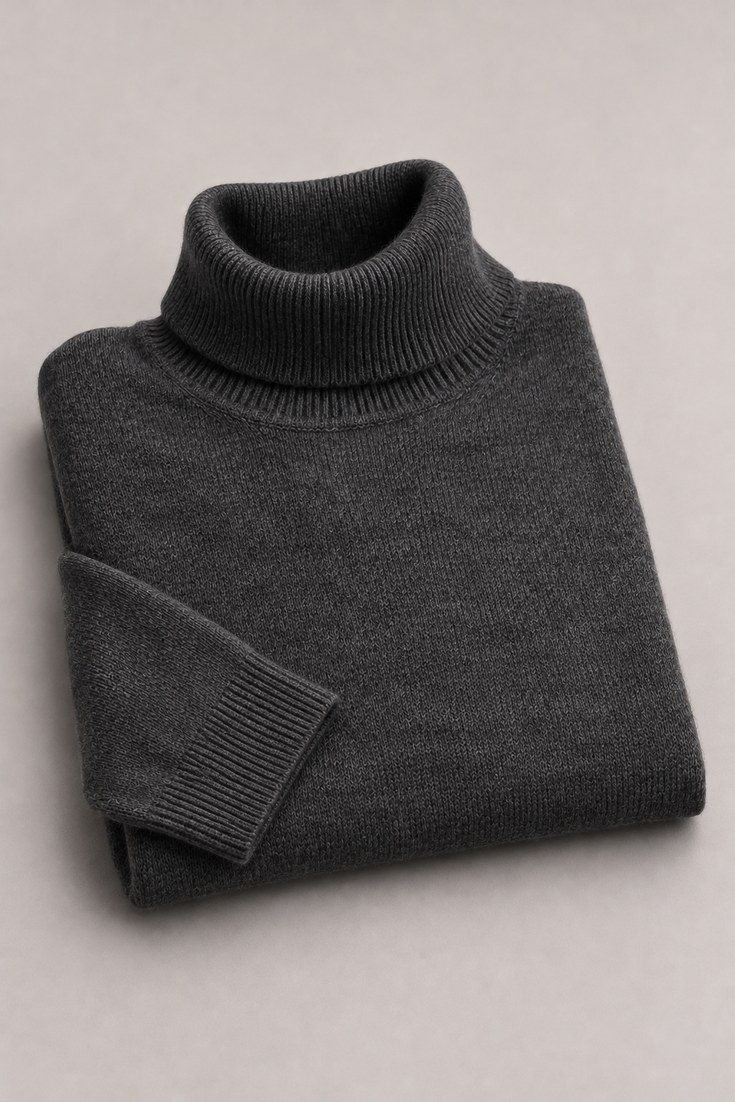
A merino turtleneck is the best layering piece in a cold wardrobe. The fibre is fine enough to sit against the neck without scratching, breathable enough for a heated train, and it fits easily under a coat. Pair it with a pleated skirt and tall boots, as in our knee high boot outfits.
Uniqlo has an extra fine merino range, and John Lewis sells merino wool blend jumpers in its own label. Current prices for either could not be confirmed, so check the tag. Merino cashmere blends turned up in UK round ups at around £140 (Jigsaw) and £175 (Me+Em).
Downside: a tight turtleneck can feel claustrophobic and holds static. Choose a loose, folded collar if you wear necklaces.
4. Merino crewneck in forest green
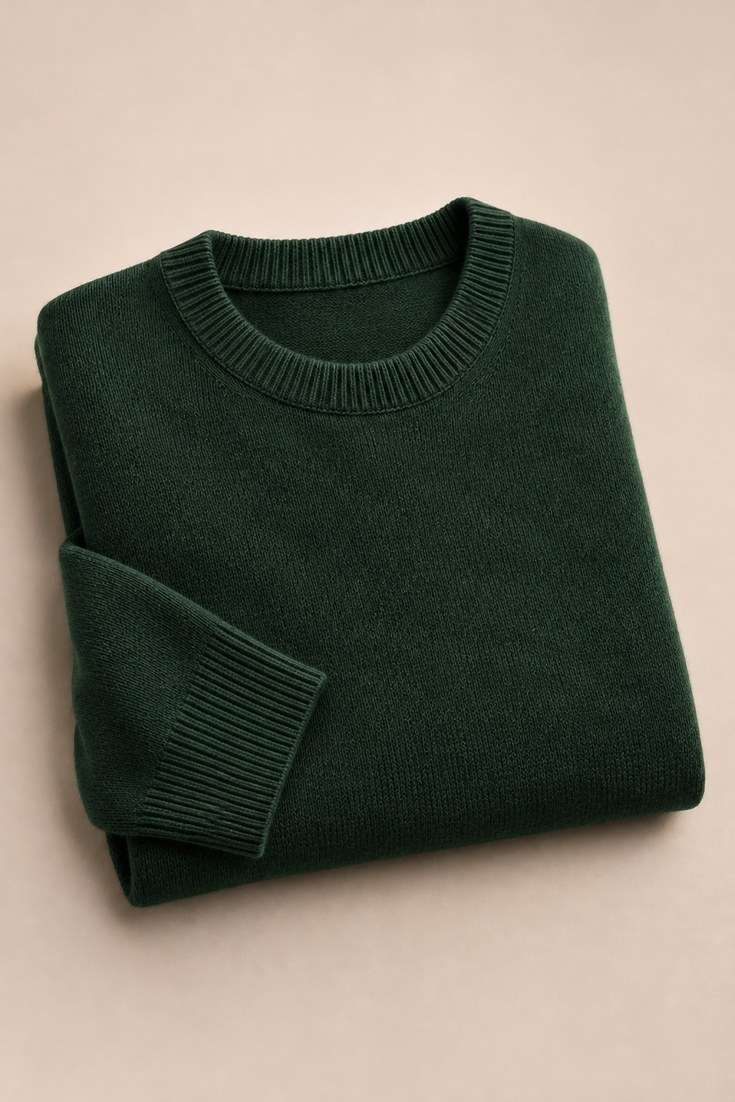
If you buy one sweater from this list, make it this one. Merino is more resistant to pilling and more durable than cashmere, and many merino sweaters can be washed on a gentle cycle. It is the one you can wear to work, to the airport, and to a dinner.
Choose a colour that earns its place: forest green, burgundy or navy look rich in wool and hide small marks better than pale shades. A two ply or tightly knitted yarn will keep its shape longer than a loose single ply.
Downside: merino does not have cashmere’s liquid softness, and cheaper merino around 22 to 24 microns can feel a touch rougher. If you have very sensitive skin, wear a thin tee underneath the first few times. Keep scrolling, the cosiest one is next.
5. Lambswool crewneck in heather grey
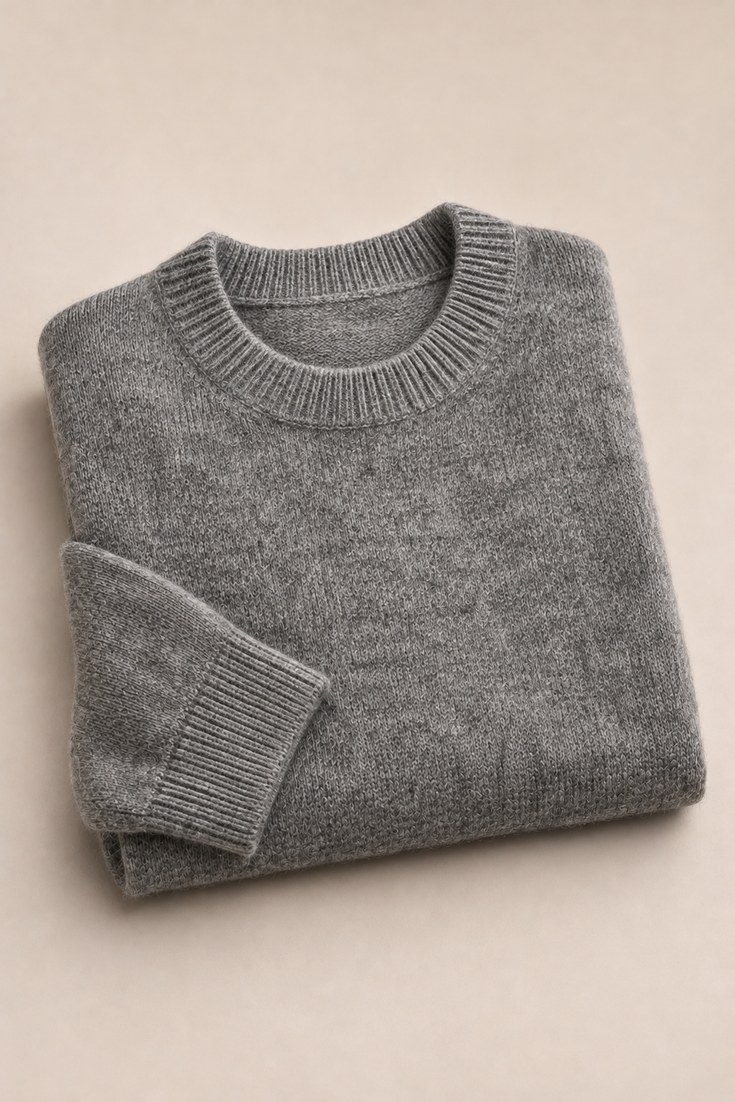
Lambswool is the sweater of the plaid skirt and the long walk. It is warm, a little fluffy, and happily old fashioned. Think Fair Isle and Shetland styles worn with pleated or checked pieces, like the ones in our plaid skirt outfits.
At the top end, Drake’s sells a Shetland cable knit jumper at $375 in 100% wool made in Scotland. John Lewis also carries a lambswool rib knit jumper under its own label. For fibre, lambswool typically sits around 24 to 30 microns, so it is coarser than merino and cashmere.
Downside: it can itch on bare skin. Wear it over a cotton shirt or a thin merino layer, not directly against your collarbone.
6. Chunky wool cable knit in ecru
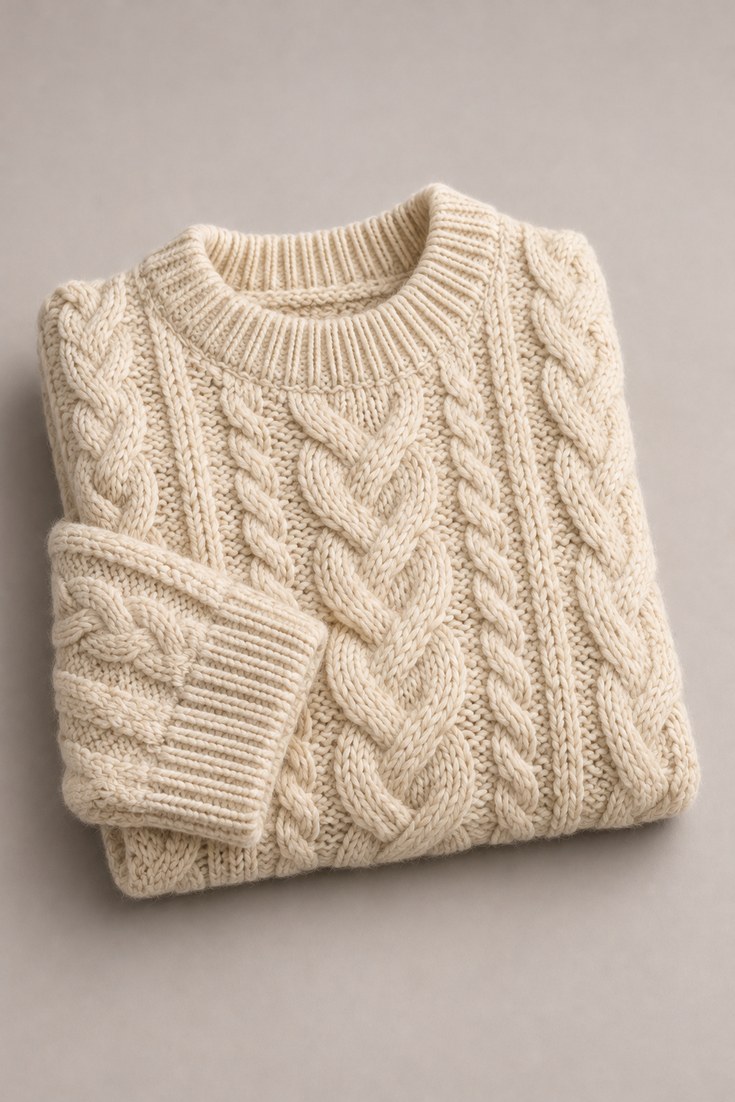
The cosy one. A heavy cable knit in ecru is the sweater you wear instead of a light coat, over jeans and boots on weekend mornings. It traps heat through thickness rather than fineness.
Finisterre’s Nova Aran knit, a chunky wool blend, was listed at $205. Sweatershop lists a 100% merino Irish fisherman sweater, knit in Co. Dublin, at €114.90 on sale from €159.90. Both show that chunky does not have to mean cheap or itchy.
Care matters. The Sweatershop listing says to hand wash or dry clean, use lukewarm water and mild detergent, and dry flat. Never tumble dry.
Downside: bulk. It will not fit under a fitted coat, and it can make a short torso look boxy.
7. Baby alpaca blend oversized crew in camel
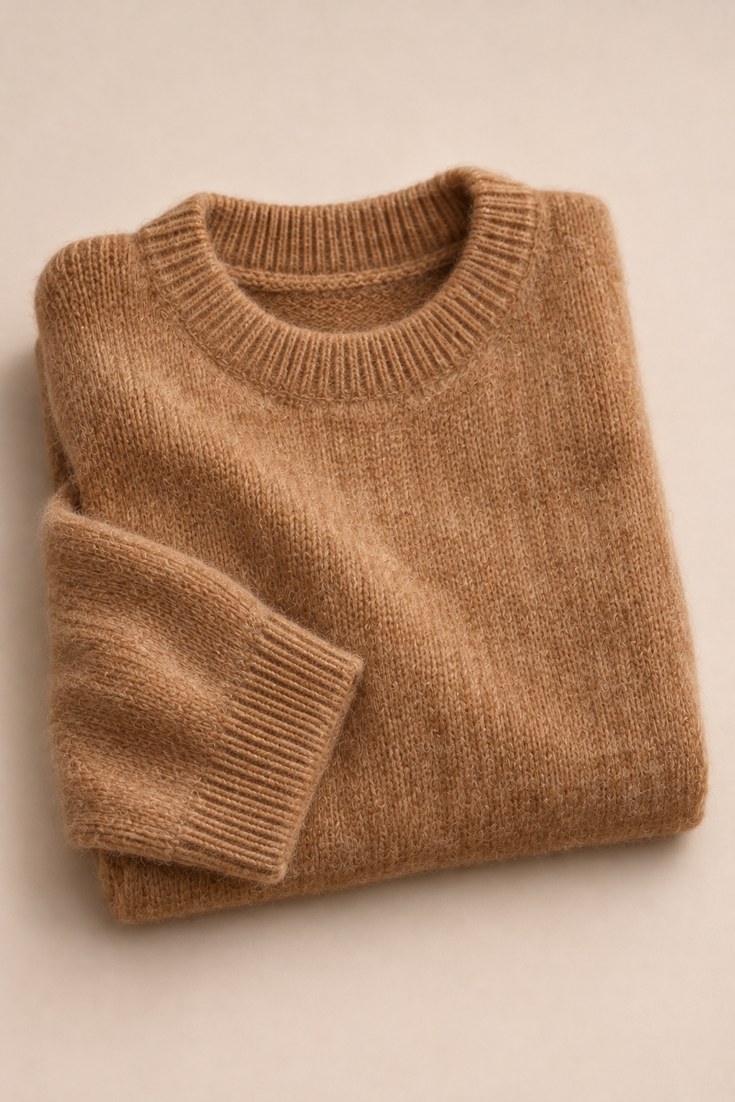
Alpaca is the underrated option. The fibre has little lanolin, and the long fibres are said to pill less than wool. It feels fluffy and warm without the weight of a chunky wool.
Quince lists a baby alpaca range with every sweater between $49.90 and $100, including a lofty oversized crew at $90. A PureWow shopping article also names alpaca sweaters at roughly $50 (Zara), $100 (Everlane), $148 (lululemon) and $395 (Jenni Kayne), though that comparison is affiliate led.
Regular alpaca can range from 23 to 40 microns, but baby and royal grades are cited at about 18 to 22. Check the label for “baby alpaca” or the micron count.
Downside: it sheds a halo of fuzz at first and can stretch if it is hung.
8. Cotton and wool blend crewneck in soft navy
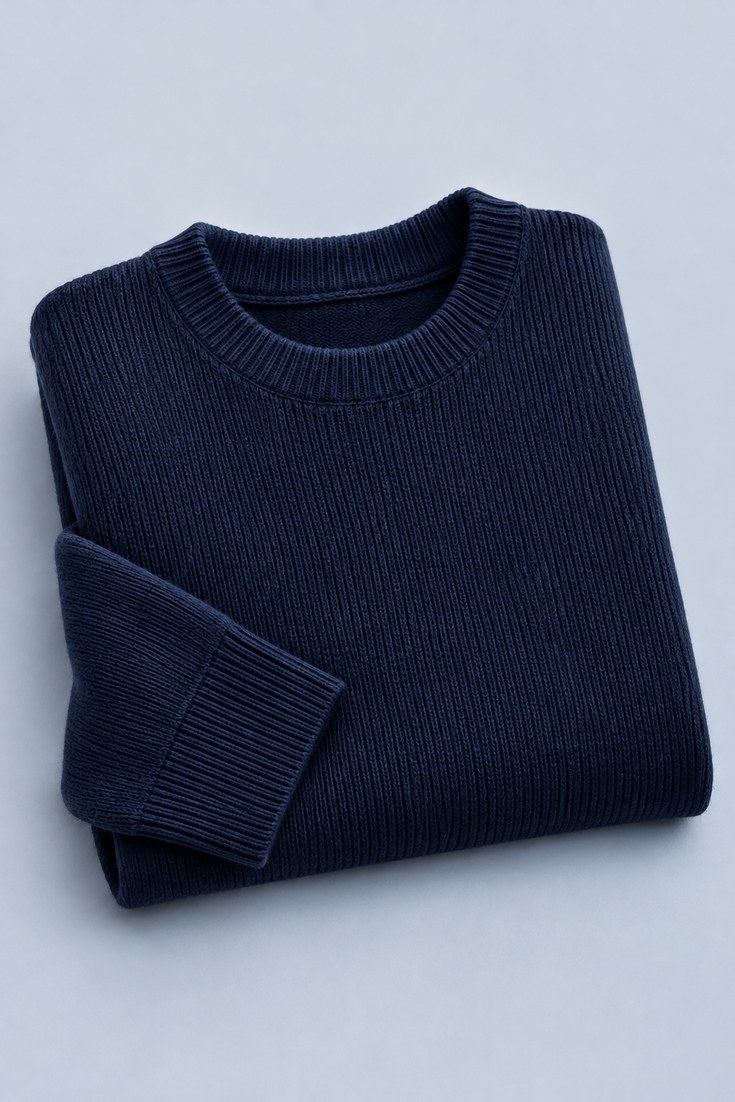
The budget friendly workhorse. Cotton makes a sweater cheaper, easier to wash and less prone to moths, but it is less warm. A blend borrows some wool warmth with cotton’s easy care.
I found cotton sweaters from $64 to $168 in a 2023 round up (Abercrombie, J.Crew, Brooks Brothers, Asket), and Quince lists a cotton cashmere cardigan at $49.90. Always read the percentage: more cotton means a heavier, less springy knit.
Care is usually simpler. Most cotton sweaters can go in the machine on the coldest setting, though wool blends deserve more caution. Check the label first.
Downside: cotton stretches out and holds moisture, so it is the least cosy of the eight on a freezing day. Layer it over a thermal.
Which fibre suits which wearer
- Run cold, indoors a lot: cashmere is the warmest for its weight, so a fine cardigan does the job without bulk.
- Run warm or travel often: merino regulates better and handles heated trains, planes and offices without feeling stuffy.
- Fuller bust or broad shoulders: pick a fine gauge knit, since chunky cables add width. Go for a fitted crewneck or a V shape.
- Petite frames: a cropped or shrunken cut in a fine knit avoids drowning you. Save the oversized chunky knit for jeans and boots.
- Tall frames: oversized and longline styles look intentional, and a chunky knit balances long legs.
- Allergies or very sensitive skin: try cashmere or baby alpaca first, and always test a sweater against your inner arm in the shop.
How to judge quality in the shop
Fibre content on the label is a starting point, not a guarantee. A few checks take two minutes and are worth doing every time.
- Stretch and release: gently pull a section of the knit. Good cashmere and merino spring back. A sweater that stays stretched out will bag at the elbows within weeks.
- Look at the surface: a lot of loose fluff suggests short fibres, which feel softer in the shop but pill and wear faster. Only slight fluff points to longer fibres.
- Rub test: run your palm over the sweater a few times. If it already looks fuzzed in the shop, it will pill at home.
- Be wary of “too soft”: one buying guide notes that overly soft cashmere has often been treated and tends to wear less well.
- Check the knit tightness: a tighter, higher gauge knit generally wears better. Ask the shop for the ply and gauge.
- Read the label for the grade: terms such as Grade A or Mongolian cashmere help, but a low price and an exaggerated label are still a flag.
What to say in the shop
- “Is this two ply, and what is the gauge?”
- “What percentage of this is cashmere, and is it blended with nylon or viscose?”
- “Can this go in the machine, or is it hand wash only?”
- “Does it pill much around the underarms in your experience?”
- “Do you have it in a merino, in case I find cashmere too delicate?”
Price ranges I found
In the US, cashmere sweaters from Quince ran from $50 for a crewneck to $89.90 for a cropped cable crewneck and turtleneck, and $249.90 for baby cashmere. Baby alpaca at Quince ran from $49.90 to $100. A Shetland cable knit from Drake’s was $375. In a 2023 round up, cotton sweaters ran from $64 to $168.
In the UK, a Hello! magazine round up listed cashmere jumpers at £79 (M&S, John Lewis), £135 (& Other Stories, Arket), £199 (AllSaints, The White Company) and £349 (Ralph Lauren). That round up is a few years old, so treat the figures as a guide to relative price, not a current quote. Current merino prices could not be verified from the pages available, so they are left out.
Care and washing
Cashmere: wash every three or four wears, not after every one. Turn the sweater inside out, soak it for around five minutes in lukewarm or cold water with a gentle detergent, squeeze, and rinse cold. Skip fabric conditioner, which coats the fibres. Roll it in a clean towel, reshape it and dry it flat. Never tumble dry or wring it.
Merino: many merino sweaters are machine washable on a gentle cycle and can be air dried flat, but the label always wins. Chunky wool and lambswool: hand wash in lukewarm water with mild detergent, reshape and dry flat.
Storage: fold knitwear instead of hanging it, so the shoulders do not pull out of shape. Store in a dry, aired place, add cedar or lavender to deter moths, and wash before putting it away for the season. A fabric shaver or pill comb removes bobbles gently.
A care timeline for the season
- Day one: remove tags, check for loose threads and snip them rather than pulling.
- First month: rotate between sweaters and wear each no more than two days in a row. Expect a few bobbles early on, which is normal as loose fibres work free.
- Every three or four wears: wash cashmere gently, or follow the label for merino.
- Mid season: comb or shave pills, and fold knitwear flat rather than hanging it.
- End of season: wash before storing, add cedar or lavender, and avoid plastic bags.
How to choose by lifestyle
- Commuter: merino crewneck or turtleneck. Durable, breathable and easy to care for.
- Office with a cold desk: cashmere cardigan to wear over a shirt, and keep it in a drawer.
- Outdoor weekends: chunky wool cable knit or lambswool, with a layer under it.
- Sensitive skin: cashmere, baby alpaca or fine merino, and always a thin layer underneath.
- Tight budget: a cotton and wool blend, or a $50 style from a direct to consumer brand, and replace it when it wears.
For more ideas on what to wear with these, see our guides to winter outfits for women and sweater dress outfits.
Common mistakes to avoid
- Washing cashmere after every wear. Wash every three or four wears and let it rest between.
- Hanging knitwear on a hanger. Fold it instead so the shoulders keep their shape.
- Buying by softness alone. Check the stretch and the rub test too.
- Ignoring the blend percentage. A label that says “cashmere blend” may contain very little cashmere.
- Wearing lambswool next to bare skin. Add a thin tee or merino layer.
- Putting wool in the dryer. Heat and tumbling shrink and felt it.
Frequently asked questions
Is cashmere really warmer than merino?
For its weight, yes. Cashmere insulates better in a lightweight garment, while merino balances warmth with breathability and is easier to wear all day indoors.
Which pills more, cashmere or merino?
Cashmere pills more, especially in high friction areas. Merino is more resistant, particularly in a tight knit. Pills can be removed with a fabric shaver or comb.
Is merino itchy?
Usually not. Fine merino is soft against the skin, though the lanolin in wool can bother a small number of people with very sensitive skin. Coarser lambswool is more likely to itch.
Is cheap cashmere worth buying?
Sometimes. Direct to consumer brands list Grade A cashmere crewnecks from around $50, but a low price often means shorter fibres or a looser knit, so do the stretch and rub tests and expect it to wear out sooner.
Can I wash cashmere in the machine?
Check the label. Some brands design cashmere for a machine wool cycle at 30 degrees, but hand washing in lukewarm or cold water is the safer default.
Save this for your next knitwear shop
If you are still deciding, save this guide to Pinterest and screenshot the table before you head to the shop. The right sweater is the one you will actually wear on a cold Tuesday, not the one that looked best on the hanger.
Related Post