

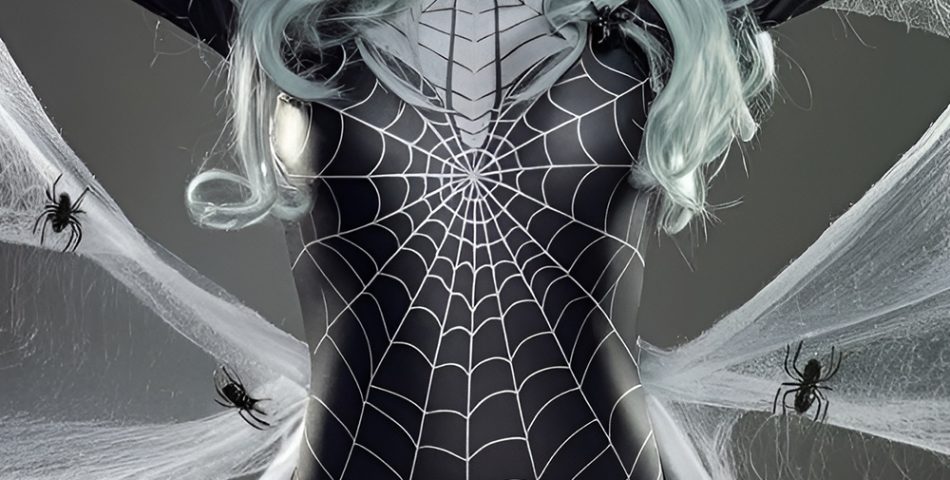
Please note that we do not create all the designs featured in this article. Our primary focus is to curate and collect a diverse range of design collections and products to inspire and share with our audience. While we do not claim ownership or take full credit for the original designs and images, we occasionally make minor adjustments, particularly in home decor and fashion items, to present them more effectively. Additionally, we may produce and edit images to enhance their quality and composition before sharing them on our Pinterest page or website. For the design work we do on these creative designs, we also include our logo on the images shared on Pinterest and our website. This helps our audience recognize that these designs have been published on insiderlyfe.com!
Spider costumes live or die on two things: the web and the legs. Get those right and almost any dark outfit becomes a spider. Get them wrong and you are a person in black with some string on.
So this list covers the fourteen looks and, more usefully, how to actually build the elements they share. Web effects, extra legs and web makeup all come up repeatedly, and all three are far easier than they look.
Read the techniques section first if you are making rather than buying. It will save you from the two mistakes that ruin most homemade spider costumes.
The Three Techniques Behind Every Spider Costume
Web on fabric. Fabric paint in a fine-nozzle bottle, drawn freehand onto a dark garment. Draw the spokes first, all radiating from one point, then join them with curved lines. Curved, not straight, is what makes it read as a web.
Extra legs. Pipe insulation foam or rolled newspaper wrapped in black fabric, stitched or safety-pinned to the shoulders and upper back. Four is plenty. Eight is heavy, hot and catches on everyone.
Web makeup. Draw one dot near the outer eye, then five or six lines radiating from it across the temple and cheekbone, then join them with curves. Liquid liner holds better than pencil and does not transfer.
1. Glittering Web Spinner
A dark base with silver web lines drawn across the skirt and bodice, plus glitter worked into the web itself so it catches every light in the room.
The build: silver fabric paint on black, with loose glitter pressed into the lines while the paint is still wet. That is the only way to make glitter follow a web pattern.
Wear it if: the venue is dark. This is the one spider look built specifically to work under party lighting.

2. Midnight Widow
Full black with a single red marking at the chest or back, long sleeves, and a sheer layer over the top for depth.
The build: cut the red hourglass from felt and stitch or glue it on. Painting red onto black almost never covers properly and ends up pink.
Wear it if: you want minimum effort. One red shape on an all-black outfit is the entire costume.
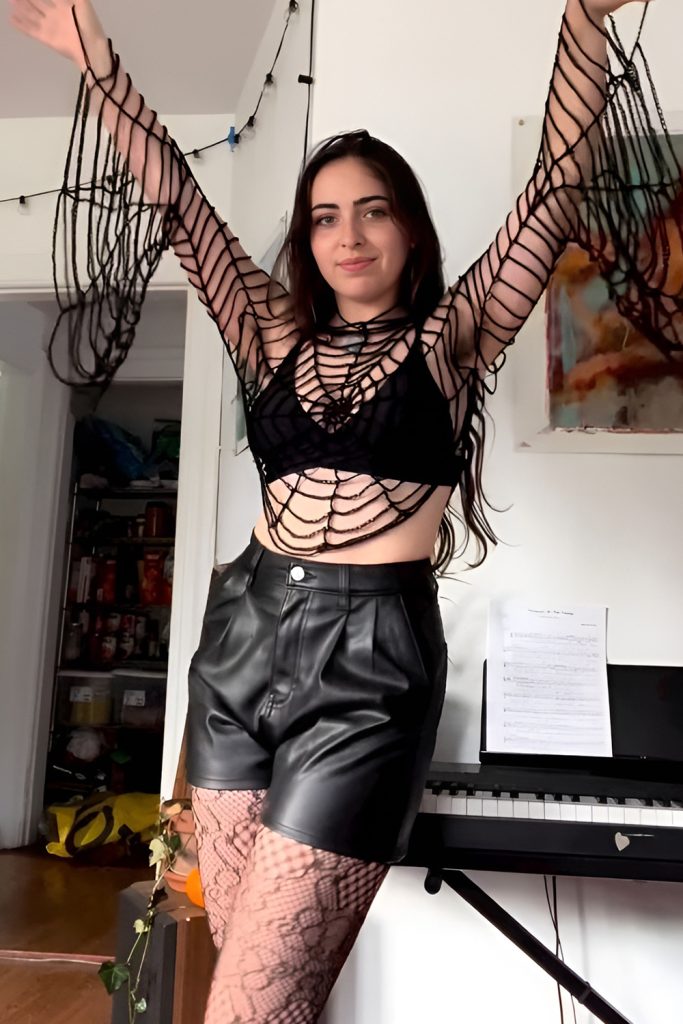
3. Gothic Spider
Black lace, a high collar, layered skirts and web detail worked into the lace itself rather than painted over it.
The build: let the lace be the web. Look for lace with a radial or geometric pattern and you can skip painting entirely.
Wear it if: you own gothic pieces already. This is the least work of any look here for anyone with a black lace wardrobe.

4. Web Forest Ruler
Deep greens and browns with web detail strung between the shoulders and arms, plus moss, bark texture and twigs worked into the silhouette.
The build: stretch cotton wool thinly between two points and it becomes web instantly. Do not use the packaged stuff, which reads as cotton wool.
Wear it if: you are going outdoors in daylight. It is the only spider look here that photographs better in natural light.

5. Night Creature
Charcoal and black layers with heavy texture, web across the shoulders, and dark dramatic eyes with no other colour anywhere.
The build: layer three different black fabrics with different finishes, matte, sheer and shine. Texture is what stops all-black reading as flat.
Wear it if: you want something atmospheric rather than literal. There is barely a spider here, and that is the point.

6. Steampunk Spider
Brass, leather and dark fabric with mechanical legs built from painted tubing, plus goggles and a corset or waistcoat.
The build: paint the foam legs with metallic brass paint and add bolts cut from card. Mechanical legs are easier than organic ones because they are meant to look constructed.
Wear it if: you have a weekend. This is the most involved look on the page and by far the most striking in photographs.

7. Black Widow Queen
A floor-length black gown, a web-patterned veil or headpiece, red accents at the lips and nails, and a commanding silhouette.
The build: the headpiece is the whole costume. Bend wire into a radial frame, wrap it in black thread, and pin it at three points.
Wear it if: you want elegance rather than horror. It reads as a gown with one dramatic detail.

8. Webbed Masquerade
A formal dark outfit with a web-patterned mask covering the upper face, and matching web detail repeated at the cuffs or hem.
The build: buy a plain black mask and draw the web on it in silver pen. Ready-made web masks are usually worse than one you make in ten minutes.
Wear it if: the event is formal. It is the only spider look here that works at a black tie party.

9. Phantom of the Web
Tattered dark layers, trailing fabric, web strung between the arms and body, and a pale hollowed face.
The build: tear the hems unevenly and let some pieces trail. Even tearing looks deliberate in a bad way, uneven looks genuinely ruined.
Wear it if: you want movement. This is the best look here for a room with any kind of breeze or fan.
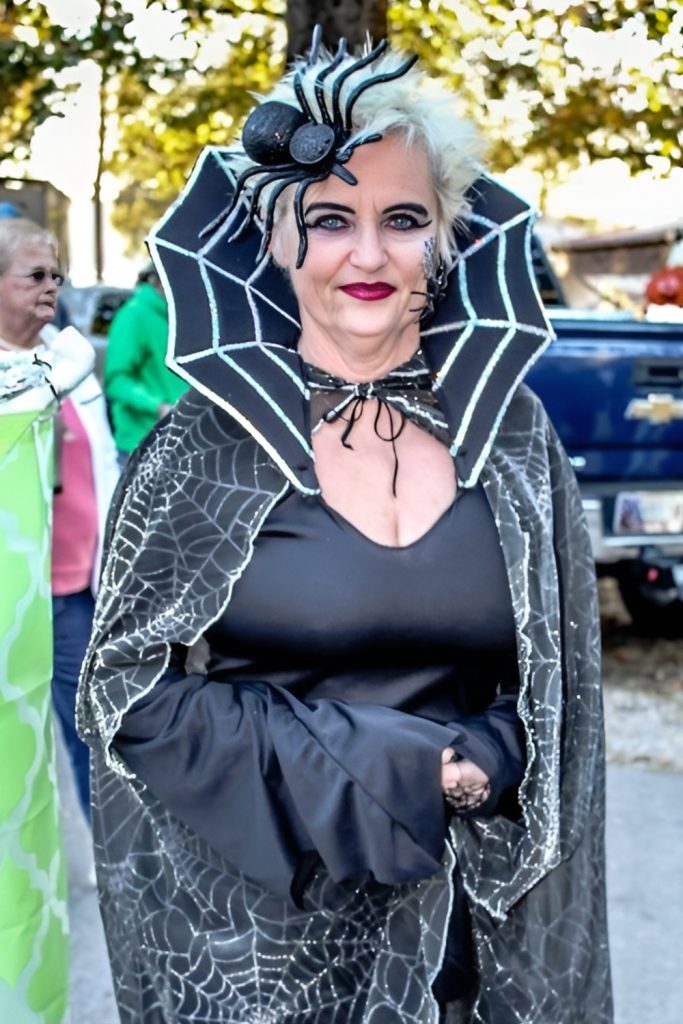
10. Glam Spider Performer
Sequins, bold colour against black, dramatic lashes, and web detail picked out in metallic across a fitted bodice.
The build: metallic fabric pen over sequins does not work. Draw the web on a plain fitted panel and attach it over the sequinned base.
Wear it if: you want to be seen. It is the loudest option on this page and the most fun to wear.

11. Moonlight Dancer
Sheer layers in grey and silver, soft web detail, silver shimmer on the skin, and a light floating silhouette.
The build: draw the web on the sheer layer only, not the solid one underneath. The web then appears to float above the body as you move.
Wear it if: you want the prettiest version of this idea. It barely reads as spooky at all.

12. Mutant Spider
Torn and distressed clothing, multiple legs at irregular angles, heavy texture and unsettling makeup around the eyes.
The build: deliberately mismatch the legs in length and angle. Symmetry is what makes homemade legs look like a craft project.
Wear it if: you actually want to be frightening. Everything else here is decorative, and this one is not.

13. Mythic Weaver
Draped fabric, gold detail, a woven or braided texture through the costume, and web patterns worked in like embroidery.
The build: braid cord and stitch it down in a radial pattern rather than painting. It gives a raised texture that paint cannot.
Wear it if: you want something nobody else will be wearing. It is the most unusual interpretation on this list.
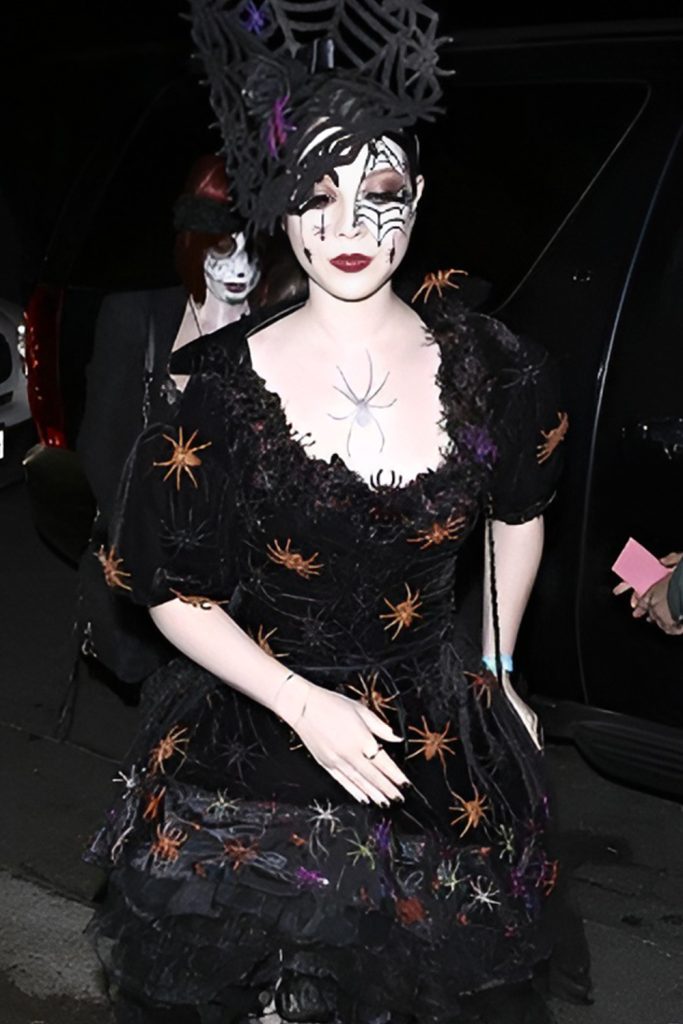
14. Cartoon Spider
Bright colours, oversized round shapes, thick black outlines, exaggerated eyes and stubby legs.
The build: outline everything in thick black marker or tape. The outline is what turns a shape into a cartoon, and it is the single most important step.
Wear it if: children will be there. It is the only spider look here that will not frighten anybody.

Two Mistakes That Ruin Homemade Spider Costumes
Straight web lines. Real webs sag between anchor points. Straight lines read as a grid, and a grid does not look like a web no matter how neatly it is drawn. Curve every connecting line inward.
Too many legs. Eight legs sounds correct and works badly. They are heavy across the shoulders, they knock into people in a crowded room, and they droop as the evening goes on. Four suggests eight perfectly well.
There is a third, smaller one worth knowing: fabric paint needs a full day to cure. A web drawn on the afternoon of the party will transfer onto everything you lean against.
And test the leg attachment by sitting down in it. Most homemade legs are mounted so they hit the back of a chair, which means you stand all night or take them off at nine.
Frequently Asked Questions
What is the easiest spider costume to make?
The midnight widow. An all-black outfit with one red felt shape stitched to the chest, and nothing else needed at all.
How do I draw a web that looks real?
Draw the spokes first from a single off-centre point, then join them with curves that sag inward. Off-centre and curved are the two details that sell it.
What can I use for web if I have no fabric paint?
Thinly stretched cotton wool for three-dimensional web, or white and silver marker pens on dark fabric for drawn web. Both work and cost very little.
Which of these is most comfortable for a long night?
The gothic spider or the webbed masquerade. Neither has legs, props or anything attached, so both wear like ordinary clothes.
The Bottom Line
A spider costume is a dark outfit plus one well-made element. The web and the legs are what people look at, so put your time there rather than into the clothes underneath.
Curve the web, limit the legs to four, and give the paint a full day to dry. Those three things separate a good spider costume from a homemade-looking one.
Going as a pair or a group? See these matching couple costumes, the DIY couple costume guide, or these trio costumes. Finish the look with some creepy cute Halloween nails.
Related Post