

Please note that we do not create all the designs featured in this article. Our primary focus is to curate and collect a diverse range of design collections and products to inspire and share with our audience. While we do not claim ownership or take full credit for the original designs and images, we occasionally make minor adjustments, particularly in home decor and fashion items, to present them more effectively. Additionally, we may produce and edit images to enhance their quality and composition before sharing them on our Pinterest page or website. For the design work we do on these creative designs, we also include our logo on the images shared on Pinterest and our website. This helps our audience recognize that these designs have been published on insiderlyfe.com!
If you have ever stood in front of a shelf of serums wondering if you need the orange one, the white one or both, you are not alone. Retinol and vitamin C are two of the most talked about ingredients in skincare, and they are also two of the most commonly mixed up.
The short verdict: use vitamin C in the morning, under sunscreen, and retinol at night. They do different jobs, and for most people the easiest routine is to keep them in different parts of the day rather than layering them. If you can only afford one, pick the one that matches your main concern.
Below you will find what each ingredient does, a side-by-side table, a week-by-week plan for starting retinol without wrecking your skin, a script for your next appointment and a free printable chart. Keep an eye out for number 4, which is the habit that stops most people from quitting retinol in week two. This guide is general information, not medical advice, so talk to a dermatologist about anything specific to your skin.
What retinol and vitamin C actually do
According to the American Academy of Dermatology (AAD), retinoid is the broad term for vitamin A based skincare products, and retinol is one type, sold over the counter for uneven skin tone, pigmentation and texture. Prescription retinoids are a separate, stronger category that a doctor has to supply. You can read the details in the AAD’s guide to retinoids and retinol.
Vitamin C is an antioxidant. In its guide to skincare in your twenties, the AAD quotes dermatologist Rebecca Baxt describing it as science-backed for skin concerns, and says it can reduce skin ageing and dark spots. The same page says retinol speeds up skin cell turnover, which starts to slow in your twenties.
In plain terms, retinol works on texture, tone and fine lines over time, while vitamin C works as a daytime defender and brightener. They are not rivals.
Retinol vs vitamin C at a glance
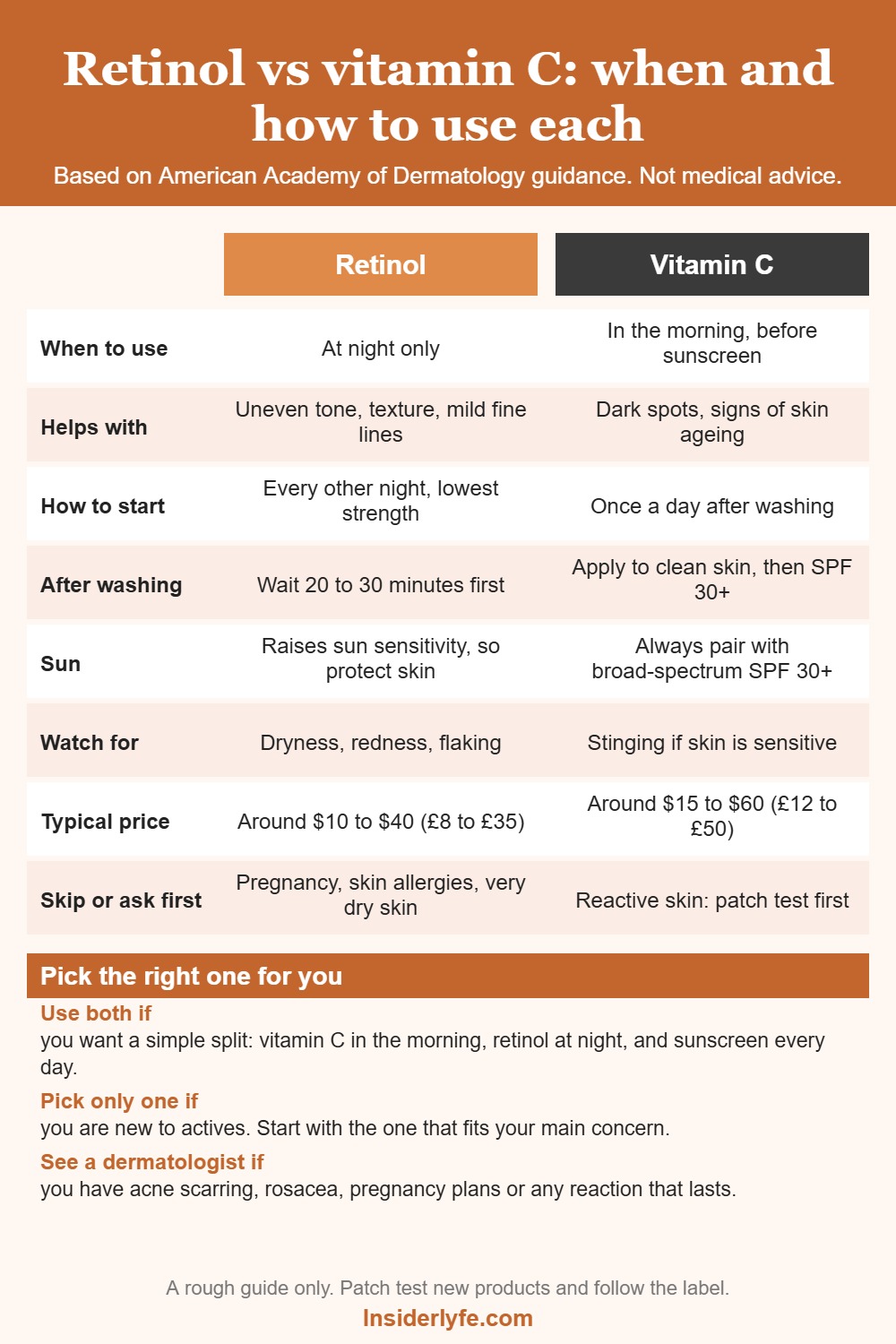
| Factor | Retinol | Vitamin C |
|---|---|---|
| When to use | At night only | In the morning, before sunscreen |
| Main jobs | Uneven tone, texture, mild fine lines | Dark spots, signs of skin ageing, daytime protection |
| How to start | Every other night, lowest strength | Once a day after washing |
| After washing | Wait 20 to 30 minutes | Apply to clean skin, then sunscreen |
| Sun | Raises sun sensitivity, so protect skin | Pair with broad-spectrum SPF 30 or higher |
| Typical price | Around $10 to $40 (£8 to £35) | Around $15 to $60 (£12 to £50) |
| Skip or ask first | Pregnancy, skin allergies, very dry skin | Reactive skin, patch test first |
Prices are rough ranges and vary by brand, size and country. A higher price does not guarantee a better formula, so check the ingredient list and the size, and consider a small bottle to start.
Eight things that make or break your routine
These photos are generic stock images of dropper bottles and routines, so they cannot tell you what is inside any bottle. Read the label, then use the points below as a plan.
1. Put vitamin C in the morning

Vitamin C belongs at the start of your day. The AAD page quotes Baxt as saying to apply it after washing your face in the morning, before you put on your sunscreen. Think of it as a layer that sits between a clean face and your SPF.
Best for: dark spots and a dull looking complexion. Upkeep: close the lid tightly and keep it away from heat. Tip: if it stings, try a smaller amount or a gentler formula and see a dermatologist for persistent irritation.
2. Save retinol for night

The AAD says retinoids increase sun sensitivity, so use them only at night. Treat that as the whole rule. If you apply it at night and wash it off in the morning, you still need sunscreen the next day.
Best for: uneven tone, rough texture and mild fine lines. Upkeep: keep your routine simple for the first weeks. Tip: put a note on your bathroom mirror to remind you it is a night product.
3. Wait before you apply retinol
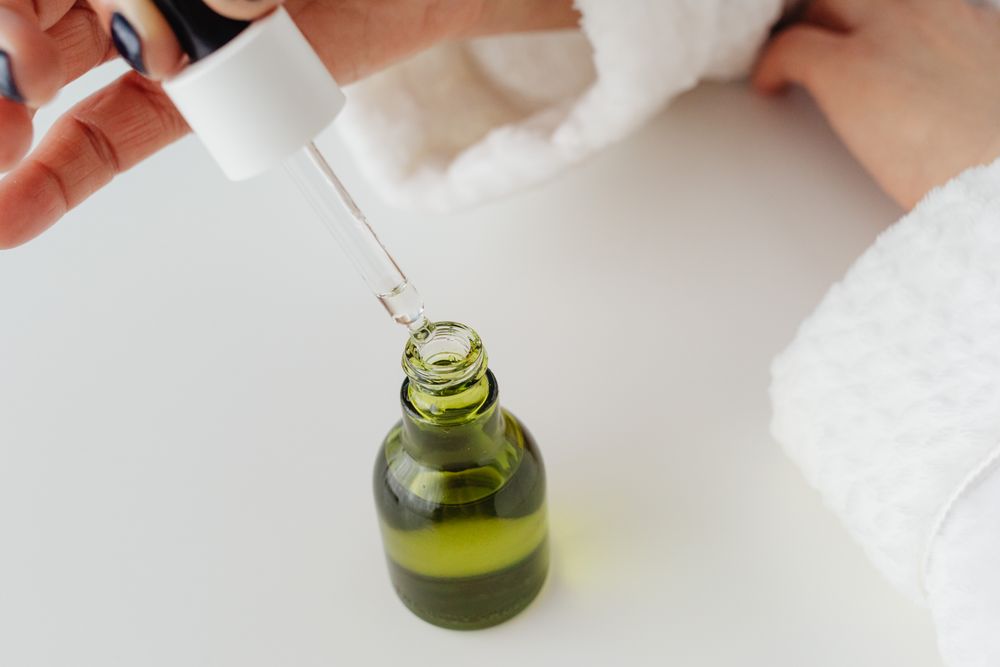
This one surprises people. The AAD guide to skincare in your twenties says to wait 20 to 30 minutes after washing your face before applying retinol. If it is too drying, apply moisturiser first, and then apply the retinoid 20 to 30 minutes later.
Best for: anyone who has felt a sting from retinol before. Upkeep: use that wait for brushing your teeth or laying out tomorrow’s clothes. Tip: set a phone timer, it really does help.
4. Start slowly, even when you feel impatient

This is the habit I promised you. The AAD quotes dermatologist Dr Alster as advising people to choose the least intense retinoid formula they can find and to start with every other night use. Another dermatologist, Dr Chapas, advises using the lowest formulation you can find, partly because over the counter labels are not required to list the retinol percentage.
Best for: beginners and sensitive skin. Upkeep: build up gradually and only once your skin is calm. Tip: if flaking starts, pause for a few nights and moisturise, instead of pushing through.
5. Patch test before you commit

Any new active deserves a patch test. Put a small amount on a spot such as the inner forearm or behind the ear, and wait a day or two before using it on your face. If you notice redness, itching or swelling, stop and speak to a pharmacist or doctor.
Best for: everyone, especially sensitive skin. Upkeep: test only one new product at a time so you know which one caused a reaction. Tip: a few drops is a good guide for the whole face, so you do not need more.
6. Keep the rest of your routine boring
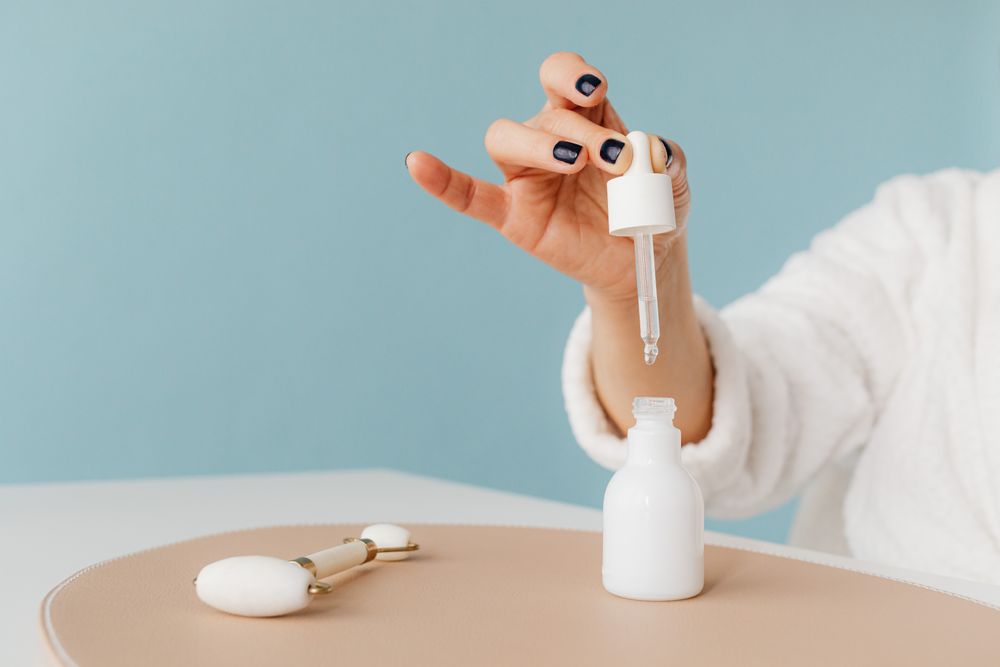
Actives work best on a calm base. A gentle cleanser, a simple moisturiser and sunscreen cover most of what you need. Piling on more exfoliating products at the same time is the quickest way to a stinging face.
Best for: new users. Upkeep: add one product at a time, a couple of weeks apart. Tip: if you also use exfoliating acids, ask a dermatologist how to space them out.
7. Use sunscreen every single day
Sunscreen is the point where the two ingredients meet. The AAD advises a broad-spectrum, water-resistant sunscreen of SPF 30 or higher, applied about 15 minutes before going outside, after your other products and beneath makeup. Makeup with SPF only counts if it is SPF 30 or higher, and it needs reapplying every two hours.
Best for: every day, every skin tone. Upkeep: reapply when you are outdoors for long. Tip: if you have oily skin, look for the words non-comedogenic, and if you dislike a white cast, tinted formulas often avoid it.
8. Store your serums sensibly
Many serums come in dark glass bottles because light and heat can wear down active ingredients over time. Keep yours in a cool drawer rather than a sunny windowsill, and check the label for how long it lasts after opening.
Best for: vitamin C in particular, which many brands note is sensitive to air and light. Upkeep: close the lid straight after use. Tip: if a serum changes colour or smell in a way the brand does not describe, ask the brand or replace it.
Who should be careful

The AAD says retinoids should not be used during pregnancy, and that people with skin allergies or dryness are probably poor candidates. It also notes that for darker skin tones, irritation can cause hyperpigmentation, meaning dark marks, so start slowly and use a moisturiser to reduce that risk.
If you have moderate or severe acne scarring, acne tied to your cycle or hormones, or redness that may point to rosacea, see a dermatologist first. For sensitive skin, the AAD suggests choosing a physical sunscreen with titanium dioxide, zinc oxide or both.
A four week plan for starting retinol
- Week 1: use a low strength retinol every other night. Moisturise, and wear sunscreen every morning.
- Week 2: stay at every other night. If your skin feels fine, continue. Mild dryness is common, but redness and burning are signs to slow down.
- Week 3: if your skin is calm, you can add a third night. Keep vitamin C in the morning if you are using it.
- Week 4: assess. Skin may feel smoother, but visible changes often take longer, so give it more time before you judge it.
How much should you actually use?

Less than you think. A serum is designed to be used in small amounts, and a few drops spread across a clean face is usually enough. Using more will not speed up results, it will just raise your chance of irritation and use up the bottle faster.
For retinol, the AAD page suggests using the lowest formulation you can find when starting. A pea sized amount is a common guide for creams, though you should follow the instructions on your product.
A simple morning and night routine
Here is the layout most people can follow without a spreadsheet.
- Morning: gentle cleanser, vitamin C serum, moisturiser, then broad-spectrum sunscreen of SPF 30 or higher.
- Night, retinol nights: remove sunscreen and makeup, wash your face, wait 20 to 30 minutes, apply retinol, then moisturiser.
- Night, rest nights: cleanser and moisturiser only, so your skin has a break.
This keeps each active in its own lane. If you want to change the routine, change one thing and give it a couple of weeks.
Budget vs splurge
Good skincare does not have to be expensive. A basic retinol or vitamin C serum from a pharmacy brand can do a lot, and the bigger variable is how consistently you use it. If you choose to splurge, spend on the product you will use every day, which is often the sunscreen.
- Budget: a low strength retinol and a simple vitamin C serum from a drugstore brand, around $10 to $25 each.
- Mid range: a gentle, fragrance free formula from a dermatology led brand, around $25 to $45.
- Splurge: a prescription from a dermatologist if your concerns call for it, which can be more effective and is supervised.
What irritation looks like, and when to stop
A little dryness or tightness in the first weeks of retinol is common. Burning, persistent redness, swelling or a rash are not normal, and they are your cue to stop and ask a professional. The AAD also notes that irritation in darker skin tones can lead to dark marks, which is another reason to start slowly and moisturise.
If you are unsure, take a photo of your skin in the same light every week. Seeing a trend is more useful than judging a single day.
Four skincare myths worth dropping
- “If it tingles, it is working.” A little warmth can happen, but burning is a sign to slow down, not a sign of progress.
- “More products means better skin.” A short routine you follow beats a long one you abandon.
- “Expensive means stronger.” Price and strength are not the same thing, and over the counter labels do not always list the retinol percentage.
- “I do not need sunscreen indoors or in winter.” The AAD recommends daily sunscreen on uncovered skin, and retinol makes this more important, not less.
If you remember only one thing from this guide, make it this: slow and steady wins. Add one active, give it weeks, protect your skin from the sun and ask a professional when something feels off.
Which one suits which skin type?
Skin type does not decide which ingredient you are allowed to use, but it does change how you start.
- Dry or sensitive skin: begin with vitamin C in the morning and add a very low strength retinol later, once your skin barrier feels comfortable. Moisturise generously around retinol nights.
- Oily or acne prone skin: retinol is often the first active people reach for, but the AAD suggests seeing a dermatologist first for moderate or severe acne. Choose non-comedogenic moisturiser and sunscreen.
- Dull or uneven skin: vitamin C in the morning is a gentle place to start, with retinol added slowly at night.
- Darker skin tones: go slowly with retinol, since irritation can cause dark marks, and wear sunscreen daily. A tinted formula may avoid a white cast.
These are general starting points, not a prescription. A dermatologist can look at your skin in person and give advice no article can.
Save this: the retinol vs vitamin C chart
Print it, save it to your phone or stick it on the bathroom mirror.
Download the full-size chart (free, no email needed)
What to say to a dermatologist or pharmacist
Hi, I would like to add a retinol to my night routine and a vitamin C serum to my morning routine. My skin is sensitive, and my main concerns are uneven tone and dull texture. Which strength should I start with, how often should I use it, and how should I fit it around my sunscreen and moisturiser?
Mistakes that cause most of the drama
- Starting too strong. The AAD warns that starting too strong can irritate skin.
- Skipping sunscreen. Retinol makes skin more sun sensitive, and vitamin C does not replace SPF.
- Using too much. More product does not mean faster results.
- Changing everything at once. If your skin reacts, you will not know why.
- Expecting overnight results. Skincare takes weeks, so give each change time.
Shop the look
Drugstore and high street brands such as CeraVe, The Ordinary, La Roche-Posay, Neutrogena and Garnier sell retinol and vitamin C products across a range of prices, usually from around $10 to $60. Look for fragrance free options if your skin is reactive, and buy small sizes first. For more on your routine, read our guide to toasty blush makeup looks, compare cream vs powder vs liquid blush, or see how to choose between a lash lift and lash extensions and dip powder and gel nails.
Frequently asked questions
Can I use retinol and vitamin C together?
Many people use them on the same day by putting vitamin C in the morning and retinol at night. If you want to layer them, ask a dermatologist first, especially if your skin is sensitive.
Which should I start with?
Pick the one that matches your main concern. Vitamin C suits dark spots and daytime protection, while retinol suits texture, tone and fine lines. Start only one at a time.
Do I still need sunscreen with vitamin C?
Yes. The AAD recommends a broad-spectrum, water-resistant sunscreen of SPF 30 or higher every day, applied after your other products.
How long until I see results?
It varies by person and product. Skin cell turnover takes time, so give any new routine several weeks before judging it.
Is retinol safe in pregnancy?
The AAD says retinoids should not be used during pregnancy. Ask your doctor about alternatives.
So, which one are you starting with?
For most routines, the simplest plan is vitamin C in the morning, retinol at night and sunscreen every day. Which of the eight tips above are you trying first? Tell us in the comments.
Related Post